
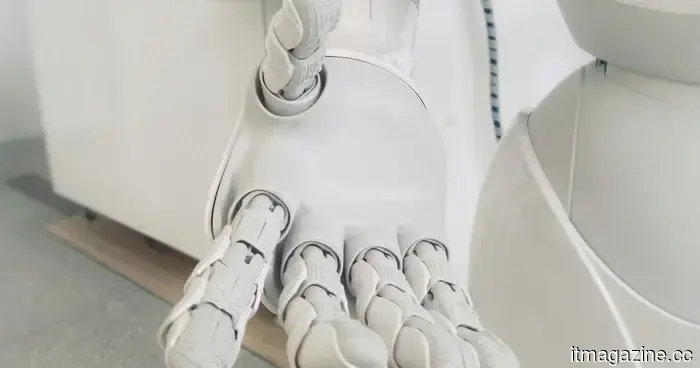
Similar to humans, this robot is capable of hearing music and can play it after only two minutes of self-training.
The successful experimentation suggests a novel approach to rehabilitation robotics focused on experiential learning.
In a neuro-robotics laboratory at the University of Southern California, a small robotic hand experienced a melody for the first time and successfully replayed it in a single try, without the need for sheet music, pre-loaded scores, or extended periods of supervised training (via USC Viterbi).
This system is known as the Musician Hand, featuring four fingers actuated by tendons linked to small electric motors, replicating how muscles pull tendons in a human hand. It was developed by doctoral candidate Hesam Azadjou under the guidance of Professor Francisco Valero-Cuevas.
How did the robot learn its capabilities?
Utilizing a method called "motor babbling," which involves an exploratory trial-and-error process akin to how humans master limb control. Without prior knowledge of hands, keyboards, or music, the robot discovered that pressing piano keys produced sound.
During the initial two minutes, the robotic hand randomly struck keys while examining the relationship between finger movements and the produced sounds. From this brief interaction, it was able to map the correlation between motor commands (the finger movements) and the resulting sounds.
When the Musician Hand first heard a 30-note melody, crafted by Los Angeles-based composer and music theorist Richard Tuttobene and titled "Robo Algo," it transformed the audio into a spectrogram, employed neural networks to recognize the notes, and subsequently generated the necessary commands to reproduce the sequence on the first attempt.
What distinguishes this from merely being a musical novelty?
The researchers performed a blind audition where two judges evaluated the Musician Hand along with four trained pianists, unaware of which participant was the robot. There were instances where they could not distinguish between the human performers and the robot.
In contrast, untrained adults struggled to replay the initial dozen notes. Azadjou emphasizes that the human brain resolves complex motor tasks using under 100 watts of power, roughly equivalent to a laptop charger, whereas conventional AI might consume megawatts of power for identical tasks.
This streamlined, effective, and experience-driven learning could potentially be implemented in robotic devices suitable for daily use, such as exoskeletons for individuals with Parkinson’s disease and personalized rehabilitation robots. The research received support from the NSF and DARPA.
For over five years, Shikhar has persistently simplified advancements in consumer technology and communicated them effectively.
Dell is reinforcing its commitment to 5G cellular connectivity for its premium business laptops in the US.
The recent launch signifies Dell’s clear stance that 5G connectivity should be a standard feature in all premium business laptops, not just found in enterprise-specific models.
On May 29, 2026, Dell unveiled a series of new laptops just four days before Computex 2026 set to take place in Taipei on June 2. Among the extensive specifications, almost every flagship model in this latest series includes the option for 5G cellular connectivity. Historically, this capability has been reserved for ultraportable or enterprise laptops, but Dell is indicating that always-connected laptops are now a mainstream expectation.
Acer’s new Swift Air 14 aims to compete with the MacBook Neo, although it may face significant challenges.
Acer finally presents its response to the MacBook Neo, but it may not be entirely adequate.
Apple created a considerable challenge for Windows laptop manufacturers with the launch of the MacBook Neo in March at $599. Fueled by the A18 chip, it quickly became a highly recommended option for students and casual users who do not specifically require Windows.
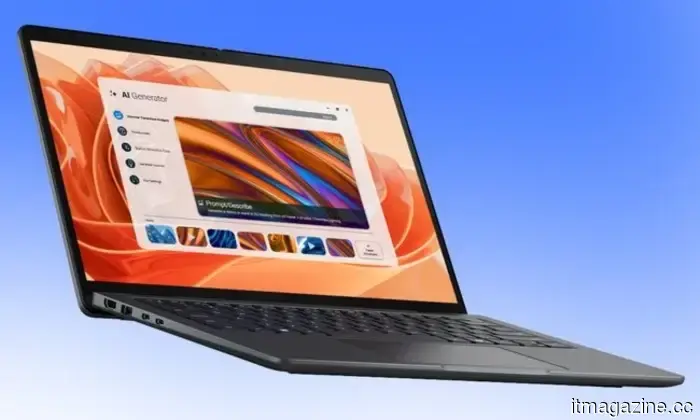
Acer is now making an attempt to counter this with the Swift Air 14, a 14-inch laptop introduced just before Computex 2026. Priced starting at $699, it utilizes Intel’s new Core Series 3 chips, also known as Wildcat Lake. On paper, it appears to be one of the first serious endeavors to create a more affordable Windows laptop that can compete with Apple’s Neo without appearing completely outmatch.
Five Menu Bar apps have become staples on my Mac in 2026.
I evaluated numerous Menu Bar apps so you don’t have to; these five made the cut.
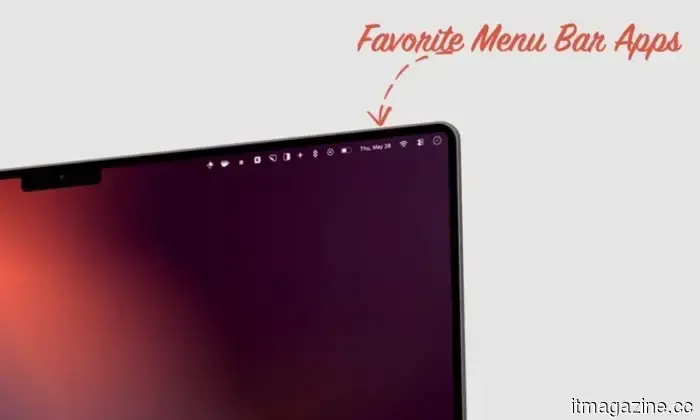
One aspect I appreciate about macOS is its compatibility with Menu Bar apps. These apps are small, reside in your Menu Bar, and assist in carrying out tasks without needing to open a full application.
Given the limited number of Menu Bar apps that can be installed before things get cluttered, I treat it as highly valuable space. Every app wants a spot up there, but only a select few truly deserve it.

Other articles
 Copilot has been redesigned and aims to offer more functionality while maintaining an appealing appearance.
Microsoft is transforming Copilot to resemble a workspace that adjusts to your needs. The redesign emphasizes a more streamlined appearance, enhanced contextual awareness, and reduced disruptions while you are working.
Copilot has been redesigned and aims to offer more functionality while maintaining an appealing appearance.
Microsoft is transforming Copilot to resemble a workspace that adjusts to your needs. The redesign emphasizes a more streamlined appearance, enhanced contextual awareness, and reduced disruptions while you are working.
 Copilot has undergone a redesign and aims to enhance functionality while maintaining a visually appealing appearance.
Microsoft is transforming Copilot to create a workspace that adjusts to your needs. The revamp emphasizes a cleaner interface, enhanced contextual awareness, and reduced disruptions during your work.
Copilot has undergone a redesign and aims to enhance functionality while maintaining a visually appealing appearance.
Microsoft is transforming Copilot to create a workspace that adjusts to your needs. The revamp emphasizes a cleaner interface, enhanced contextual awareness, and reduced disruptions during your work.
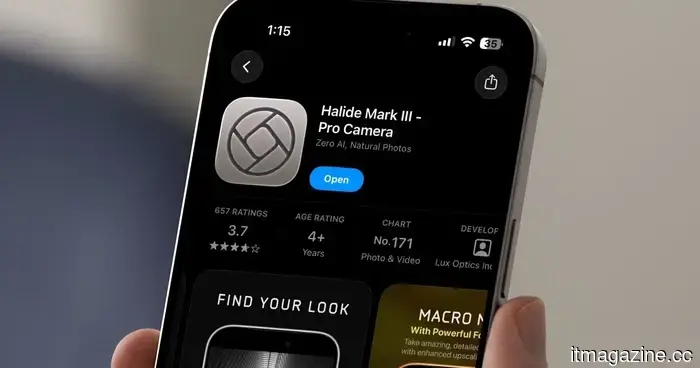 Halide Mark III introduces creative cinematic features to one of the top iPhone camera applications.
Halide Mark III has arrived, and it's a significant update. With new film-inspired Looks, an integrated Photo Lab for RAW editing, and a more streamlined design, it stands as the most comprehensive iPhone camera app to date.
Halide Mark III introduces creative cinematic features to one of the top iPhone camera applications.
Halide Mark III has arrived, and it's a significant update. With new film-inspired Looks, an integrated Photo Lab for RAW editing, and a more streamlined design, it stands as the most comprehensive iPhone camera app to date.
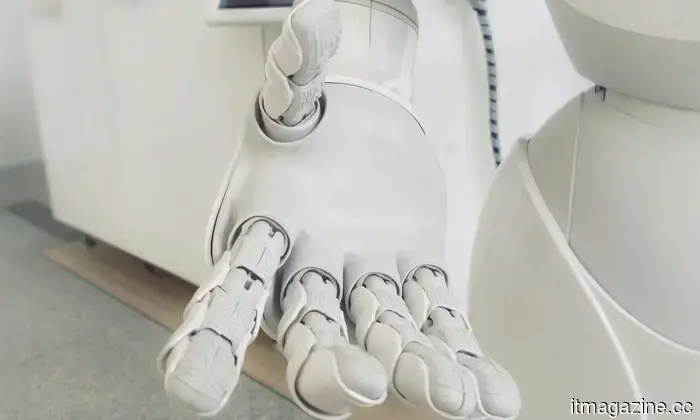
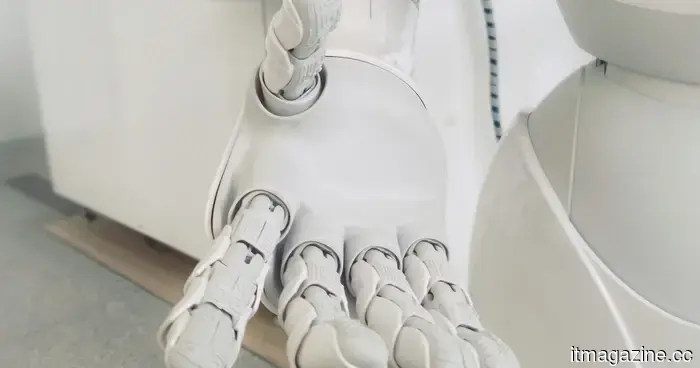 Similar to humans, this robot can listen to music and is able to perform it after only two minutes of self-training.
USC's Musician Hand learned to play the piano by ear in just two minutes through a process resembling infant motor babbling.
CoStar acquires Zonda for $800 million to finalize its real estate data empire.
CoStar has purchased the new-home data platform Zonda for $800 million in cash, completing the final piece of a real estate information empire established through over 40 acquisitions totaling $7.3 billion.
Similar to humans, this robot can listen to music and is able to perform it after only two minutes of self-training.
USC's Musician Hand learned to play the piano by ear in just two minutes through a process resembling infant motor babbling.
CoStar acquires Zonda for $800 million to finalize its real estate data empire.
CoStar has purchased the new-home data platform Zonda for $800 million in cash, completing the final piece of a real estate information empire established through over 40 acquisitions totaling $7.3 billion.
 In China, low-cost sodium batteries are already achieving performance levels comparable to those of Tesla.
A commercial sodium-ion battery developed in China is nearing performance levels similar to those of Tesla, utilizing more affordable materials and a double-aluminum structure that has the potential to compete with lithium-ion batteries in cost-sensitive electric vehicles and grid storage applications.
In China, low-cost sodium batteries are already achieving performance levels comparable to those of Tesla.
A commercial sodium-ion battery developed in China is nearing performance levels similar to those of Tesla, utilizing more affordable materials and a double-aluminum structure that has the potential to compete with lithium-ion batteries in cost-sensitive electric vehicles and grid storage applications.
Similar to humans, this robot is capable of hearing music and can play it after only two minutes of self-training.
USC's Musician Hand learned to play the piano by ear in just two minutes through a process resembling infant motor babbling.