
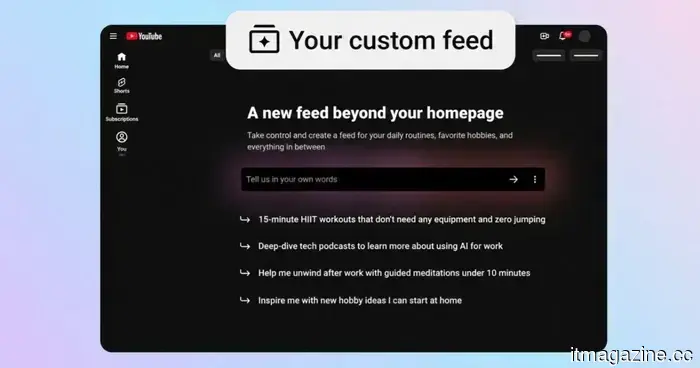
YouTube's Home feed is transforming into exactly what you request.
A new prompt-based feature allows signed-in U.S. users to create tailored feeds based on their moods, interests, or curiosities.
YouTube is introducing a new discovery feature on its Home page that transforms a written request into a personalized video stream.
Called “Your custom feed,” this feature offers users a more straightforward method to diverge from standard recommendations. Viewers can request content beyond their usual viewing habits or focus on specific experiences, such as short guided meditations after work.
The update to the YouTube Home feed is being rolled out in the U.S. for signed-in users on both mobile and desktop platforms, specifically for those using English.
How the feature operates
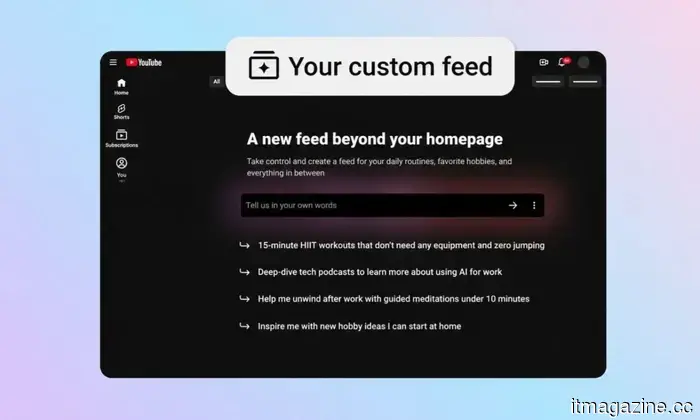
The new option appears at the top of the Home page alongside YouTube’s other quick-access topic buttons. By selecting “Your custom feed,” users can access a text box where they can describe their desired content or pick from suggested prompts.
Once YouTube generates the results, the request is saved as a chip. Users can revisit it later without needing to retype the same prompt, making the feature feel more like a reusable discovery lane rather than a traditional search function.
Users can also modify the prompt within the custom feed. Altering the text creates a new space, allowing the feature to adapt to changing interests, routines, or viewing preferences.
Why this impacts recommendations
YouTube’s recommendations can sometimes feel rigid once the algorithm identifies a viewer's preferences. This new chip allows users to take a more active role in steering their viewing experience when they prefer a temporary change without altering their overall watching habits.
The Home page serves as the entry point for many users who start watching before knowing exactly what they want. Allowing users to influence this interface with simple text requests could make the discovery process feel less passive, particularly during times when the usual feed may feel uninspired.
That said, there is a limitation. YouTube does not clarify the extent to which a prompt can override previous viewing history, indicating that the feature is more like a gentle prompt on top of the existing recommendation system rather than a complete reset option.
Who will receive this update first
The rollout is exclusive to signed-in users in the U.S. who utilize YouTube in English. It is compatible with both the YouTube mobile app and desktop version.
It’s important to note that users must have search and watch history enabled. If the chip doesn't show up, these settings should be the first area to check.
YouTube encourages feedback through the three-dot menu on the chip if the results do not meet expectations. For those feeling trapped in repetitive recommendation loops, a practical strategy is to start with a specific prompt and gradually refine it until the feed becomes more useful.
---
Sony introduces True RGB TVs in the Bravia series, marking the dawn of a new era in home entertainment.
Your living room is about to undergo a significant upgrade.
Sony has unveiled two new BRAVIA television models, the BRAVIA 9 II and BRAVIA 7 II, which may revolutionize the standard for living room TVs. Utilizing a technology termed True RGB, these televisions employ independently controlled red, green, and blue LEDs to produce color directly from the source, as opposed to the conventional single white backlight used by most TVs.
Sony asserts that this results in the largest color volume ever achieved in their home television range. The company has been developing this technology for over twenty years, beginning with the Qualia 005 in 2004. True RGB is Sony's endeavor to merge the advantages of Mini LED and OLED into a single display, delivering more vibrant colors, brighter images, and enhanced performance in well-lit environments.
---
Spotify has made it simpler to engage with long reads without needing to read them.
Long-form journalism is now available on Spotify, fitting seamlessly into your commute.
Spotify appears intent on becoming a comprehensive solution for all audio needs. The leading music streaming service has gradually incorporated audiobooks and podcasts into its platform and has now expanded to include magazine articles.
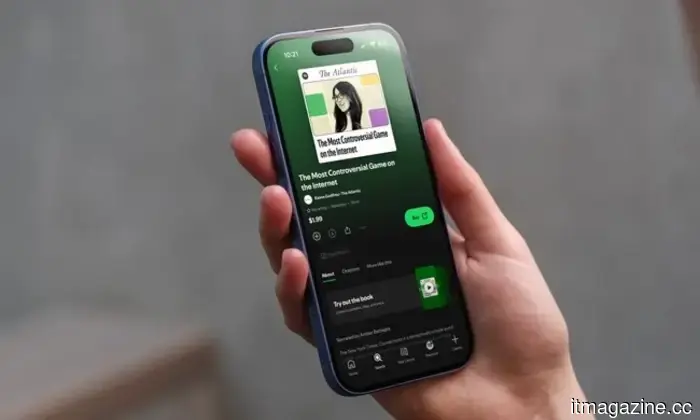
In an announcement on its website, Spotify stated that more than 650 long-form magazine articles are now accessible in audio format. This curated selection is produced by Spotify's own audiobooks team and includes contributions from some of the most renowned publications, such as Rolling Stone, The Atlantic, Vogue, Variety, Billboard, GQ, WIRED, Vanity Fair, and Pitchfork.
---
Apple AirPods Pro 3 review: Eight months later, they remain a solid choice that continues to impress.
Apple's flagship earbuds have become more refined, resilient, and outperform rivals in numerous ways.
Quick Overview
I selected the AirPods Pro 3 primarily seeking enhanced noise isolation and sound quality. However, over time, I've discovered additional benefits beyond those typically expected from premium earbuds. They've helped me correct my posture while working and even offer heart rate monitoring capabilities.





Other articles
 Samsung aims to support your Ozempic weight loss journey with its smartwatch.
Samsung and Mass General are investigating if the Galaxy Watch8 can assist adults beginning GLP-1RA therapy by monitoring activity levels, heart rate, body composition, and muscle changes throughout the treatment process.
Samsung aims to support your Ozempic weight loss journey with its smartwatch.
Samsung and Mass General are investigating if the Galaxy Watch8 can assist adults beginning GLP-1RA therapy by monitoring activity levels, heart rate, body composition, and muscle changes throughout the treatment process.
 The most credible leak regarding Apple's first foldable iPhone has just emerged.
The much-anticipated foldable iPhone from Apple may now be easier to visualize, as initial case listings suggest a sleek folding design, dual rear cameras, and compatibility with MagSafe-style accessories.
The most credible leak regarding Apple's first foldable iPhone has just emerged.
The much-anticipated foldable iPhone from Apple may now be easier to visualize, as initial case listings suggest a sleek folding design, dual rear cameras, and compatibility with MagSafe-style accessories.
 The hybrid model: reasons the most intelligent finance teams are not fully committing to AI.
AI is revolutionizing finance processes, but it is unable to create a financial model on its own. The organizations that are truly benefiting combine the speed of machines with the insights of human judgment, rather than relying on one alone.
The hybrid model: reasons the most intelligent finance teams are not fully committing to AI.
AI is revolutionizing finance processes, but it is unable to create a financial model on its own. The organizations that are truly benefiting combine the speed of machines with the insights of human judgment, rather than relying on one alone.
 The hybrid model: reasons why the most intelligent finance teams aren't fully committing to AI.
AI is changing finance processes, but it isn't capable of creating a financial model. The organizations that are truly benefiting combine the speed of machines with human insight, rather than relying on just one or the other.
The hybrid model: reasons why the most intelligent finance teams aren't fully committing to AI.
AI is changing finance processes, but it isn't capable of creating a financial model. The organizations that are truly benefiting combine the speed of machines with human insight, rather than relying on just one or the other.
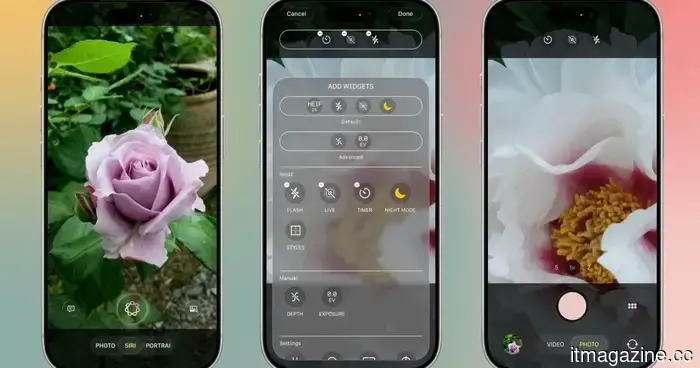 The camera app on the iPhone is set to receive a significant update, and this might be our initial glimpse of it.
Apple's iOS 27 update will introduce a significant redesign of the Camera app on your iPhone, featuring Siri integration, new AI editing features, and a completely customizable interface.
The camera app on the iPhone is set to receive a significant update, and this might be our initial glimpse of it.
Apple's iOS 27 update will introduce a significant redesign of the Camera app on your iPhone, featuring Siri integration, new AI editing features, and a completely customizable interface.
 In a recent leak, the rumored Samsung Fold 8 Wide appears to be remarkably slim.
A leaked dummy model of the Samsung Fold 8 indicates that the upcoming foldable device from Samsung might be significantly thinner; however, details regarding the name, specifications, battery, durability, launch schedule, and final design remain unverified.
In a recent leak, the rumored Samsung Fold 8 Wide appears to be remarkably slim.
A leaked dummy model of the Samsung Fold 8 indicates that the upcoming foldable device from Samsung might be significantly thinner; however, details regarding the name, specifications, battery, durability, launch schedule, and final design remain unverified.
YouTube's Home feed is transforming into exactly what you request.
YouTube is introducing a prompt-based Home feed feature that allows signed-in viewers in the U.S. to create personalized video streams focused on particular moods, interests, or subjects, utilizing their watch and search history.