

The hybrid model: reasons why the most intelligent finance teams aren't fully committing to AI.
In the past 18 months, nearly every finance vendor has prominently featured "AI-powered" on their homepage. While many of them are not being malicious, they tend to exaggerate the capabilities of their products. They are referring to forecasting as "modeling," extending trends as "intelligence," and pattern matching as "reasoning." This purposeful blurring of terms is designed to attract attention.
Here's a clearer perspective: AI is truly reshaping finance workflows today. However, it is not creating your financial model. The discrepancy between these two statements is where many companies could potentially lose a significant amount of money.
The bait-and-switch in simple terms
A financial model is not merely a spreadsheet filled with numbers. It represents a structured argument detailing how a business operates, what drives its revenue, the distinction between fixed and variable costs, how hiring decisions may impact cash flow after six months, and what might happen to the runway if prices decrease by three percent. Crafting one requires posing challenging questions, questioning the founder’s optimism, and recognizing when something in row 47 contradicts a statement in row 12.
In contrast, a forecast is a projection that extends established patterns into the future. This is useful and necessary work but is fundamentally different from modeling.
AI excels at forecasting and is not designed to create financial models. It cannot inquire why your churn assumption decreased from 4% to 2% in Q3 without an explanation. It cannot indicate that the hiring plan you just included is mathematically incompatible with last week’s revenue plan. It will calculate a 300% growth against flat costs and present it to you confidently.
This isn’t a temporary shortcoming that upcoming model releases will address; it reflects a fundamental distinction. Calculation and reasoning are not interchangeable skills, and overlooking this can lead to difficult questions from your board regarding the sources of the numbers.
What AI does exceptionally well (and why that’s still quite significant)
When we strip away the marketing, AI demonstrates real proficiency in five areas within a finance workflow today:
1. It forecasts using historical data. Machine learning is indeed superior to humans in identifying patterns across numerous historical data points and projecting them forward with a calibrated degree of uncertainty. This capability represents a significant advancement over a typical analyst's intuition.
2. It consolidates disparate data. AI is well-suited for merging information from your CRM, billing systems, accounting platforms, and multiple spreadsheet exports into coherent data sets, efficiently handling this tedious work.
3. It rapidly runs scenarios. Questions like "What if churn doubles?" or "What if we postpone the next hire by two months?" can be answered in seconds rather than days or weeks.
4. It identifies anomalies such as unusual spending patterns, classification errors, or transactions that don’t reconcile; AI is faster and more reliable than a human reviewer who has been examining the same ledger for hours.
5. It eliminates manual labor. Tasks like data entry, categorization, formatting, and repetitive reconciliation make up the tedious 60% of finance work that has historically consumed the time of your best personnel.
Altogether, these advantages provide genuine value: finance teams can update forecasts weekly instead of quarterly, catch errors before board meetings, and dedicate their time to more complex judgment tasks instead of mundane chores.
That’s a real productivity revolution that deserves attention, even without the hype of science fiction.
Where the problems arise
Issues arise when companies mistake “AI did the work” for “the work is done.”
Some notable failure modes include:
- The confident hallucination: AI can generate a well-formatted, seemingly logical forecast that is incorrect at its core due to flawed assumptions. It won’t flag this issue because it cannot, leading to outputs that appear authoritative.
- The missing dependency: AI may operate under the misconception that revenue and costs are independent variables, failing to recognize that your sales team cannot close Q4 deals without a marketing hire in Q2.
- The unchallenged assumption: If you tell a human analyst your churn will improve by half next year, they will inquire about the reasoning. In contrast, an AI will simply integrate that optimistic projection into the forecast without questioning it.
- The audit trail problem: Most AI tools provide outputs without a traceable process suitable for board meetings. “The model says so” does not suffice as an answer to “why,” and the board will demand clarity.
This doesn’t imply AI is ineffective; it highlights that AI is a tool that requires human oversight from someone capable of questioning its outputs.
Companies realizing true value are not those that eliminated their finance teams; instead, they empower their finance teams with better tools and encourage deeper thinking.
The Big 4 have already understood this
It’s important to note that firms with substantial resources for AI automation, such as Deloitte and PwC, are choosing not to fully automate. Deloitte committed $3 billion to AI solutions and partnerships with technology giants like Google and NVIDIA, while PwC invested $1 billion to enhance AI capabilities,
Other articles
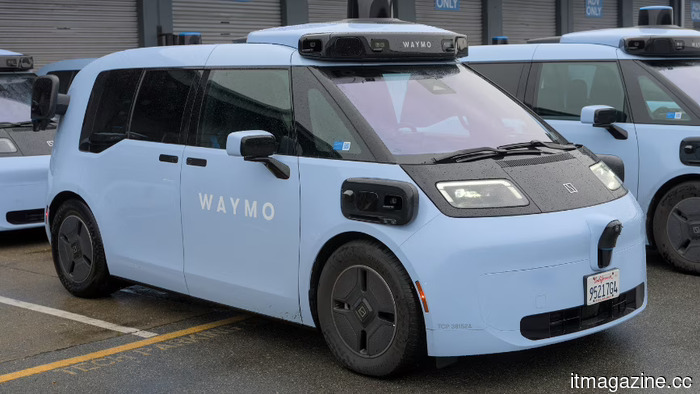 Waymo launches a more affordable Ojai robotaxi manufactured by China's Geely.
Waymo's latest Ojai robotaxi reduces sensor usage by 42% and is priced at $75,000 lower than the Jaguar I-PACE. Manufactured by Geely's Zeekr in China, it will be introduced in three cities across the United States.
Waymo launches a more affordable Ojai robotaxi manufactured by China's Geely.
Waymo's latest Ojai robotaxi reduces sensor usage by 42% and is priced at $75,000 lower than the Jaguar I-PACE. Manufactured by Geely's Zeekr in China, it will be introduced in three cities across the United States.
 Qualcomm's Snapdragon C chip targets low-cost laptops as the MacBook Neo reshapes the budget category.
Qualcomm's latest Snapdragon C chip is designed for budget laptops priced from $300, offering all-day battery life and reliable performance for students, families, and small businesses.
Qualcomm's Snapdragon C chip targets low-cost laptops as the MacBook Neo reshapes the budget category.
Qualcomm's latest Snapdragon C chip is designed for budget laptops priced from $300, offering all-day battery life and reliable performance for students, families, and small businesses.
 The Oura Ring 5 is released as the smallest smart ring in the world, priced at $399.
Oura's Ring 5 is 40% more compact at a width of 6.09mm, introduces blood pressure pattern recognition, and features AI health monitoring. It will be released on June 4, with prices starting at $399. An IPO filing is expected soon.
The Oura Ring 5 is released as the smallest smart ring in the world, priced at $399.
Oura's Ring 5 is 40% more compact at a width of 6.09mm, introduces blood pressure pattern recognition, and features AI health monitoring. It will be released on June 4, with prices starting at $399. An IPO filing is expected soon.
 Oura Ring 5 is released as the smallest smart ring globally, priced at $399.
Oura's Ring 5 is now 40% smaller, with a width of 6.09mm. It includes features for detecting blood pressure patterns and AI health monitoring. It will be available starting June 4, with prices beginning at $399. An IPO filing is expected soon.
Oura Ring 5 is released as the smallest smart ring globally, priced at $399.
Oura's Ring 5 is now 40% smaller, with a width of 6.09mm. It includes features for detecting blood pressure patterns and AI health monitoring. It will be available starting June 4, with prices beginning at $399. An IPO filing is expected soon.
 Samsung aims to support your Ozempic weight loss journey with its smartwatch.
Samsung and Mass General are investigating if the Galaxy Watch8 can assist adults beginning GLP-1RA therapy by monitoring activity levels, heart rate, body composition, and muscle changes throughout the treatment process.
Samsung aims to support your Ozempic weight loss journey with its smartwatch.
Samsung and Mass General are investigating if the Galaxy Watch8 can assist adults beginning GLP-1RA therapy by monitoring activity levels, heart rate, body composition, and muscle changes throughout the treatment process.
 Anthropic's Claude Opus 4.8 is four times more truthful, followed by Mythos.
Anthropic has launched Claude Opus 4.8, featuring improved judgment and a reduction in uncaught code errors. Mythos-class models will be available in a few weeks. Series H has successfully raised $65 billion with a valuation of $965 billion.
Anthropic's Claude Opus 4.8 is four times more truthful, followed by Mythos.
Anthropic has launched Claude Opus 4.8, featuring improved judgment and a reduction in uncaught code errors. Mythos-class models will be available in a few weeks. Series H has successfully raised $65 billion with a valuation of $965 billion.
The hybrid model: reasons why the most intelligent finance teams aren't fully committing to AI.
AI is changing finance processes, but it isn't capable of creating a financial model. The organizations that are truly benefiting combine the speed of machines with human insight, rather than relying on just one or the other.