
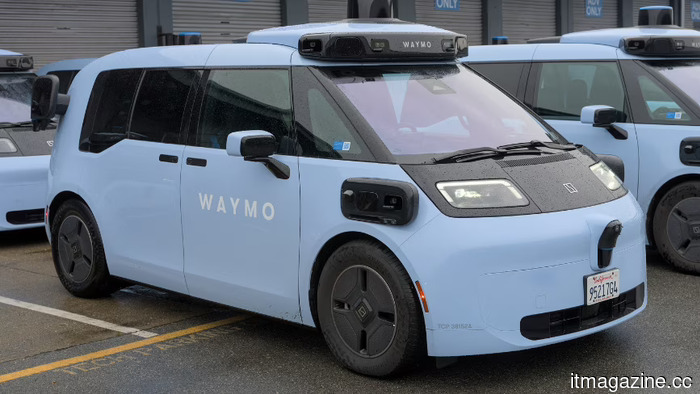
Waymo launches a more affordable Ojai robotaxi manufactured by China's Geely.
Waymo has launched its sixth-generation Ojai robotaxi for select riders in San Francisco, Los Angeles, and Phoenix. Manufactured by Geely’s Zeekr in China, the Ojai features a 42% reduction in sensor count and is approximately $75,000 less expensive per unit than the Jaguar I-PACE it replaces.
The Ojai is Waymo's first vehicle specifically designed for autonomous ride-hailing, rather than being retrofitted from an existing model. It utilizes Waymo’s sixth-generation Driver system and is built on a platform from Zeekr, a brand under China's Geely, which also owns Volvo. Currently, rides are available in San Francisco, Los Angeles, and Phoenix, with plans to expand to San Diego, Las Vegas, and Denver this summer.
Replacing the Jaguar I-PACE that has been in use since 2020, the Ojai has a more spacious, boxier design, a lower step-in height, a higher ceiling, and comes with a removable steering wheel, emphasizing passenger comfort as there is no need for a driver.
A key economic feature of the Ojai is its reduced sensor count: it uses 13 cameras, four lidar units, and six radar sensors, which is a 42% decrease from the 29 cameras found in the fifth-generation I-PACE fleet. To compensate for having fewer sensors, Waymo has enhanced their quality, employing a new 17-megapixel imager that provides sharper images and improved thermal stability, capable of detecting objects up to 500 meters away in low light conditions.
Additionally, the advanced lidar system performs well in heavy rain and snow, while updated audio receivers are more effective at picking up sirens and other sounds, addressing previous challenges that led to service suspensions in some cities. Recently, Waymo halted operations in five U.S. cities after a software issue caused vehicles to drive into standing water.
According to Morgan Stanley, the Ojai's cost is estimated at around $125,000 per unit, compared to approximately $200,000 for the I-PACE. The base model from Zeekr is reportedly priced at about $38,000, while the Jaguar costs around $75,000, and the hardware for the sixth-generation Driver is expected to cost under $20,000 per unit, reflecting a more than 50% reduction from the previous generation. Waymo aims to have thousands of Ojai vehicles operating by the end of the year.
The Ojai’s dependence on Chinese manufacturing has drawn political attention. Zeekr manufactures the base vehicles in Ningbo, Zhejiang, and ships them to Mesa, Arizona, where Waymo incorporates its autonomous driving technology. This process subjects the imports to a 100% tariff on Chinese-made electric vehicles; however, because Waymo imports partially assembled vehicles instead of finished products, the tariff applies to a lower value of approximately $10,000 to $20,000 per unit, making the expenses manageable.
A U.S. senator has publicly expressed concerns over this arrangement, and the federal government is tightening regulations on connected vehicle software sourced from China. The autonomous vehicle sector is closely monitoring whether geopolitical issues will compel Waymo to seek a domestic manufacturing partner or if the current tariff structure will remain favorable enough to maintain the Chinese supply chain.
Waymo currently provides over 500,000 paid rides weekly across ten U.S. metropolitan areas, including San Francisco, Los Angeles, Phoenix, Austin, Atlanta, Miami, Dallas, Houston, San Antonio, and Orlando. The company aims for one million weekly rides by the end of 2026 and is laying the foundation to expand its operations into more than 20 additional cities, including international locations like Tokyo and London.
This expansion is supported by a $16 billion funding round completed in February 2026, which valued the company at $110 billion—more than double its $45 billion valuation from 15 months prior. Alphabet contributed roughly $13 billion to this total, with Sequoia Capital, Dragoneer, and DST Global among the external investors. Waymo is estimated to generate $350 million in annual recurring revenue and operates at Level 4 autonomy, meaning the vehicle can perform all driving tasks in specific conditions without human intervention.
Waymo's lead in the commercial robotaxi market is significant but faces competition. Tesla has initiated a limited robotaxi service in Austin using a camera-only approach, which has received criticism from other autonomous vehicle manufacturers for being less safe. Amazon’s Zoox operates around 50 robotaxis in San Francisco and Las Vegas and plans to integrate its service with the Uber app this summer. Cruise, which was once a close competitor to Waymo, suspended its operations in 2023 after a pedestrian incident and has been slow to resume.
In China, Baidu’s Apollo platform runs commercial robotaxi services in various cities. Europe largely lacks robotaxi services, though Waymo’s forthcoming expansion to London would be the first by a significant U.S. operator.
The O
Other articles
 The hybrid model: reasons the most intelligent finance teams are not fully committing to AI.
AI is revolutionizing finance processes, but it is unable to create a financial model on its own. The organizations that are truly benefiting combine the speed of machines with the insights of human judgment, rather than relying on one alone.
The hybrid model: reasons the most intelligent finance teams are not fully committing to AI.
AI is revolutionizing finance processes, but it is unable to create a financial model on its own. The organizations that are truly benefiting combine the speed of machines with the insights of human judgment, rather than relying on one alone.
 The camera app on the iPhone is set to receive a significant update, and this might be our initial glimpse of it.
Apple's iOS 27 update will introduce a significant redesign of the Camera app on your iPhone, featuring Siri integration, new AI editing features, and a completely customizable interface.
The camera app on the iPhone is set to receive a significant update, and this might be our initial glimpse of it.
Apple's iOS 27 update will introduce a significant redesign of the Camera app on your iPhone, featuring Siri integration, new AI editing features, and a completely customizable interface.
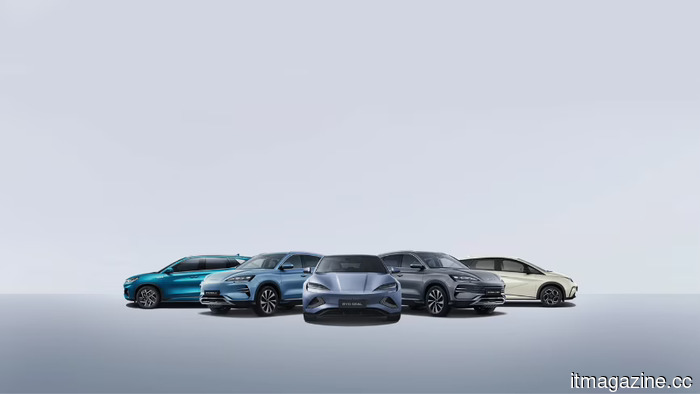 BYD introduces China's inaugural 4nm driving chip and enhances God's Eye.
BYD's Xuanji A3 is the initial 4nm automotive chip in China, delivering 700 TOPS. The God's Eye driver assistance system is now extending to mainstream electric vehicles as sales decline for the eighth consecutive month.
BYD introduces China's inaugural 4nm driving chip and enhances God's Eye.
BYD's Xuanji A3 is the initial 4nm automotive chip in China, delivering 700 TOPS. The God's Eye driver assistance system is now extending to mainstream electric vehicles as sales decline for the eighth consecutive month.
 Anthropic's Claude Opus 4.8 is four times more truthful, followed by Mythos.
Anthropic has launched Claude Opus 4.8, featuring improved judgment and a reduction in uncaught code errors. Mythos-class models will be available in a few weeks. Series H has successfully raised $65 billion with a valuation of $965 billion.
Anthropic's Claude Opus 4.8 is four times more truthful, followed by Mythos.
Anthropic has launched Claude Opus 4.8, featuring improved judgment and a reduction in uncaught code errors. Mythos-class models will be available in a few weeks. Series H has successfully raised $65 billion with a valuation of $965 billion.
 You should experience Marathon before the internet makes that choice for you.
Marathon's Open Play Week is just around the corner, making it the perfect moment for players to experience Bungie's sleek extraction shooter firsthand.
You should experience Marathon before the internet makes that choice for you.
Marathon's Open Play Week is just around the corner, making it the perfect moment for players to experience Bungie's sleek extraction shooter firsthand.
 On this Scary Movie website, you can control Ghostface however you like.
Scary Movie has introduced an interactive website in advance of its June 5 release, allowing fans to input commands and see Ghostface perform them on screen.
On this Scary Movie website, you can control Ghostface however you like.
Scary Movie has introduced an interactive website in advance of its June 5 release, allowing fans to input commands and see Ghostface perform them on screen.
Waymo launches a more affordable Ojai robotaxi manufactured by China's Geely.
Waymo's latest Ojai robotaxi reduces sensor usage by 42% and is priced $75,000 lower than the Jaguar I-PACE. Manufactured by Geely's Zeekr in China, it will debut in three cities in the US.