

The hybrid model: reasons why the most intelligent finance teams are not fully committing to AI.
In the past 18 months, virtually every finance vendor has prominently featured "AI-powered" claims on their websites. Many are overstating their capabilities, not out of ill intent but through a loose application of terminology. They refer to forecasting as “modeling,” trend extrapolation as “intelligence,” and pattern recognition as “reasoning.” This blurring of terms serves a marketing purpose.
The clearer reality is that AI is genuinely changing finance operations today. However, it is not constructing your financial model. The disparity between these two realities could lead many companies to potential financial losses.
Understanding the Distinction
A financial model goes beyond a simple spreadsheet filled with figures. It represents a structured approach to understanding how a business functions, what drives revenue, distinguishing fixed from variable costs, how hiring decisions affect cash flow six months later, and the implications of a three percent drop in pricing on the runway. Crafting one involves asking tough questions, challenging the founder’s optimism, and identifying inconsistencies between rows in the data.
In contrast, a forecast is about extending existing trends into the future. While this task is valuable and necessary, it differs from building a financial model.
AI excels at forecasting but lacks the ability to construct a financial model. It cannot inquire why a churn assumption changed from 4% to 2% in the third quarter without explanation. It won't indicate that a newly added hiring plan conflicts mathematically with a revenue plan introduced the previous week. It can compute a 300% growth against constant costs and return it to you without analysis.
This isn't a temporary shortcoming that will be rectified in the next software release; it's a fundamental difference. Calculation and reasoning are distinct skills, and ignoring this has repercussions when boards question the data's origins.
AI's True Strengths in Finance
When we look beyond the marketing hype, AI can effectively perform five key functions within finance workflows today:
1. Forecasting: AI uses existing data to forecast outcomes, demonstrating a superior ability to detect patterns within thousands of historical data points and project them into the future with calibrated uncertainty. This capability marks a significant improvement over an analyst’s intuitive guesswork.
2. Data consolidation: AI efficiently gathers and reconciles data from various sources such as CRM, billing systems, accounting software, and multiple spreadsheet exports into a comprehensible format—tedious work that AI can handle effortlessly.
3. Scenario analysis: AI can quickly provide answers to hypothetical questions, like the consequences of doubling churn, delaying hires, or adjusting pricing by five percent, delivering results in seconds rather than days or weeks.
4. Anomaly detection: AI identifies unusual spending patterns, classification mistakes, and transactions that don’t match up faster and more consistently than a human reviewer who may be fatigued from examining a general ledger for hours.
5. Easing manual tasks: AI takes over mundane tasks such as data entry, categorization, formatting, and repetitive reconciliations, which typically occupy a significant portion of a finance team’s time.
When you combine these five capabilities, you create value: finance teams that can update forecasts weekly instead of quarterly, catch errors before they reach the board, and devote time to strategic judgments rather than clerical tasks. This represents a genuine productivity revolution, even without a sci-fi narrative.
Challenges Arise
Problems surface when organizations conflate “AI performed the work” with “the work is complete.” Some notable pitfalls include:
- Confident inaccuracies: AI can generate a well-formatted and seemingly credible forecast that is fundamentally flawed due to faulty assumptions, without flagging the error.
- Ignored dependencies: AI may not recognize that a sales team can't close deals without prior marketing hires, modeling revenue and costs as independent when they are interconnected.
- Unquestioned assumptions: A human analyst would challenge a claim of improved churn; AI, however, would incorporate it into predictions without scrutiny, producing overly optimistic forecasts.
- Lack of audit trails: Most AI tools generate outputs without showing their reasoning in a manner suitable for board review. "The model says so" isn’t a satisfactory response to inquiries about the rationale behind the numbers.
None of this implies that AI lacks value; rather, it highlights the necessity for human oversight to critique the outputs.
Success lies with companies that haven’t eliminated their finance teams but have instead empowered them with improved tools, urging them to engage in deeper analysis.
Lessons from The Big 4
It’s important to note that the firms with substantial resources for AI automation—like Deloitte, which invested $3 billion in AI solutions and collaborations with tech titans such as Google and NVIDIA, and PwC, which allocated $1 billion for AI capabilities—are utilizing their investments to enhance their professionals rather than replace them.
AI can manage compliance checks, document processing, and baseline analysis while leaving strategic thinking and client interpretation to human experts. This approach is not temporary until AI advances but represents a sustainable hybrid model.
If major firms dedicated to financial analysis still combine AI with experienced human judgment, then companies
Other articles
 On this Scary Movie website, you can control the Ghostface however you wish.
Scary Movie has introduced an interactive website in anticipation of its release on June 5, allowing fans to input commands and see Ghostface execute them on screen.
On this Scary Movie website, you can control the Ghostface however you wish.
Scary Movie has introduced an interactive website in anticipation of its release on June 5, allowing fans to input commands and see Ghostface execute them on screen.
 The camera app on the iPhone is set to receive a significant update, and this might be our initial glimpse of it.
Apple's iOS 27 update will introduce a significant redesign of the Camera app on your iPhone, featuring Siri integration, new AI editing features, and a completely customizable interface.
The camera app on the iPhone is set to receive a significant update, and this might be our initial glimpse of it.
Apple's iOS 27 update will introduce a significant redesign of the Camera app on your iPhone, featuring Siri integration, new AI editing features, and a completely customizable interface.
 Why GoTrax Is Emerging as the Preferred Brand for All Types of eBike Riders in 2026
From the durable Tundra and sleek Mustang to the urban-friendly Accord and high-performance GX3, GoTrax’s selection caters to almost every type of rider in 2026. Here are the models that shine the brightest.
Why GoTrax Is Emerging as the Preferred Brand for All Types of eBike Riders in 2026
From the durable Tundra and sleek Mustang to the urban-friendly Accord and high-performance GX3, GoTrax’s selection caters to almost every type of rider in 2026. Here are the models that shine the brightest.
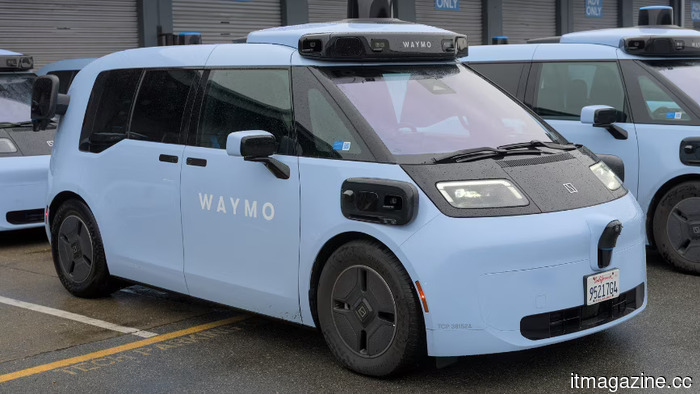 Waymo launches a more affordable Ojai robotaxi constructed by China's Geely.
Waymo's latest Ojai robotaxi reduces sensor usage by 42% and is priced at $75,000 less than the Jaguar I-PACE. Manufactured by Geely's Zeekr in China, it will debut in three cities across the US.
Waymo launches a more affordable Ojai robotaxi constructed by China's Geely.
Waymo's latest Ojai robotaxi reduces sensor usage by 42% and is priced at $75,000 less than the Jaguar I-PACE. Manufactured by Geely's Zeekr in China, it will debut in three cities across the US.
 Oura Ring 5 is introduced as the smallest smart ring in the world, priced at $399.
Oura's Ring 5 has shrunk by 40% to a width of 6.09mm, includes blood pressure pattern detection, and features AI health monitoring. It will be available starting June 4, with prices beginning at $399. An IPO filing is on the way.
Oura Ring 5 is introduced as the smallest smart ring in the world, priced at $399.
Oura's Ring 5 has shrunk by 40% to a width of 6.09mm, includes blood pressure pattern detection, and features AI health monitoring. It will be available starting June 4, with prices beginning at $399. An IPO filing is on the way.
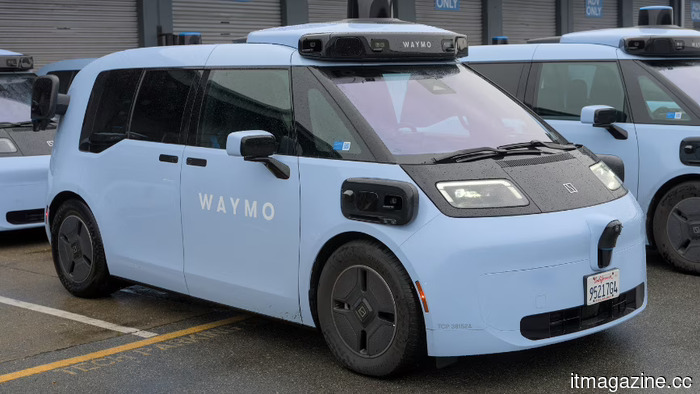 Waymo launches more affordable Ojai robotaxi manufactured by China's Geely.
Waymo's latest Ojai robotaxi reduces its sensors by 42% and is priced at $75,000 less than the Jaguar I-PACE. Manufactured by Geely's Zeekr in China, it is set to debut in three cities across the US.
Waymo launches more affordable Ojai robotaxi manufactured by China's Geely.
Waymo's latest Ojai robotaxi reduces its sensors by 42% and is priced at $75,000 less than the Jaguar I-PACE. Manufactured by Geely's Zeekr in China, it is set to debut in three cities across the US.
The hybrid model: reasons why the most intelligent finance teams are not fully committing to AI.
AI is revolutionizing financial workflows, yet it cannot create a financial model on its own. The firms that are truly benefiting combine machine efficiency with human insight, rather than relying solely on one or the other.