
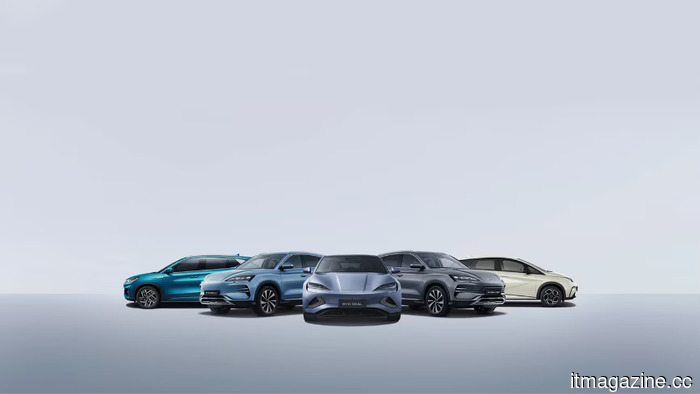
BYD introduces China's inaugural 4nm driving chip and enhances its God's Eye technology.
TL;DR: BYD has introduced the Xuanji A3, China's first automotive-grade 4nm chip designed for self-driving cars, providing 700 TOPS of performance per chip. The company is expanding its God’s Eye driver-assistance system to include mass-market EVs such as the $10,300 Seagull, in response to eight consecutive months of declining sales and a 55% drop in profits, necessitating a shift toward technology.
BYD has launched the Xuanji A3, touted as China's inaugural automotive-grade 4-nanometer chip for autonomous vehicles. CEO Wang Chuanfu revealed the chip at a BYD event in Shenzhen on May 28, stating it offers the lowest power consumption per computing unit in its category, consuming about 20% less than competing semiconductors. Mass production of the chip is already underway.
One Xuanji A3 chip provides 700 TOPS of computational power. A group of three chips can deliver 2,100 TOPS, sufficient for Level 3 and Level 4 autonomous driving capabilities. This chip serves as the core for a new central computing platform the size of a laptop, integrating three previously separate vehicle systems: the smart cockpit, the driver-assistance system, and the essential electric propulsion.
In terms of capability, the chip approaches that of Huawei Technologies, which currently produces automotive chips using a 7nm fabrication process but plans to launch 1.4nm chips by 2031. The most advanced chip currently available is TSMC's 2nm N2 node. BYD's ability to design and mass-produce a 4nm driving chip enhances its existing vertical integration strategy, which encompasses batteries, motors, and vehicle manufacturing.
God’s Eye expands to mass-market vehicles
In conjunction with the chip announcement, BYD revealed plans to extend its God’s Eye driver-assistance system to all models sold in China, including more affordable vehicles such as the Seagull compact hatchback, priced at 69,800 yuan ($10,300). The 2026 model of the Seagull, launched on May 11, became the first in its category to incorporate LiDAR, previously available only in luxury cars.
The enhanced God’s Eye system, which features city and highway navigation, traffic light recognition, and automated parking, will be available as an optional add-on for 12,000 yuan ($1,770). Wang described this pricing as strictly cost-based. BYD is also providing one year of insurance that fully covers damages from accidents occurring while using the latest version of God’s Eye, indicating confidence in the system's reliability.
A system facing challenges
The insurance offer comes in the wake of numerous complaints regarding God’s Eye's functionality. BYD made the system standard in most of its vehicles last year, but the initial rollout utilized a tiered approach that restricted advanced urban navigation to pricier models, leaving budget-friendly cars with only basic highway cruise control. Users reported serious issues, including unintended acceleration, erratic lane changes, and steering anomalies that nearly led vehicles into oncoming traffic.
Unlike Tesla's optional Full Self-Driving package, BYD implemented God’s Eye across millions of vehicles, causing any flaws to manifest at a large scale. The company has over 3.15 million cars equipped with advanced driver-assistance technology on the road, generating approximately 200 million kilometers of driving data daily. BYD is analyzing this data to refine its algorithms using cloud-based world models and reinforcement learning, with iteration cycles occurring every three days.
Declining sales
The technological initiative comes at a challenging time for BYD's operations. Sales have decreased year-on-year for eight consecutive months, with April 2026 figures down about 16% compared to the same month the previous year. The first quarter saw net profit drop 55% to 4.09 billion yuan ($599 million), driven by intense price competition in China and a stronger yuan affecting profit margins.
Revenue fell by 12% to 150.2 billion yuan in the same quarter. Operational costs have increased as BYD invests in intelligent driving technology while simultaneously lowering vehicle prices to compete with rivals like Xiaomi, which has entered the EV sector with high-performance offerings, and brands backed by Huawei expanding their presence. On a positive note, exports surged more than 70% year on year to a record 135,098 units in April.
The competitive landscape
Tesla has finally rolled out its Full Self-Driving system in China after several delays, yet it still requires active human intervention and will bear a different name due to scrutiny from Chinese transportation authorities. Tesla utilizes a vision-based approach employing cameras and neural networks without incorporating LiDAR or radar, a strategy that BYD and other Chinese automakers have criticized as less effective.
In December 2025, China’s Ministry of Industry and Information Technology granted its first Level 3 autonomous driving certifications to vehicles from Changan Auto and BAIC Motor. BYD
Other articles
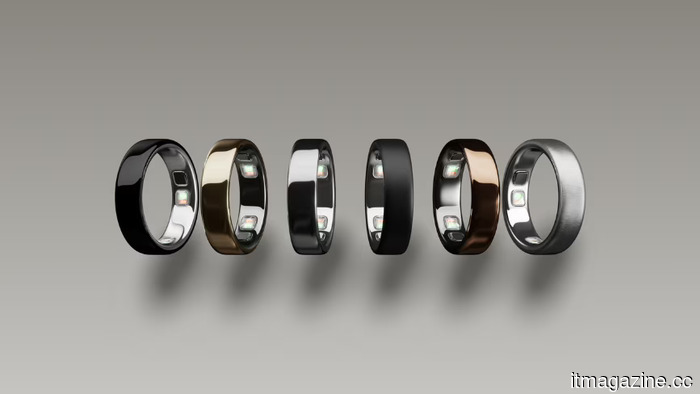 Oura Ring 5 is released as the smallest smart ring globally, priced at $399.
Oura's Ring 5 is now 40% smaller, with a width of 6.09mm. It includes features for detecting blood pressure patterns and AI health monitoring. It will be available starting June 4, with prices beginning at $399. An IPO filing is expected soon.
Oura Ring 5 is released as the smallest smart ring globally, priced at $399.
Oura's Ring 5 is now 40% smaller, with a width of 6.09mm. It includes features for detecting blood pressure patterns and AI health monitoring. It will be available starting June 4, with prices beginning at $399. An IPO filing is expected soon.
 Anthropic's Claude Opus 4.8 is four times more truthful, followed by Mythos.
Anthropic has launched Claude Opus 4.8, featuring improved judgement and reduced instances of uncaught code errors. Mythos-class models are expected to arrive in the coming weeks. Series H has secured $65 billion with a valuation of $965 billion.
Anthropic's Claude Opus 4.8 is four times more truthful, followed by Mythos.
Anthropic has launched Claude Opus 4.8, featuring improved judgement and reduced instances of uncaught code errors. Mythos-class models are expected to arrive in the coming weeks. Series H has secured $65 billion with a valuation of $965 billion.
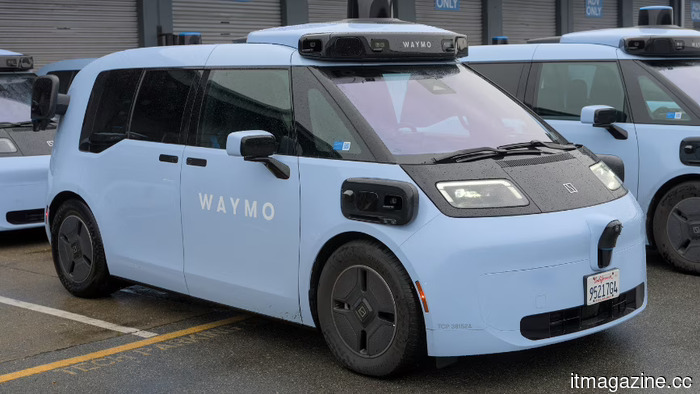 Waymo launches a more affordable Ojai robotaxi manufactured by China's Geely.
Waymo's latest Ojai robotaxi reduces sensor usage by 42% and is priced at $75,000 lower than the Jaguar I-PACE. Manufactured by Geely's Zeekr in China, it will be introduced in three cities across the United States.
Waymo launches a more affordable Ojai robotaxi manufactured by China's Geely.
Waymo's latest Ojai robotaxi reduces sensor usage by 42% and is priced at $75,000 lower than the Jaguar I-PACE. Manufactured by Geely's Zeekr in China, it will be introduced in three cities across the United States.
 You should experience Marathon before the internet makes that choice for you.
Marathon's Open Play Week is just around the corner, making it the perfect moment for players to experience Bungie's sleek extraction shooter firsthand.
You should experience Marathon before the internet makes that choice for you.
Marathon's Open Play Week is just around the corner, making it the perfect moment for players to experience Bungie's sleek extraction shooter firsthand.
 Qualcomm's Snapdragon C chip targets low-cost laptops as the MacBook Neo reshapes the budget category.
Qualcomm's latest Snapdragon C chip is designed for budget laptops priced from $300, offering all-day battery life and reliable performance for students, families, and small businesses.
Qualcomm's Snapdragon C chip targets low-cost laptops as the MacBook Neo reshapes the budget category.
Qualcomm's latest Snapdragon C chip is designed for budget laptops priced from $300, offering all-day battery life and reliable performance for students, families, and small businesses.
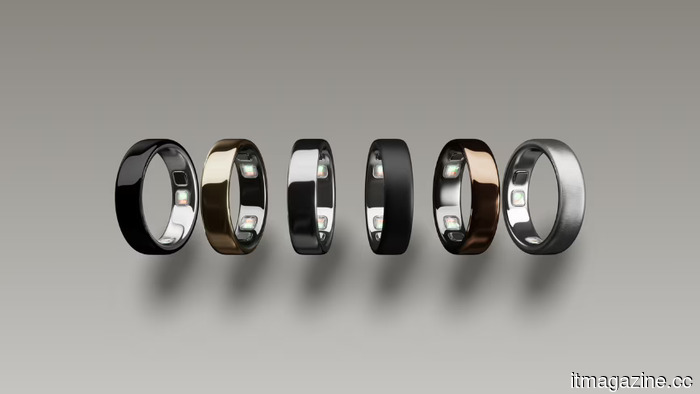 Oura Ring 5 debuts as the smallest smart ring in the world, priced at $399.
Oura's Ring 5 is now 40% smaller, measuring 6.09mm in width, and includes features for detecting blood pressure patterns and AI health monitoring. It will be available starting June 4, with a starting price of $399. An IPO filing is expected soon.
Oura Ring 5 debuts as the smallest smart ring in the world, priced at $399.
Oura's Ring 5 is now 40% smaller, measuring 6.09mm in width, and includes features for detecting blood pressure patterns and AI health monitoring. It will be available starting June 4, with a starting price of $399. An IPO filing is expected soon.
BYD introduces China's inaugural 4nm driving chip and enhances its God's Eye technology.
BYD's Xuanji A3 is the first 4nm automotive chip in China, delivering 700 TOPS. The God's Eye driver assistance system is now being extended to mainstream electric vehicles as sales decline for the eighth consecutive month.