
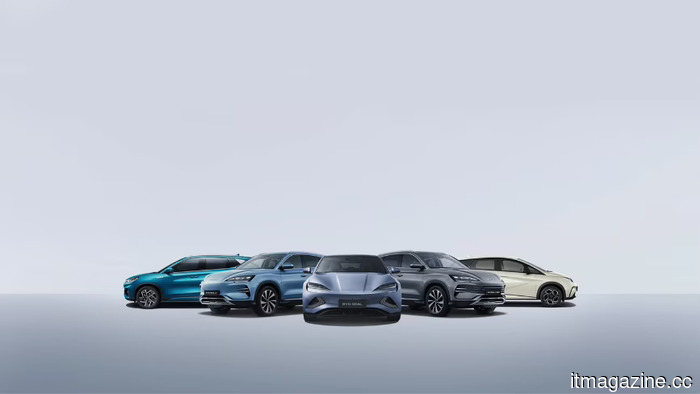
BYD introduces China's initial 4nm driving chip and enhances the capability of God's Eye.
**Summary**
BYD has introduced the Xuanji A3, which is touted as China’s first automotive-grade 4nm chip for autonomous vehicles, offering 700 TOPS per chip. The company is also broadening its God’s Eye driver-assistance system to include budget-friendly electric vehicles like the $10,300 Seagull, in response to eight months of declining sales and a 55% drop in profits that necessitate a technology-focused shift.
During an event on May 28 at BYD’s Shenzhen headquarters, CEO Wang Chuanfu announced the launch of the Xuanji A3 chip, claiming it has the lowest power consumption in its class, using approximately 20% less energy than rival semiconductors. The chip has commenced mass production.
Each Xuanji A3 chip offers 700 TOPS of processing power, and a combination of three chips achieves 2,100 TOPS, which is sufficient for Level 3 and Level 4 self-driving capabilities. This chip serves as the core component of a new central computing platform that integrates three previously separate vehicle systems: the smart cockpit, the driver-assistance features, and the primary electric propulsion system.
The semiconductor's capabilities are on par with those of Huawei Technologies, which currently manufactures automotive chips at 7nm but aims to introduce 1.4nm chips by 2031. The most advanced chip available globally is TSMC's 2nm N2 node. BYD's development and mass production of its own 4nm driving chip enhance its vertical integration strategy, which already includes batteries, motors, and vehicle manufacturing.
**Expanding God’s Eye**
In conjunction with the chip release, BYD stated it would extend its God’s Eye driver-assistance system to all vehicles sold in China, including more affordable models like the Seagull compact hatchback, starting at 69,800 yuan ($10,300). The Seagull was notable for being the first car in its class to incorporate LiDAR technology with its 2026 model introduced on May 11, a feature previously found only in luxury vehicles.
The enhanced God’s Eye system incorporates city and highway navigation, traffic light recognition, and automated parking, available as an optional upgrade for 12,000 yuan ($1,770). Wang indicated the pricing was simply cost-based. BYD is also providing one year of insurance fully covering damages from accidents when the latest version of God’s Eye is activated, betting on the system's reliability.
**Challenging History of the System**
The insurance offer follows numerous complaints regarding God’s Eye’s functionality. BYD made the system a standard feature in most of its vehicles last year, but the initial rollout had a tiered approach that restricted advanced urban navigation to pricier models, leaving budget options with only basic highway cruise control. Users reported dangerous issues, including unintended acceleration, erratic lane changes, and steering inputs that nearly caused collisions with oncoming traffic.
Unlike Tesla’s optional Full Self-Driving package, BYD deployed God’s Eye across millions of vehicles, resulting in widespread visibility of its flaws. The company claims to have over 3.15 million vehicles fitted with advanced driver-assistance hardware on the road, accumulating about 200 million kilometers of driving data daily. BYD is leveraging this data to refine its algorithms using cloud-based world models and reinforcement learning, with iterative updates every three days.
**Declining Sales Amid Challenges**
This technological initiative comes at a challenging time for BYD’s operations. Sales have declined year-over-year for eight consecutive months, with a 16% decrease in April 2026 compared to the previous year. The first quarter saw net profit plummet by 55% to 4.09 billion yuan ($599 million) amid a fierce price competition in China and a stronger yuan impacting margins.
Quarterly revenue fell by 12% to 150.2 billion yuan. Operating expenses increased as BYD invested in advanced driving hardware while also reducing vehicle prices to compete against rivals like Xiaomi, which has entered the EV market with strong models, and Huawei-backed brands that are ramping up their presence. The only positive development has been in exports, which surged over 70% year-on-year, reaching a record 135,098 units in April.
**Competitive Landscape**
Tesla has finally rolled out its Full Self-Driving system in China after numerous delays; however, the technology still necessitates active human oversight and will carry a different branding due to scrutiny from Chinese transport authorities. Tesla's vision-only strategy employs cameras and neural networks, eschewing LiDAR and radar, a fundamentally different and less costly approach that BYD and other Chinese automakers have criticized for being inferior.
China's Ministry of Industry and Information Technology issued its first Level 3 autonomous driving certifications in December 2025, approving vehicles from Changan Auto and BAIC Motor. BYD anticipates that China will soon finalize regulations facilitating broader consumer deployment of
Other articles
 Anthropic's Claude Opus 4.8 is four times more truthful, with Mythos coming next.
Anthropic has launched Claude Opus 4.8, featuring improved judgement and reduced uncaught code errors. Mythos-class models are set to be released in the coming weeks. Series H has successfully raised $65 billion with a valuation of $965 billion.
Anthropic's Claude Opus 4.8 is four times more truthful, with Mythos coming next.
Anthropic has launched Claude Opus 4.8, featuring improved judgement and reduced uncaught code errors. Mythos-class models are set to be released in the coming weeks. Series H has successfully raised $65 billion with a valuation of $965 billion.
 Claude Opus 4.8 from Anthropic is four times more truthful, followed by Mythos.
Anthropic has launched Claude Opus 4.8, featuring improved judgment and a reduction in uncaught coding errors. Mythos-class models are expected to be introduced in the coming weeks. Series H has successfully raised $65 billion at a valuation of $965 billion.
Claude Opus 4.8 from Anthropic is four times more truthful, followed by Mythos.
Anthropic has launched Claude Opus 4.8, featuring improved judgment and a reduction in uncaught coding errors. Mythos-class models are expected to be introduced in the coming weeks. Series H has successfully raised $65 billion at a valuation of $965 billion.
 On this Scary Movie website, you have the ability to control the Ghostface as you wish.
Scary Movie has unveiled an interactive website in anticipation of its June 5 release, allowing fans to input commands and see Ghostface execute them on screen.
On this Scary Movie website, you have the ability to control the Ghostface as you wish.
Scary Movie has unveiled an interactive website in anticipation of its June 5 release, allowing fans to input commands and see Ghostface execute them on screen.
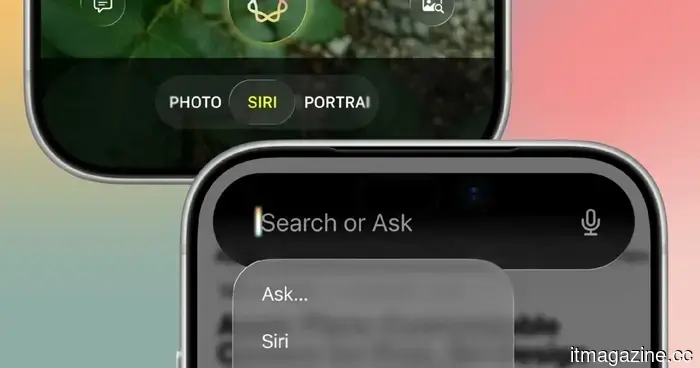 The iOS 27 leak reveals a streamlined redesign of Siri along with new features in a dedicated application.
The redesign of Siri in Apple's iOS 27 introduces the assistant's first standalone app, a new search interface activated by swiping down, a Gemini-powered AI foundation, and a mode within the Camera app.
The iOS 27 leak reveals a streamlined redesign of Siri along with new features in a dedicated application.
The redesign of Siri in Apple's iOS 27 introduces the assistant's first standalone app, a new search interface activated by swiping down, a Gemini-powered AI foundation, and a mode within the Camera app.
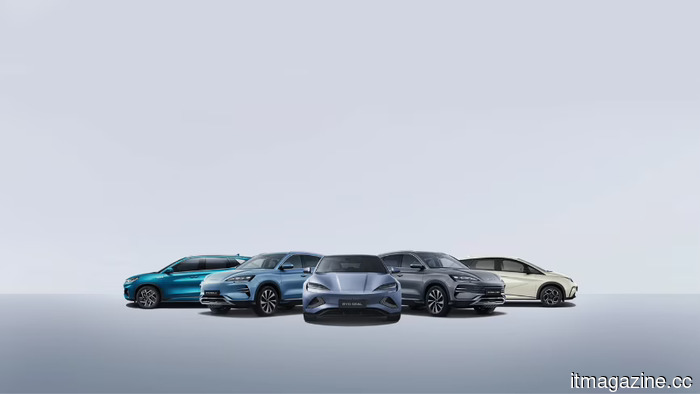 BYD introduces China's inaugural 4nm driving chip and enhances God's Eye.
BYD's Xuanji A3 is the initial 4nm automotive chip in China, delivering 700 TOPS. The God's Eye driver assistance system is now extending to mainstream electric vehicles as sales decline for the eighth consecutive month.
BYD introduces China's inaugural 4nm driving chip and enhances God's Eye.
BYD's Xuanji A3 is the initial 4nm automotive chip in China, delivering 700 TOPS. The God's Eye driver assistance system is now extending to mainstream electric vehicles as sales decline for the eighth consecutive month.
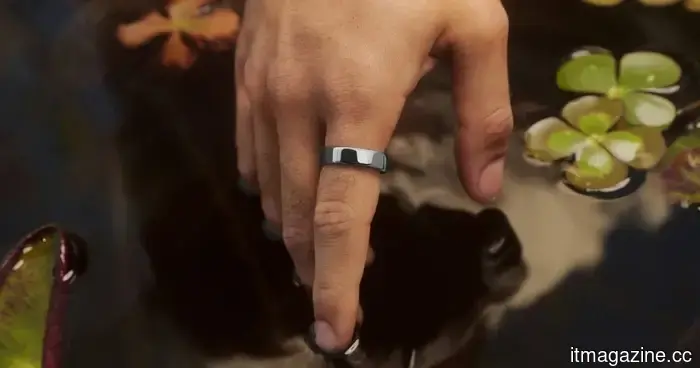 Oura Ring 5 is 40% more compact and features its most scratch-resistant design to date.
Oura has reduced the size of its latest smart ring by 40%, while incorporating more robust sensors, a sturdier finish, and improved battery life.
Oura Ring 5 is 40% more compact and features its most scratch-resistant design to date.
Oura has reduced the size of its latest smart ring by 40%, while incorporating more robust sensors, a sturdier finish, and improved battery life.
BYD introduces China's initial 4nm driving chip and enhances the capability of God's Eye.
BYD’s Xuanji A3 represents China’s first automotive chip at 4nm, boasting 700 TOPS. The God’s Eye driver assistance system is being extended to mainstream electric vehicles as sales decline for the eighth consecutive month.