

Vincent Bolloré turns down Ackman's $64 billion offer for Universal Music.
Vincent Bolloré has officially declined Bill Ackman’s offer through Pershing Square for Universal Music Group, concluding the largest attempt to take a music company private in history. According to a Reuters report on Wednesday, Bolloré rejected Ackman’s $64 billion bid, which ended Pershing Square’s seven-week effort to privatize the leading global recorded-music entity.
The rejection came through Bolloré’s holding company rather than UMG’s board, and it matched the expectations of most analysts who had predicted this outcome since the offer was made in April. The financial situation has always led to this conclusion; Bolloré holds around 28% of UMG via his Vivendi shares. Ackman’s proposal would have placed a premium on the company compared to its listing in Amsterdam, but, based on Bolloré’s own assessments, it would still have been significantly undervalued.
In early April, analysts from JPMorgan explained the rationale behind the rejection: Bolloré does not require cash, has been acquiring UMG shares for years instead of selling them, prefers a European listing and location, and is unlikely to diminish his control over a company he considers a key strategic asset. As Ackman himself acknowledged earlier this month, “without Bolloré, we don’t have a transaction.”
Ackman’s primary concern remains. He has publicly argued that UMG “really needs a reset,” as the company’s share price has lagged behind the broader music industry trends despite its strong catalog and growth in subscription streaming. Pershing Square’s belief was that a private structure, with improved operational discipline and a bolder AI-licensing strategy, could help address this discrepancy. While Spotify trades at a higher earnings multiple, UMG is valued at a notable discount.
The valuation gap persists, with Ackman asserting that it is driven by structural factors rather than cyclical ones. Bolloré’s rejection acknowledges that gap as a consequence of his desire for strategic control.
The music industry landscape has continued to evolve amid this standoff. Spotify is broadening its audiobook offerings to include narrated journalism; AI music platforms Suno and Udio are actively competing with record labels in licensing disputes; and OpenAI is making visible strides into related content areas.
Ackman questioned UMG’s adaptability to these transitions. The shareholder vote that would have determined the fate of the take-private proposal has become irrelevant, but the fundamental strategic issues continue to exist, especially as UMG’s business model faces genuine threat from AI-generated substitutes for new music releases.
For Pershing Square, this unsuccessful bid marks the largest unresolved deal in the firm’s history. Historically, Ackman has leveraged activist campaigns to drive change in companies he cannot outright purchase, and future strategies are likely to reflect this approach.
Pershing Square has already revealed a significant open-market stake in UMG; the next steps may involve a proxy fight or a public campaign aimed at the board rather than directly at Bolloré. However, whether Ackman has the institutional backing to pursue this, given Bolloré’s controlling position, remains uncertain.
In early trading on Wednesday in Amsterdam, UMG shares saw a slight decline as the takeover premium diminished. Bolloré has not publicly commented further than the rejection announcement, while Ackman has indicated that Pershing Square will provide a formal response "in the coming days."
Other articles
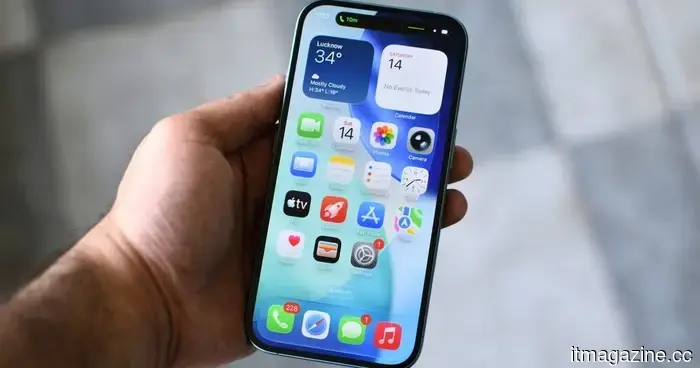 iOS 26.6 notifies you when you reach the limit of blocked contacts, and that's an issue.
The initial feature of iOS 26.6 by Apple is a notification that informs you when you have reached the maximum number of blocked contacts.
iOS 26.6 notifies you when you reach the limit of blocked contacts, and that's an issue.
The initial feature of iOS 26.6 by Apple is a notification that informs you when you have reached the maximum number of blocked contacts.
 Logitech's latest office mouse and keyboard feature a small comfort enhancement that your wrist will appreciate.
Logitech's latest Signature Comfort Plus series features a padded mouse, quieter clicking sounds, and a keyboard designed for extended working hours at the desk.
Logitech's latest office mouse and keyboard feature a small comfort enhancement that your wrist will appreciate.
Logitech's latest Signature Comfort Plus series features a padded mouse, quieter clicking sounds, and a keyboard designed for extended working hours at the desk.
 Luna believes you might be weary of fitness subscriptions and is presenting its screenless band as a solution.
Luna's initial screenless fitness band will launch in July, featuring no subscription fee. It offers voice-activated health logging, a 10-day battery life, and supports LifeOS for both Siri and Gemini.
Luna believes you might be weary of fitness subscriptions and is presenting its screenless band as a solution.
Luna's initial screenless fitness band will launch in July, featuring no subscription fee. It offers voice-activated health logging, a 10-day battery life, and supports LifeOS for both Siri and Gemini.
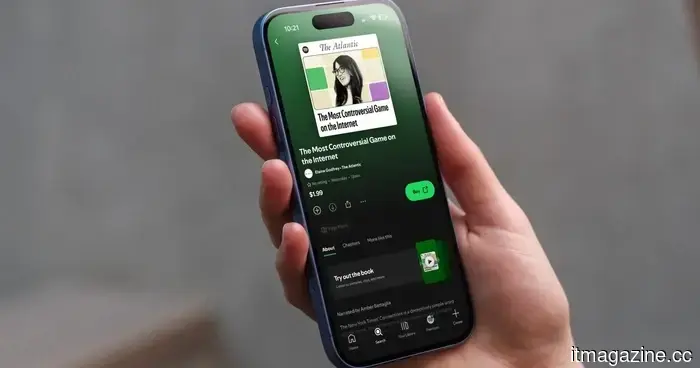 Spotify has simplified the process of staying updated on lengthy articles without the need to read them.
Spotify is launching over 650 narrated magazine articles from publications such as Rolling Stone, Vogue, WIRED, and others. Premium subscribers can begin listening to these articles using their audiobook credits starting today.
Spotify has simplified the process of staying updated on lengthy articles without the need to read them.
Spotify is launching over 650 narrated magazine articles from publications such as Rolling Stone, Vogue, WIRED, and others. Premium subscribers can begin listening to these articles using their audiobook credits starting today.
 The CEO of Barnes & Noble believes that AI-generated books are acceptable. He is mistaken.
The CEO of Barnes & Noble claims he has no issues with selling books written by AI. This may seem reasonable at first glance, but it's actually problematic, and here's why it poses a threat to all authors.
The CEO of Barnes & Noble believes that AI-generated books are acceptable. He is mistaken.
The CEO of Barnes & Noble claims he has no issues with selling books written by AI. This may seem reasonable at first glance, but it's actually problematic, and here's why it poses a threat to all authors.
 Vučić traveled to Beijing for a $1.1 billion Chinese investment, as Belgrade was engulfed in chaos.
China's $1.1 billion investment in AI and robotics in Serbia comes just four days after the biggest protests against Vučić in months. Brussels has not yet formulated a consistent response to either situation.
Vučić traveled to Beijing for a $1.1 billion Chinese investment, as Belgrade was engulfed in chaos.
China's $1.1 billion investment in AI and robotics in Serbia comes just four days after the biggest protests against Vučić in months. Brussels has not yet formulated a consistent response to either situation.
Vincent Bolloré turns down Ackman's $64 billion offer for Universal Music.
Vincent Bolloré has officially declined Bill Ackman's $64 billion offer from Pershing Square for Universal Music Group, bringing an end to the biggest take-private proposal in the history of the music industry.