

YouTube will now automatically mark videos that are generated by AI.
YouTube will start automatically recognizing and labeling videos with a significant amount of photorealistic AI-generated content, moving past its previous system that relied on voluntary disclosures from creators. The labeling will now be more visible and permanent for content created with YouTube's own tools or verified by C2PA metadata.
The platform announced this automatic detection and labeling system, which will roll out gradually beginning in May 2026. Instead of depending on creators to self-report, YouTube will use its internal signals to identify AI-generated content, although specific technical methods haven't been disclosed.
Additionally, YouTube is shifting the placement of AI labels to ensure they are more noticeable. For long videos, the labels will now be shown directly beneath the video player instead of in the less-visible expanded description. In the case of Shorts, the label will be overlaid on the video itself. Previously, labels were only prominently shown when the AI content addressed sensitive issues like health or finance, but this distinction will be eliminated, making all AI-labeled videos clearly marked regardless of topic.
Creators will still have the opportunity to contest the labeling if they believe their video has been mistakenly flagged. However, YouTube will make labels permanent in two scenarios: when a video uses its own AI tools, such as Veo, Gemini Omni, and Dream Screen, and when C2PA metadata shows the content is entirely AI-generated.
C2PA, which stands for the Coalition for Content Provenance and Authenticity, is an open standard established in 2021 by prominent organizations like Adobe and Microsoft that attaches metadata to files to document their origins and editing history. OpenAI joined the C2PA steering committee on May 19, 2026, and has since formed a partnership with Google to incorporate invisible SynthID watermarks into AI-generated images.
SynthID, Google's watermarking tool, has already been embedded in over 100 billion AI-generated images and videos. It embeds a signal in the content that detection systems can read but is not visible to viewers. YouTube’s detection system will utilize both C2PA metadata and SynthID watermarks during the identification process.
This expansion of labeling coincides with YouTube’s enhancement of its deepfake detection and removal system. As of May 16, 2026, the platform has extended protections against deepfakes to all users over 18 years of age, a change from the previous policy that only allowed public figures to request the removal of AI-generated content depicting them. Currently, the system focuses on face-based deepfakes, with voice cloning detection planned for later in 2026.
YouTube has clarified that labeled videos will not be penalized in the recommendation algorithm or lose monetization privileges; the labels serve an informational purpose rather than punitive. The company presents this change as a measure for transparency and not as a form of content moderation.
The timing of this announcement aligns with the upcoming transparency obligations under the European Commission's AI Act, which will come into effect in August 2026. YouTube's initiative appears to position it ahead of regulatory requirements, though the changes have not been explicitly framed as compliance-driven.
This development occurs within a wider context where all major platforms are dealing with similar issues. Meta is also labeling AI-generated content using C2PA signals, while TikTok mandates creators to disclose AI-generated content. However, voluntary disclosures have proven to be inconsistent, as creators often forget or avoid labeling in favor of maximizing audience engagement. YouTube’s transition to automated detection acknowledges the limitations of the previous self-reporting system.
One of the key challenges remains accuracy since AI detection is not foolproof; erroneous labeling could alienate creators of genuine content. The decision to allow creators to contest automated labels indicates YouTube's anticipation of potential mistakes. The permanent labeling policy for content made with its tools and C2PA-verified material is clearer, as those signals are definitive.
YouTube is also heavily investing in AI enhancements for content creation. At Google I/O 2026, new features like Ask YouTube, an AI-based search tool, an AI playlist generator, and AI video summaries were announced. The Gemini Omni model can now be accessed within YouTube Shorts Remix and the YouTube Create app, increasing the ease of generating AI content while complicating efforts to obscure it.
This tension between facilitation and transparency is likely to intensify. As AI video tools evolve and the volume of AI-generated content continues to rise on YouTube, the platform's strategy of adopting automatic labeling suggests a belief that promoting transparency is preferable to imposing restrictions.
Whether viewers will pay attention to these labels remains uncertain. While they serve to inform, they do not deter consumption. The true indicator will be if the visible AI labels influence how audiences perceive content or if they become an overlooked aspect, akin to cookie consent banners. For the moment, YouTube is opting to implement labeling first and assess the repercussions later.
Other articles
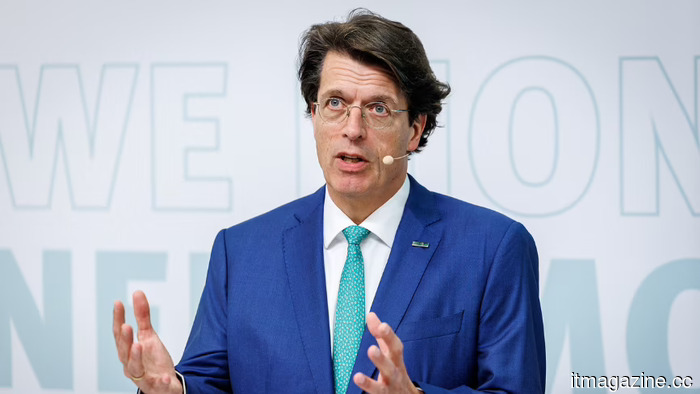 Schaeffler and Spire collaborate to construct sovereign European satellites in Germany.
Schaeffler and Spire Global have entered into a Memorandum of Understanding (MoU) to create sovereign-European space hardware and satellite systems in Germany, expanding Spire's Munich facility for defense clients.
Schaeffler and Spire collaborate to construct sovereign European satellites in Germany.
Schaeffler and Spire Global have entered into a Memorandum of Understanding (MoU) to create sovereign-European space hardware and satellite systems in Germany, expanding Spire's Munich facility for defense clients.
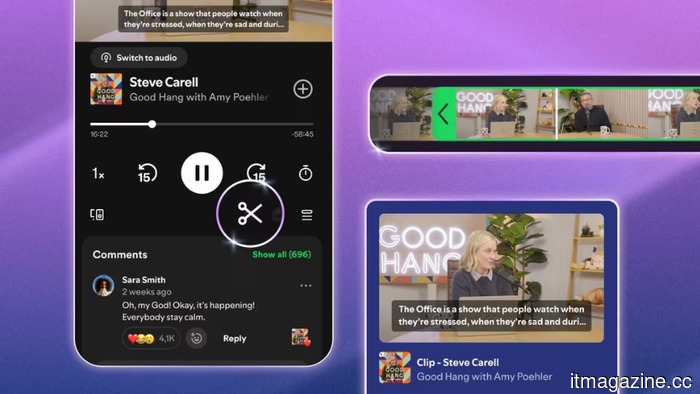 Spotify now enables listeners to clip and share snippets from any podcast.
Spotify introduces Podcast Clips, allowing listeners to cut and share audio snippets from episodes using a new scissors icon, accessible globally on mobile for both free and Premium users.
Spotify now enables listeners to clip and share snippets from any podcast.
Spotify introduces Podcast Clips, allowing listeners to cut and share audio snippets from episodes using a new scissors icon, accessible globally on mobile for both free and Premium users.
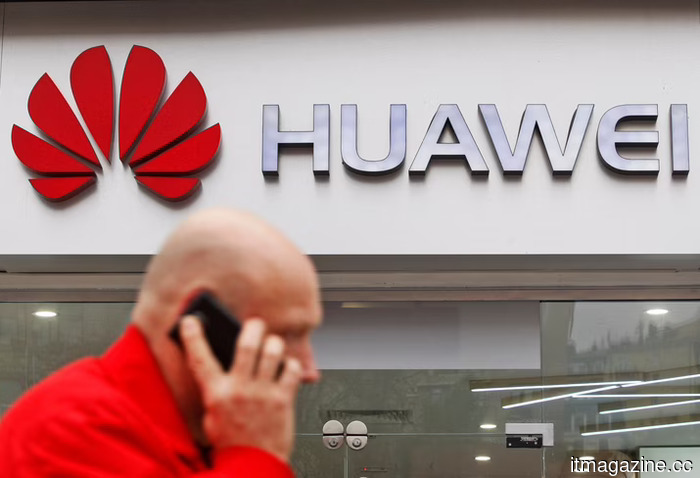 Germany and Spain are opposing Brussels' proposals to impose a ban on Huawei equipment throughout the entire bloc.
Germany and Spain are opposing the European Commission's proposed binding legislation concerning Huawei and ZTE, pointing to the potential risk of retaliation from Beijing and the expenses related to the development of European AI infrastructure.
Germany and Spain are opposing Brussels' proposals to impose a ban on Huawei equipment throughout the entire bloc.
Germany and Spain are opposing the European Commission's proposed binding legislation concerning Huawei and ZTE, pointing to the potential risk of retaliation from Beijing and the expenses related to the development of European AI infrastructure.
 Scammers are profiting from GTA 6 even before Rockstar sells a single unit.
Although GTA 6 is still several months from release, scammers are already taking advantage of the excitement to promote fake beta keys, malware-infested downloads, Android adware, and phishing sites aimed at Rockstar accounts.
Scammers are profiting from GTA 6 even before Rockstar sells a single unit.
Although GTA 6 is still several months from release, scammers are already taking advantage of the excitement to promote fake beta keys, malware-infested downloads, Android adware, and phishing sites aimed at Rockstar accounts.
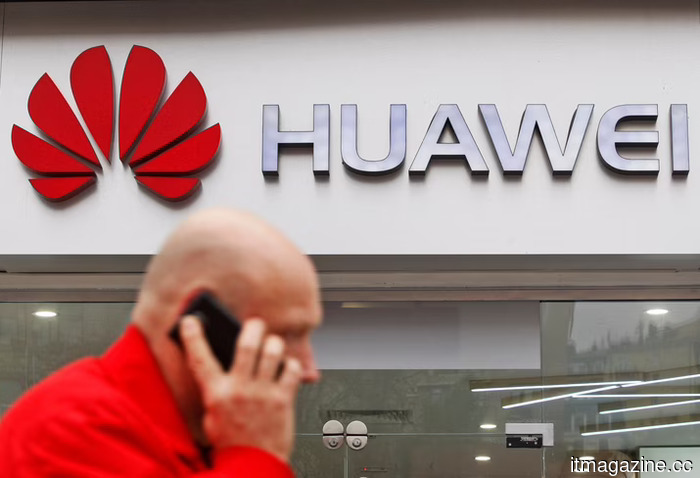 Germany and Spain oppose Brussels' proposals to impose a bloc-wide ban on Huawei equipment.
Germany and Spain are opposing the European Commission's proposed mandatory regulations concerning Huawei and ZTE, pointing to the potential for retaliation from Beijing and the expenses associated with developing European AI infrastructure.
Germany and Spain oppose Brussels' proposals to impose a bloc-wide ban on Huawei equipment.
Germany and Spain are opposing the European Commission's proposed mandatory regulations concerning Huawei and ZTE, pointing to the potential for retaliation from Beijing and the expenses associated with developing European AI infrastructure.
 Airis Labs emerges from stealth mode with $60 million in funding and a proposal focused on video intelligence for defense agencies.
Defence-AI startup Airis Labs has come out of stealth mode with a total funding of $60 million, which includes a Series B round of $31 million led by PSG Equity, and is relocating its scaling operations to Washington DC.
Airis Labs emerges from stealth mode with $60 million in funding and a proposal focused on video intelligence for defense agencies.
Defence-AI startup Airis Labs has come out of stealth mode with a total funding of $60 million, which includes a Series B round of $31 million led by PSG Equity, and is relocating its scaling operations to Washington DC.
YouTube will now automatically mark videos that are generated by AI.
YouTube is transitioning from optional creator disclosures to automated AI detection of videos, featuring noticeable labels and permanent indicators for content created using its tools or validated by C2PA metadata.