

Robinhood allows AI agents to trade stocks and utilize credit cards.
TL;DR: Robinhood has introduced a beta version of an AI agent trading platform, enabling users to link AI agents through MCP to autonomously execute stock trades from a separate wallet. The company is also launching a virtual credit card for AI agents that offers 3% cashback, marking it as the first major retail brokerage to allow autonomous software in both trading and spending.
Robinhood has unveiled a platform that allows users to connect AI agents to their brokerage accounts for autonomous stock trading. Additionally, the company is introducing a virtual credit card specifically for AI agents, making it the first significant consumer brokerage to permit both trading and spending through autonomous software.
The agent-based trading system operates via a dedicated account structure. Users must create a separate trading account for their AI agent, fund it with a specified balance, and connect the agent to Robinhood’s Model Context Protocol service. The AI agent can then analyze portfolios, evaluate concentration risks and sector exposure, review analyst notes, and execute trades, but only with the funds available in its designated wallet.
These precautions are intentional. Agents are unable to access a user's entire brokerage balance. Users receive notifications for each trade executed by the agent and can oversee activities through the Robinhood app. For specific trades, agents are required to provide a preview and await user authorization prior to executing. Robinhood has also integrated fraud detection into the system, with a team that monitors suspicious trades and assists in resolving disputes.
This feature is currently in beta and solely supports stock trading. Robinhood has stated that it intends to implement options, cryptocurrency, event contracts, futures, and prediction markets in future updates.
The virtual credit card serves as a related but distinct product. Holders of the Gold Card can link to a new virtual card number, separate from their main card, which an AI agent can use for purchases. Agents utilizing this card earn 3% cashback, matching the rate of the standard Gold Card. Users can set monthly spending limits and determine if the agent requires approval for every transaction or just for purchases exceeding a specific amount. The virtual card can be deactivated at any time.
Robinhood's Platinum Card, priced at $695 per year and launched by invitation in March 2026, will also offer a similar feature for agents when the product becomes widely available later this year.
Abhishek Fatehpuria, Vice President of Product at Robinhood, informed TechCrunch that this feature was developed in response to customer requests. Users expressed a desire to integrate their own tools, large language models, and agents with the platform. Fatehpuria, who began at Robinhood as an intern in 2016 and now heads the brokerage product, emphasized that the launch is aimed at meeting the needs of early adopters.
This timing places Robinhood among the leaders in establishing financial infrastructure for AI agents. Stripe has launched an Agentic Commerce Suite with Shared Payment Tokens, allowing AI agents to make purchases using a buyer’s saved payment method without revealing card details. Amazon Web Services unveiled Bedrock AgentCore Payments in collaboration with Coinbase and Stripe, enabling AI agents to make stablecoin purchases. Google introduced Universal Cart at the I/O 2026 event, featuring an updated Agent Payments Protocol that allows AI agents to complete purchases across platforms like Search, Gemini, and YouTube.
Visa and Mastercard are also making strides. Mastercard introduced Agent Pay in 2025, unveiling agentic tokens for payments initiated by AI agents within defined limits. Visa teamed up with Ramp to create a trusted agent protocol for managing corporate expenses. Meow Technologies launched what it claimed was the first agentic banking platform earlier this year, aiming to bridge the gap between AI capabilities and financial infrastructure.
What sets Robinhood’s initiative apart is its empowerment of AI agents to trade securities, as opposed to merely facilitating purchases. This introduces a new category of risk. Stock trading entails market timing, price sensitivity, and regulatory requirements that do not apply when buying consumer goods. FINRA Rule 3110 mandates human oversight of trading activities, while the SEC’s Market Access Rule necessitates pre-trade risk assessments. It remains uncertain if an AI agent executing trades autonomously on behalf of a retail investor meets these regulatory standards.
Robinhood has dealt with regulatory scrutiny previously. The company settled SEC charges for $65 million in 2020 over misleading customers about its revenue generation methods and was fined $70 million by FINRA in 2021 for systemic supervisory shortcomings. Adding autonomous AI trading to a platform already under regulatory examination is a calculated risk, assuming that controls, dedicated wallets, notifications, trade previews, and fraud detection are adequate to satisfy regulators.
The company's overall trajectory supports this gamble. In 2025, Robinhood reported $4.5 billion in revenue, with $1.07 billion in the first quarter of 2026, reflecting a 15% year-over-year increase. It boasts 4.3 million Gold subscribers, a 36% jump from the previous year. The company's market capitalization, which reached $101
Other articles
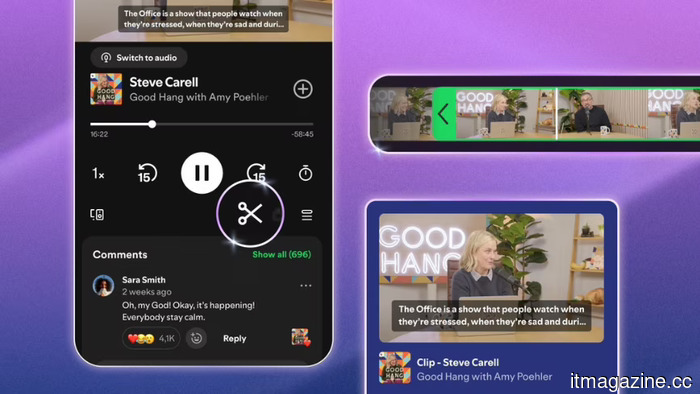 Spotify now enables users to clip and share segments from any podcast.
Spotify introduces Podcast Clips, allowing listeners to cut and share audio snippets from episodes using a new scissors icon, accessible globally on mobile for both free and Premium users.
Spotify now enables users to clip and share segments from any podcast.
Spotify introduces Podcast Clips, allowing listeners to cut and share audio snippets from episodes using a new scissors icon, accessible globally on mobile for both free and Premium users.
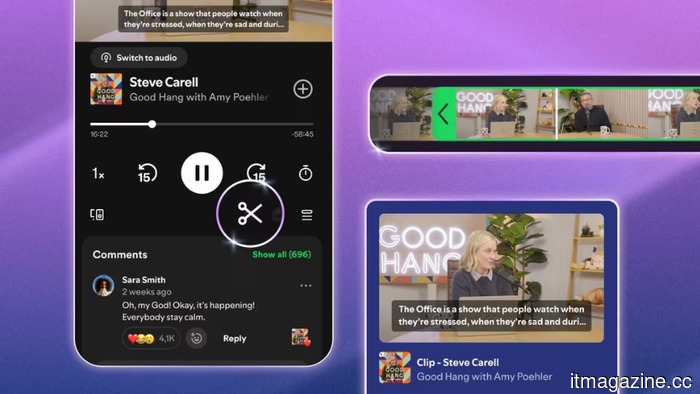 Spotify now enables listeners to clip and share snippets from any podcast.
Spotify introduces Podcast Clips, allowing listeners to cut and share audio snippets from episodes using a new scissors icon, accessible globally on mobile for both free and Premium users.
Spotify now enables listeners to clip and share snippets from any podcast.
Spotify introduces Podcast Clips, allowing listeners to cut and share audio snippets from episodes using a new scissors icon, accessible globally on mobile for both free and Premium users.
 Scammers are profiting from GTA 6 even before Rockstar sells a single unit.
Although GTA 6 is still several months from release, scammers are already taking advantage of the excitement to promote fake beta keys, malware-infested downloads, Android adware, and phishing sites aimed at Rockstar accounts.
Scammers are profiting from GTA 6 even before Rockstar sells a single unit.
Although GTA 6 is still several months from release, scammers are already taking advantage of the excitement to promote fake beta keys, malware-infested downloads, Android adware, and phishing sites aimed at Rockstar accounts.
 A Samsung Galaxy S25 FE exploded during the night, marking it as not the first instance of a Galaxy S25 experiencing such an incident.
A Samsung Galaxy S25 FE ignited while being charged in bed, injuring its owner and sparking new concerns regarding the safety of Samsung's batteries.
A Samsung Galaxy S25 FE exploded during the night, marking it as not the first instance of a Galaxy S25 experiencing such an incident.
A Samsung Galaxy S25 FE ignited while being charged in bed, injuring its owner and sparking new concerns regarding the safety of Samsung's batteries.
 Robinhood enables AI agents to engage in stock trading and utilize credit cards.
Robinhood introduces autonomous stock trading through MCP and a virtual credit card for AI agents that offers 3% cashback, making it the first significant retail brokerage to allow bots to take control.
Robinhood enables AI agents to engage in stock trading and utilize credit cards.
Robinhood introduces autonomous stock trading through MCP and a virtual credit card for AI agents that offers 3% cashback, making it the first significant retail brokerage to allow bots to take control.
 YouTube will now automatically label videos that are generated by AI.
YouTube is transitioning from a system of voluntary creator disclosures to an automatic detection method using AI for videos. This will include clear labels and permanent markers for content created with its tools or validated by C2PA metadata.
YouTube will now automatically label videos that are generated by AI.
YouTube is transitioning from a system of voluntary creator disclosures to an automatic detection method using AI for videos. This will include clear labels and permanent markers for content created with its tools or validated by C2PA metadata.
Robinhood allows AI agents to trade stocks and utilize credit cards.
Robinhood introduces autonomous stock trading through MCP and a virtual credit card for AI agents, offering 3% cashback, making it the first significant retail brokerage to give control to bots.