

Germany and Spain oppose Brussels' proposals to impose a bloc-wide ban on Huawei equipment.
Berlin and Madrid are pushing back against the European Commission's efforts to implement binding legislation regarding Huawei and ZTE, citing the risks of retaliation from Beijing and the expenses associated with developing AI infrastructure. Germany and Spain are at the forefront of the resistance within the European Council to the Commission's draft proposal to prohibit Huawei and ZTE equipment from EU telecom networks at the level of the bloc.
The two countries wish to keep decisions concerning high-risk vendors at the national level and have cautioned that a ban across the EU could provoke a response from Beijing and increase the costs of the AI infrastructure build-out that the bloc has been trying to expedite over the last 18 months. This opposition arises at a challenging time for Brussels, as the Commission has dedicated much of 2026 to transforming its long-held recommendation against Chinese telecom suppliers into enforceable legislation.
In early May, the Commission released a new formal recommendation, which is broader than the initial 2020 version, prompting member states to exclude Huawei and ZTE not just from 5G core networks but from the overall connectivity framework. In January, Executive Vice-President Henna Virkkunen introduced a cybersecurity package that, according to current drafts, would require the removal of designated high-risk supplier components from essential network infrastructure within 36 months after the rules take effect.
Germany and Spain's objections specifically target the binding-legislation stage, rather than the earlier recommendations. The statistics clarify why Berlin's stance is particularly challenging for Brussels, as roughly 60% of 5G radio sites in Germany were still equipped with Huawei technology as of late 2024. Germany has its own domestic phase-out plan, established with Deutsche Telekom, Vodafone, and Telefónica Deutschland, which mandates the removal of critical components from core networks by the end of 2026 and broader elimination from radio access networks by the end of 2029.
From Berlin's perspective, this domestic timeline is the relevant framework. An EU-level binding ban would accelerate this schedule, impose compliance costs that Germany has already partially borne, and eliminate the negotiating flexibility that operators currently utilize to manage their contracts with Huawei.
Spain's situation is notably different. MasOrange opted for Ericsson when securing a six-year 5G standalone core contract in February; however, Telefónica renewed its 5G core agreement with Huawei in late 2024, extending until 2030. Additionally, Spain assigned significant fiber-optic infrastructure contracts to Huawei in the summer of 2025, which the Commission has identified as fostering “dependence on a high-risk supplier in a critical and sensitive area.” A binding EU ban would necessitate the unwinding of current contracts with Spanish operators.
The argument related to AI costs represents a new political dimension in this resistance. Both governments have pointed out that the rollout of AI data centers throughout Europe will require extensive upgrades to telecom networks, a scale that the bloc has yet to address. They argue that excluding Huawei from the supplier pool while simultaneously advocating for a rapid AI infrastructure rollout creates a cost burden that no stakeholder wishes to bear.
Ericsson and Nokia, the leading European alternatives, are already operating at full capacity and setting prices accordingly. Neither capital argues that Huawei is entirely benign; rather, they contend that the Commission's timing forces a dilemma between two of its declared industrial priorities.
Despite Germany and Spain's firm stance, the broader situation appears to be shifting in favor of Brussels. By January 2026, 13 out of 27 member states had enacted specific 5G security measures targeting Huawei and ZTE, up from 11 in early 2024. The trajectory is evident; the pace is where disagreements lie. China’s foreign ministry has explicitly warned that a bloc-wide ban would elicit “countermeasures,” which neither Berlin nor Madrid wishes to provoke, given their current trade vulnerabilities.
The European Council is anticipated to formally review the binding legislation draft in the latter half of 2026. The negotiation will focus on timelines and exemptions rather than core principles, an area where Berlin and Madrid have a legitimate chance of achieving some national flexibility. Brussels will need to assess whether partial compliance is preferable to completely abandoning the proposal.
Other articles
 Airis Labs emerges from stealth mode with $60 million in funding and a proposal focused on video intelligence for defense agencies.
Defence-AI startup Airis Labs has come out of stealth mode with a total funding of $60 million, which includes a Series B round of $31 million led by PSG Equity, and is relocating its scaling operations to Washington DC.
Airis Labs emerges from stealth mode with $60 million in funding and a proposal focused on video intelligence for defense agencies.
Defence-AI startup Airis Labs has come out of stealth mode with a total funding of $60 million, which includes a Series B round of $31 million led by PSG Equity, and is relocating its scaling operations to Washington DC.
 Vincent Bolloré turns down Ackman's $64 billion offer for Universal Music.
Vincent Bolloré has officially declined Bill Ackman's $64 billion offer from Pershing Square for Universal Music Group, bringing an end to the biggest take-private proposal in the history of the music industry.
Vincent Bolloré turns down Ackman's $64 billion offer for Universal Music.
Vincent Bolloré has officially declined Bill Ackman's $64 billion offer from Pershing Square for Universal Music Group, bringing an end to the biggest take-private proposal in the history of the music industry.
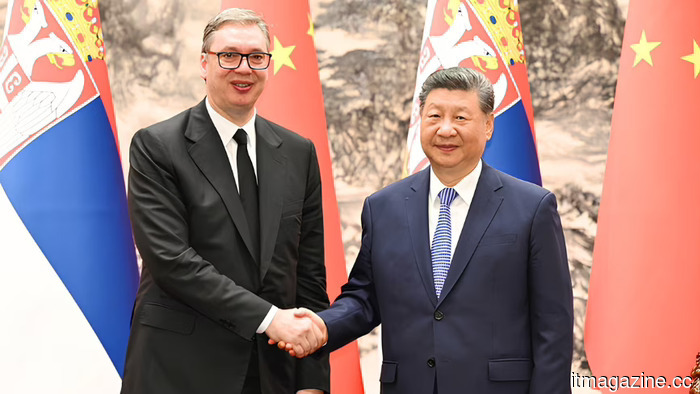 Vučić traveled to Beijing for a $1.1 billion Chinese investment, as Belgrade was engulfed in chaos.
China's $1.1 billion investment in AI and robotics in Serbia comes just four days after the biggest protests against Vučić in months. Brussels has not yet formulated a consistent response to either situation.
Vučić traveled to Beijing for a $1.1 billion Chinese investment, as Belgrade was engulfed in chaos.
China's $1.1 billion investment in AI and robotics in Serbia comes just four days after the biggest protests against Vučić in months. Brussels has not yet formulated a consistent response to either situation.
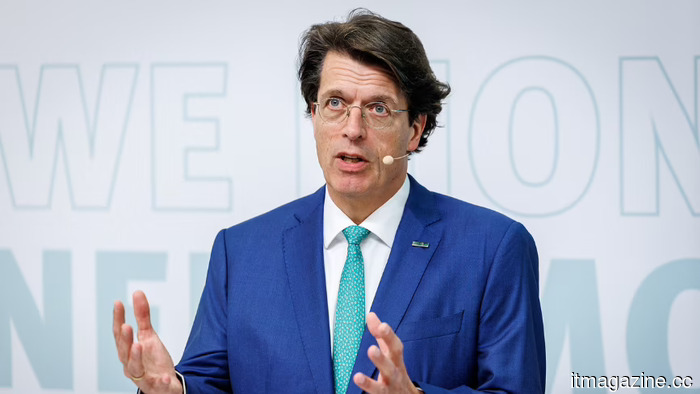 Schaeffler and Spire collaborate to construct sovereign European satellites in Germany.
Schaeffler and Spire Global have entered into a Memorandum of Understanding (MoU) to create sovereign-European space hardware and satellite systems in Germany, expanding Spire's Munich facility for defense clients.
Schaeffler and Spire collaborate to construct sovereign European satellites in Germany.
Schaeffler and Spire Global have entered into a Memorandum of Understanding (MoU) to create sovereign-European space hardware and satellite systems in Germany, expanding Spire's Munich facility for defense clients.
 Germany and Spain are opposing Brussels' proposals to impose a ban on Huawei equipment throughout the entire bloc.
Germany and Spain are opposing the European Commission's proposed binding legislation concerning Huawei and ZTE, pointing to the potential risk of retaliation from Beijing and the expenses related to the development of European AI infrastructure.
Germany and Spain are opposing Brussels' proposals to impose a ban on Huawei equipment throughout the entire bloc.
Germany and Spain are opposing the European Commission's proposed binding legislation concerning Huawei and ZTE, pointing to the potential risk of retaliation from Beijing and the expenses related to the development of European AI infrastructure.
 Spotify now allows users to capture and share segments from any podcast.
Spotify introduces Podcast Clips, which allows listeners to cut and share audio snippets from episodes using a new scissors icon. This feature is accessible worldwide on mobile for both free and Premium users.
Spotify now allows users to capture and share segments from any podcast.
Spotify introduces Podcast Clips, which allows listeners to cut and share audio snippets from episodes using a new scissors icon. This feature is accessible worldwide on mobile for both free and Premium users.
Germany and Spain oppose Brussels' proposals to impose a bloc-wide ban on Huawei equipment.
Germany and Spain are opposing the European Commission's proposed mandatory regulations concerning Huawei and ZTE, pointing to the potential for retaliation from Beijing and the expenses associated with developing European AI infrastructure.