

Introducing the speakers: Who will be on stage at the gathering organized by TNW, Oneflow, and Flexas in Amsterdam?
Four guests, one question: when AI becomes ubiquitous, what will distinguish winning SaaS companies? This question will be the focus of the panel on June 3 in Amsterdam.
At some point, between the releases of the third and fourth AI features of the quarter, even the most passionate founder may start to doubt whether anyone is truly purchasing these products.
This uncertainty is the reason the panel at the TNW, Oneflow & Flexas Gathering Amsterdam on June 3 is framed around a single, challenging question: in a world where everyone has AI, what will enable SaaS companies to succeed?
Today, we are announcing the four guests who will tackle this question, moderated by Cristian Dina, co-founder of Tekpon and CRO at TNW, who has interviewed hundreds of SaaS founders and typically knows everyone in the room before they arrive.
The essence of the discussion is as follows: generative AI has transitioned from being merely an added feature to a core component. The crucial work that will determine which companies thrive in the coming years will shift from simply adding an assistant to a sidebar to fundamentally restructuring products, go-to-market strategies, and operations based on the premise that the AI model is integral to the company rather than an add-on.
Three main themes will guide the discussion: which functions within a SaaS company are redesigned first, which are addressed last, and which may become obsolete. What elements will form a competitive advantage in an AI-driven environment, and what will become commonplace? How will AI influence pricing, packaging, and the unit economics that investors continue to evaluate in their board presentations? Woven throughout is a fourth question that many founders are quietly contemplating: how can one avoid delivering demo AI that impresses in a thirty-second clip but fails to create genuine customer value in production?
Who will be on the panel?
- **Sebastian Mertens, Head of Applied AI at Make**. Make is a no-code automation platform that has rapidly gained popularity over the past two years among non-technical teams utilizing large language models. Mertens oversees applied AI initiatives there: the agents, toolkits, and elements that enable sales operations leads to effectively deploy models. Prior to Make, he co-founded Wemakefuture, a German automation consultancy, providing him insight into the reality of AI-native product surfaces after the initial excitement has faded.
- **Masha Moisseyeva, Managing Director of DutchBasecamp**. DutchBasecamp is an Amsterdam-based program assisting founders in entering new markets, a task that becomes significantly more complex when all competitors have rolled out their own versions of similar AI features recently. Moisseyeva is also a two-time founder; her role at DBC, which recently partnered with ACE, grants her a unique perspective on the European startup ecosystem: identifying who is hiring, consolidating, or running low on runway. She is expected to guide the conversation regarding operations and expansion.
- **Hugo Pereira, fractional CGO/CMO and former Chief Growth Officer at EVBox**. Pereira spent seven years at EVBox and successfully scaled the business from approximately five million euros in revenue to over a hundred million while expanding the team from ten to seven hundred. Now serving as a fractional operator, he advises B2B SaaS and deep-tech founders and is the author of "Teams in Hell," focusing on organizational dysfunction that often grows faster than revenue. In a discussion centered on AI-native go-to-market strategies, he is likely to make candid remarks about pipeline coverage ratios.
- **Sako Arts, CTO at Bright Cape and co-founder of FruitPunch AI**. Arts brings a technical perspective to the panel. As CTO of Bright Cape, a Dutch data and AI consultancy, and co-founder of FruitPunch AI, a global AI-for-Good community, he connects engineers with practical challenges in healthcare, conservation, and climate issues. His recent experience building production AI systems for organizations that cannot afford errors provides vital insight into the distinction between what AI can demonstrate and what it can deliver in practice.
Together, these four panelists represent various areas that an AI-native company needs to revamp: product (Mertens), growth (Pereira), operations and expansion (Moisseyeva), and the foundational technical architecture (Arts). Dina's role as moderator will be to encourage diverse perspectives rather than allow consensus to form too quickly.
Two years after the initial wave of generative AI launches, the conversation surrounding SaaS has evolved. The earlier debate about whether established companies would prevail or if a new generation of AI-native firms would dominate has transitioned to a more nuanced discussion.
Founders are no longer questioning if they should use AI, but rather which aspects of their company to redesign, the order in which to do so, and the timeline for these changes. This conversation is better suited for an audience of forty rather than four hundred. The June 3 gathering is designed for a more intimate setting, running from 6:00 PM to 7:30
Other articles
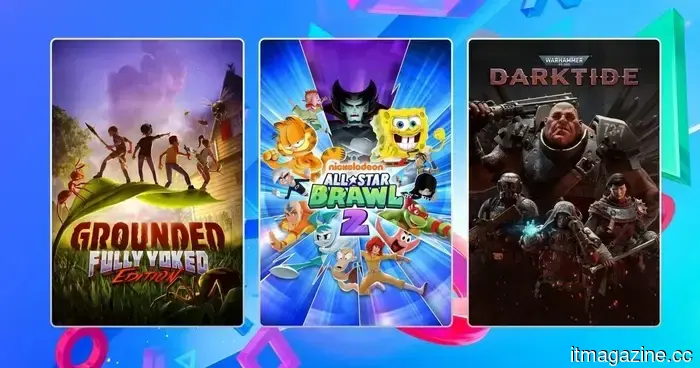 PlayStation Plus subscribers can expect a month focused on co-op games in June following the increase in prices.
PlayStation Plus will offer a co-op-focused lineup for June following the price increase, featuring Grounded, Darktide, and Nickelodeon All-Star Brawl 2 as the highlights.
SK Hynix enters the trillion-dollar club, boosted by orders for Nvidia's HBM4.
On Wednesday, SK Hynix's market capitalization exceeded $1 trillion during trading in Seoul, positioning the South Korean memory company as the third chip manufacturer to reach this milestone, following Nvidia and TSMC.
PlayStation Plus subscribers can expect a month focused on co-op games in June following the increase in prices.
PlayStation Plus will offer a co-op-focused lineup for June following the price increase, featuring Grounded, Darktide, and Nickelodeon All-Star Brawl 2 as the highlights.
SK Hynix enters the trillion-dollar club, boosted by orders for Nvidia's HBM4.
On Wednesday, SK Hynix's market capitalization exceeded $1 trillion during trading in Seoul, positioning the South Korean memory company as the third chip manufacturer to reach this milestone, following Nvidia and TSMC.
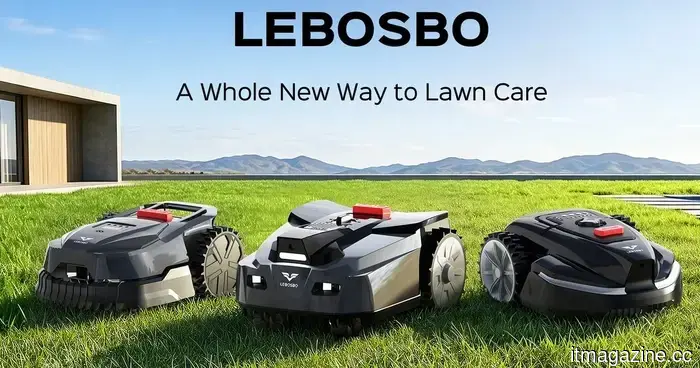 My lawn used to be an endless weekend task until the LEBOSBO V3 came along.
Many homeowners aspire to have a well-maintained and polished outdoor area, but the effort involved in achieving that ideal lawn is frequently underestimated. From tiring weekend mowing to ongoing maintenance, the task can rapidly become daunting. The LEBOSBO V3 addresses this challenge with smart automation, wireless convenience, and a much more hands-off mowing process that demands minimal manual involvement.
SpaceX secures a $2.29 billion contract from the Space Force for the Golden Dome infrastructure.
The US Space Force has granted SpaceX $2.29 billion to develop the Space Data Network Backbone on Starshield satellites, which will serve as the communications backbone for the Golden Dome missile defense system.
Apple and Google are advocating for court supervision of Canada’s lawful-access legislation.
Apple and Google have requested that Parliament modify Canada’s lawful-access Bill C-22 to mandate a court review prior to allowing ministers to enforce changes to encryption.
My lawn used to be an endless weekend task until the LEBOSBO V3 came along.
Many homeowners aspire to have a well-maintained and polished outdoor area, but the effort involved in achieving that ideal lawn is frequently underestimated. From tiring weekend mowing to ongoing maintenance, the task can rapidly become daunting. The LEBOSBO V3 addresses this challenge with smart automation, wireless convenience, and a much more hands-off mowing process that demands minimal manual involvement.
SpaceX secures a $2.29 billion contract from the Space Force for the Golden Dome infrastructure.
The US Space Force has granted SpaceX $2.29 billion to develop the Space Data Network Backbone on Starshield satellites, which will serve as the communications backbone for the Golden Dome missile defense system.
Apple and Google are advocating for court supervision of Canada’s lawful-access legislation.
Apple and Google have requested that Parliament modify Canada’s lawful-access Bill C-22 to mandate a court review prior to allowing ministers to enforce changes to encryption.
Introducing the speakers: Who will be on stage at the gathering organized by TNW, Oneflow, and Flexas in Amsterdam?
Four guests, one question: what will distinguish a SaaS company in a world where everyone has AI? Introducing the panel for the gathering on June 3, 2026, in Amsterdam.