
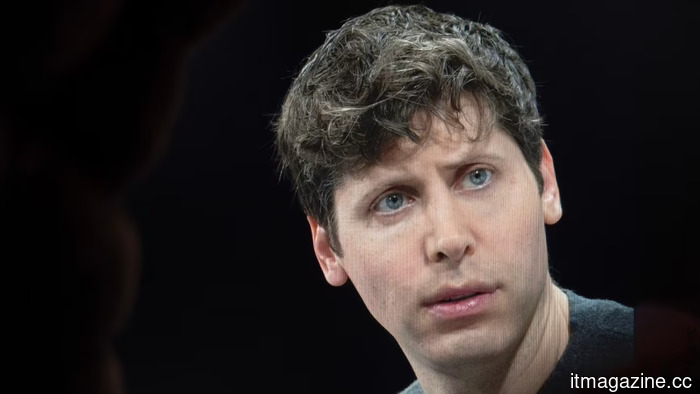
Sam Altman believes that an AI-driven job apocalypse is improbable.
The head of OpenAI, while speaking in the Asia-Pacific region, reassessed the more extreme forecasts of a widespread employment crisis. Current data appears to support his perspective.
On Tuesday, OpenAI CEO Sam Altman stated that artificial intelligence is not expected to cause the widespread job collapse often referred to in the industry as the jobs apocalypse, although he acknowledged that certain job categories, such as customer support, could largely vanish.
These comments, reported by Reuters from his Asia-Pacific engagement, reflect a notable shift in tone from executives who were previously most vocal about the disruptions AI might bring to the labor market. Altman has spent a significant part of the past year asserting that customer service positions are "totally, totally gone" in the near future, and he mentioned that traditional skills in the workforce now have a lifespan of two to three years.
The newer perspective, which he has echoed in various appearances across India, Japan, and South Korea over the last few months, suggests that while there will be considerable changes within specific sectors, there will not be an overall collapse in employment across the economy. This change in narrative aligns with the lack of macroeconomic indicators that would typically signal a real jobs apocalypse.
The Yale Budget Lab, which has monitored the impact of AI on U.S. labor markets since the introduction of ChatGPT, reported no significant alterations in job composition or unemployment duration through March 2026 for positions highly exposed to AI.
Similarly, data from Anthropic included in February's report did not alter this assessment. The Brookings Institution reached a comparable conclusion earlier this year, stating that there is no apocalypse on the horizon, at least not for now. Altman has focused more on the "not yet" aspect.
During the India AI Impact Summit in February, he told CNBC-TV18 that some businesses were participating in “AI washing,” attributing layoffs to AI that they would have implemented regardless, even though actual job displacement is beginning to occur in specific roles.
He has been particularly clear about certain job categories: he believes that customer service roles conducted via phone or computer will be replaced and performed more efficiently by AI within the next few years.
Coding practices have already been transformed, with engineers spending less time on writing code and more on architectural design, system development, and reviewing AI-generated outputs.
This softer macroeconomic framing is not completely at odds with OpenAI’s policy initiatives. Earlier in 2026, the company released a 13-page policy document advocating for taxes on automated labor, a national public wealth fund partly funded by AI companies, and trials of a 32-hour workweek, presupposing significant disruptions in the labor market are on the way.
Altman’s remarks in May are better understood as a refinement of the timing and nature of that disruption, rather than a rejection of it: less of a sudden break and more of a gradual reorganization where some job categories disappear, others evolve significantly, and overall employment figures might not fluctuate dramatically.
Altman’s recent travel schedule has aligned with his audience for this message. He visited Tokyo in the spring to meet with SoftBank CEO Masayoshi Son and Japanese Prime Minister Shigeru Ishiba, followed by a stop in Seoul for a developer event held by OpenAI. His engagements in the Asia-Pacific region, in general, emphasized the narrative that "new jobs will emerge" more than his U.S. appearances.
The Yale Budget Lab is set to release its next data update in the coming weeks. Until then, the overall labor statistics and Altman's interpretation of them remain relatively stable for the time being.
Other articles
 According to Handelsblatt, Google is expected to receive a significant EU fine amounting to hundreds of millions of euros before the summer.
According to Handelsblatt, the European Commission is set to impose its largest fine to date under the Digital Markets Act, focusing on Google for self-preferencing in search results.
Samsung's union representing non-chip workers is taking legal action to stop the bonus vote.
Samsung’s Donghaeng union has submitted an injunction to the Suwon District Court to stop a vote that grants chip workers 600 million won while providing minimal compensation to others.
According to Handelsblatt, Google is expected to receive a significant EU fine amounting to hundreds of millions of euros before the summer.
According to Handelsblatt, the European Commission is set to impose its largest fine to date under the Digital Markets Act, focusing on Google for self-preferencing in search results.
Samsung's union representing non-chip workers is taking legal action to stop the bonus vote.
Samsung’s Donghaeng union has submitted an injunction to the Suwon District Court to stop a vote that grants chip workers 600 million won while providing minimal compensation to others.
 A developer created Quick Share from the ground up for phones that Google overlooked, and it functions effectively.
A developer has created a functional Quick Share solution for Android devices lacking Google Play Services.
A developer created Quick Share from the ground up for phones that Google overlooked, and it functions effectively.
A developer has created a functional Quick Share solution for Android devices lacking Google Play Services.
 A developer created Quick Share from the ground up for phones that Google overlooked, and it genuinely functions.
A developer has created a functional Quick Share implementation for Android devices that lack Google Play Services.
A developer created Quick Share from the ground up for phones that Google overlooked, and it genuinely functions.
A developer has created a functional Quick Share implementation for Android devices that lack Google Play Services.
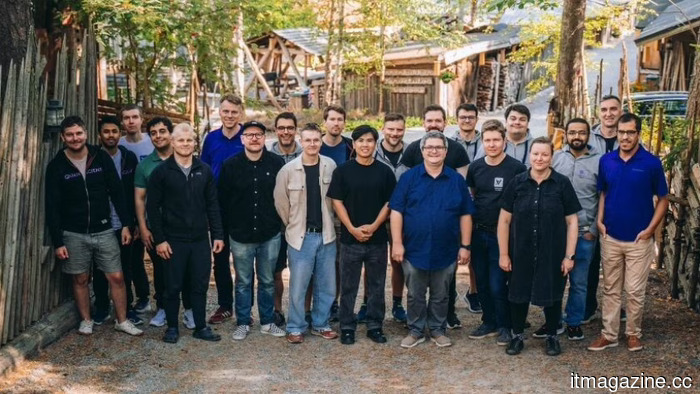 Finland's Quanscient secures €10 million to develop a simulation platform that integrates quantum and AI technologies.
Finland's Quanscient has completed a €10M Series A financing round, led by Denmark's 55 North and Austria's B&C Group, to expand its cloud-based multiphysics platform for hardware engineering.
Finland's Quanscient secures €10 million to develop a simulation platform that integrates quantum and AI technologies.
Finland's Quanscient has completed a €10M Series A financing round, led by Denmark's 55 North and Austria's B&C Group, to expand its cloud-based multiphysics platform for hardware engineering.
 Sony may not be producing another PSP, but Zara has brought the handheld back to life as a crossbody bag.
Zara unexpectedly released a crossbody bag inspired by the PSP 1000, featuring a silicone console face, a PlayStation button strap, and a vinyl display panel, priced at $35.90.
Sony may not be producing another PSP, but Zara has brought the handheld back to life as a crossbody bag.
Zara unexpectedly released a crossbody bag inspired by the PSP 1000, featuring a silicone console face, a PlayStation button strap, and a vinyl display panel, priced at $35.90.
Sam Altman believes that an AI-driven job apocalypse is improbable.
Sam Altman informed an audience in the Asia-Pacific region that a job crisis caused by AI is improbable, despite the decline of roles in customer service and other sectors.