
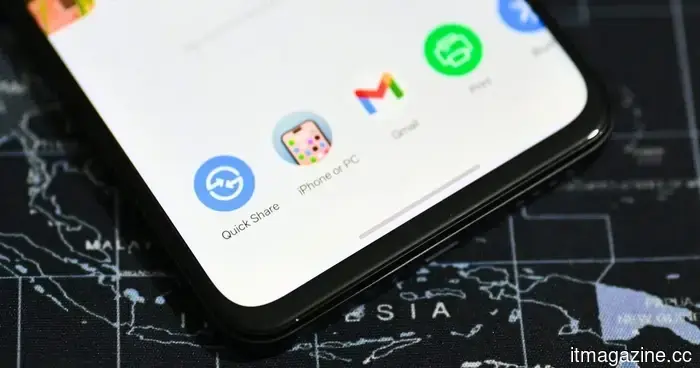
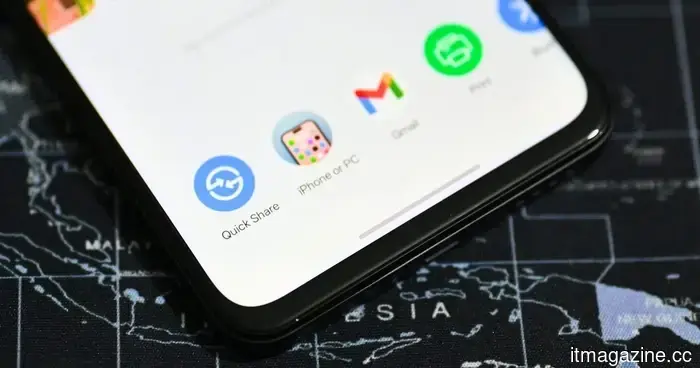
A developer created Quick Share from the ground up for phones that Google overlooked, and it genuinely functions.
Bada provides a functional file-sharing solution for millions of Android devices that are unable to access Google's Quick Share.
Google’s Quick Share is a feature that often goes unnoticed until you find yourself needing it on a device that lacks it. This is the constant situation for Huawei device users since they do not have access to Google Play services, and it also affects anyone utilizing the Chinese version of Android.
However, a developer named Kyujin-cho has recently released an open-source Android application called Bada on GitHub, which seems to address this issue. It implements Google’s Quick Share protocol independently, bypassing the need for Google Play Services.
What functionality does Bada provide?
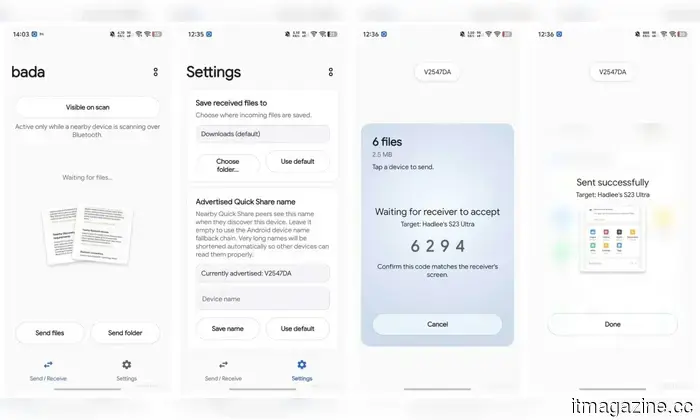
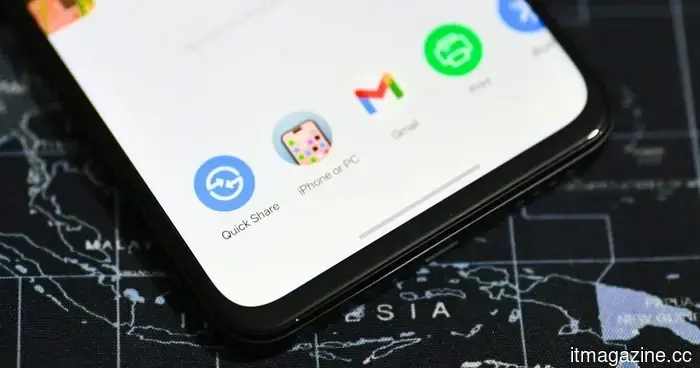
After Bada is installed on a device without Quick Share, it can fully communicate with other Quick Share-enabled Android devices within the same Wi-Fi network. The familiar four-digit PIN confirmation process appears on both the sending and receiving devices.
Through this application, users can send files from any Android app (using the system share sheet), receive files into a designated folder, and even transfer entire folders while maintaining the directory structure. Similar to Quick Share, the app uses Wi-Fi LAN for transfers and employs BLE-based identification for devices running stock Android and Samsung’s One UI.
Initial testing has verified that Bada is compatible with the Galaxy S26 Ultra and Z Fold 7 through BLE GATT bootstrap. It lists possible targets like NearDrop on macOS and Quick Share on Windows, though these have yet to be tested.
Is it advisable to use it right now?
Based on hands-on testing from Android Authority, the user experience while sharing files from a Quick Share device to a Bada device isn’t entirely smooth, with Windows transfers failing completely.
The project currently holds 10 stars and one fork on GitHub, indicating it's still in the early stages of development. Being open-source, the code is accessible for those with technical skills who wish to verify its operations.
The app also confirms that transfers utilize Quick Share’s encryption method. The developer has plans for future interoperability with NearDrop and Windows Quick Share.
In my view, while Bada may not replace Quick Share for most users, it offers a viable alternative for Huawei users, the Chinese Android population that Google has overlooked, or any Android user with a device that doesn’t come with Quick Share pre-installed—it’s the closest anyone has come to creating a real solution for these users.

Other articles
 A reveal for Hogwarts Legacy 2 might be in the works right beneath our awareness.
A new rumor suggests that Hogwarts Legacy 2 might be announced during PlayStation’s State of Play on June 2. However, this information originates from a leaker known for a mixed history of accuracy.
Quanscient from Finland has secured €10 million to develop a simulation platform that integrates quantum technology and AI.
Quanscient from Finland has secured a €10M Series A funding round, spearheaded by Denmark's 55 North and Austria's B&C Group, to expand its cloud multiphysics platform aimed at hardware engineering.
A reveal for Hogwarts Legacy 2 might be in the works right beneath our awareness.
A new rumor suggests that Hogwarts Legacy 2 might be announced during PlayStation’s State of Play on June 2. However, this information originates from a leaker known for a mixed history of accuracy.
Quanscient from Finland has secured €10 million to develop a simulation platform that integrates quantum technology and AI.
Quanscient from Finland has secured a €10M Series A funding round, spearheaded by Denmark's 55 North and Austria's B&C Group, to expand its cloud multiphysics platform aimed at hardware engineering.
 Sam Altman believes that an AI-driven job apocalypse is improbable.
Sam Altman informed an audience in the Asia-Pacific region that a job crisis caused by AI is improbable, despite the decline of roles in customer service and other sectors.
Samsung's union representing non-chip workers is taking legal action to stop the bonus vote.
Samsung’s Donghaeng union has submitted an injunction to the Suwon District Court to stop a vote that grants chip workers 600 million won while providing minimal compensation to others.
Sam Altman believes that an AI-driven job apocalypse is improbable.
Sam Altman informed an audience in the Asia-Pacific region that a job crisis caused by AI is improbable, despite the decline of roles in customer service and other sectors.
Samsung's union representing non-chip workers is taking legal action to stop the bonus vote.
Samsung’s Donghaeng union has submitted an injunction to the Suwon District Court to stop a vote that grants chip workers 600 million won while providing minimal compensation to others.
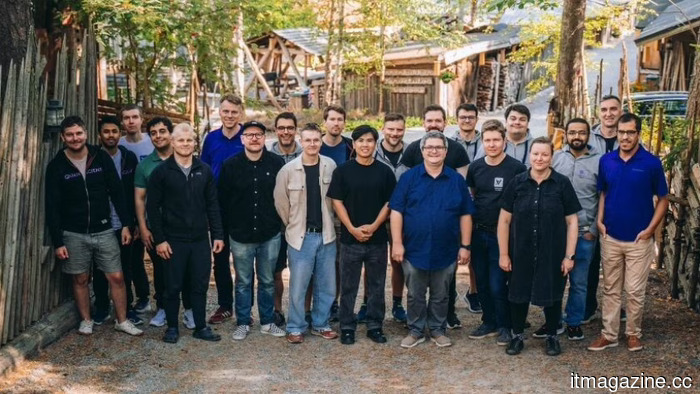 Finland's Quanscient secures €10 million to develop a simulation platform that integrates quantum and AI technologies.
Finland's Quanscient has completed a €10M Series A financing round, led by Denmark's 55 North and Austria's B&C Group, to expand its cloud-based multiphysics platform for hardware engineering.
Finland's Quanscient secures €10 million to develop a simulation platform that integrates quantum and AI technologies.
Finland's Quanscient has completed a €10M Series A financing round, led by Denmark's 55 North and Austria's B&C Group, to expand its cloud-based multiphysics platform for hardware engineering.
 A developer created Quick Share from the ground up for phones that Google overlooked, and it functions effectively.
A developer has created a functional Quick Share solution for Android devices lacking Google Play Services.
A developer created Quick Share from the ground up for phones that Google overlooked, and it functions effectively.
A developer has created a functional Quick Share solution for Android devices lacking Google Play Services.
A developer created Quick Share from the ground up for phones that Google overlooked, and it genuinely functions.
A developer has created a functional Quick Share implementation for Android devices that lack Google Play Services.