

Brussels intends to reserve two-thirds of the EU mobile-satellite spectrum for companies based in Europe.
The proposal anticipated to be revealed on Wednesday would allow Starlink and Amazon’s Kuiper to bid only for the remaining third of the European Union’s 2 GHz mobile-satellite band. According to a Reuters report on Tuesday from sources familiar with the proposal, the European Commission is set to allocate two-thirds of the future mobile-satellite-services spectrum for European operators, limiting Starlink, Amazon’s Project Kuiper, and other non-EU entities to the remaining portion.
Details are expected to be finalized during a meeting of commissioners in Brussels on Wednesday, although sources indicated that the plan could still change prior to the formal announcement. The relevant spectrum is within the 2 GHz mobile-satellite-services (MSS) band, specifically the 30 MHz frequency pairs from 1980-2010 MHz and 2170-2200 MHz, which facilitate connections for mobile devices and vehicles in areas lacking terrestrial mobile network coverage. Current licenses, issued in 2009 to Inmarsat (now Viasat) and Solaris (now EchoStar), expire in May 2027. The allocation post-2027 is the focus of Wednesday’s decision. EU member states, collaborating through the Commission, manage the band in a harmonized manner, allowing for this bloc-wide reservation.
The two-thirds allocation is the most direct measure of industrial policy that the Commission has implemented in the space sector thus far. The reserved portion would be designated for companies registered in the EU, with the United Kingdom and Norway also eligible to participate in bidding. The operators behind IRIS2, the 290-satellite multi-orbit constellation being developed by the SpaceRISE consortium, which includes SES, Eutelsat, and Hispasat, are positioned to benefit. Among the contractors are Airbus, Thales Alenia Space, and OHB. The 12-year IRIS2 concession was signed in December 2024 with an estimated cost of €10.5 billion, approximately €6.5 billion of which is sourced from public funds. Government services are set to commence in 2030.
This decision is part of a broader European initiative aimed at achieving what Brussels refers to as “strategic autonomy” in space, driven by two interconnected concerns: the reliance on Starlink, exacerbated by Elon Musk’s public threats to discontinue service in Ukraine and his political alignment with Donald Trump’s second presidency; and a general trend in European frontier-tech policy established in 2026, which has seen Brussels gradually limit US companies' access to sensitive categories, spanning from cybersecurity AI tools to cloud sovereignty and chip manufacturing equipment. The 2 GHz reservation is a clear indication that satellite communications are included in this strategy.
On the proposed terms, Starlink and Kuiper are not entirely excluded. The remaining one-third of the band would be available for non-EU bidders through a standard competitive selection process. Starlink’s direct-to-cell service, already operational in the US, would benefit from European MSS spectrum to expand its service in Europe. Kuiper, still in the constellation deployment phase, has been preparing for direct-to-device services to generate revenue towards the latter half of the decade.
Viasat and EchoStar, the existing license holders, find themselves in a challenging situation. Being US-listed, they would, under the proposed terms, fall into the non-EU third despite currently holding the spectrum. Viasat has spent the last 18 months advocating for an extension of its existing S-band spectrum, primarily used to operate the European Aviation Network in conjunction with Deutsche Telekom.
Whether incumbents can gain access to the European portion through joint ventures or corporate restructuring remains a question that Wednesday’s announcement may not completely address. The 2 GHz band is too limited to independently support a service on the scale of Starlink. However, it does offer a harmonized, interference-protected, regulated layer that mobile carriers prefer for their direct-to-device traffic. Reserving two-thirds of this layer for European companies restricts the addressable market for Starlink and Kuiper in Europe to one-third. The broader impact is structural rather than absolute: Brussels aims to favorably support European D2D services, rather than entirely precluding American services.
The Commission is set to release the formal proposal on Wednesday afternoon, Brussels time.
Other articles
 Brussels intends to set aside two-thirds of the EU mobile-satellite spectrum specifically for European companies.
The EU plans to allocate two-thirds of its future 2 GHz mobile-satellite-services spectrum for European companies, allowing Starlink and Kuiper to compete for the remaining one-third.
Brussels intends to set aside two-thirds of the EU mobile-satellite spectrum specifically for European companies.
The EU plans to allocate two-thirds of its future 2 GHz mobile-satellite-services spectrum for European companies, allowing Starlink and Kuiper to compete for the remaining one-third.
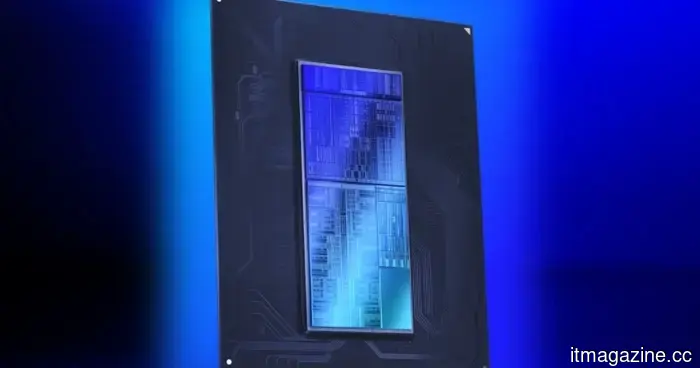 An Intel leak forecasts the arrival of the new Nova Lake Edge processors featuring an unusual core configuration.
Intel's Nova Lake Edge is said to exclude P-cores altogether, opting instead for eight E-cores and 12 Xe graphics cores.
An Intel leak forecasts the arrival of the new Nova Lake Edge processors featuring an unusual core configuration.
Intel's Nova Lake Edge is said to exclude P-cores altogether, opting instead for eight E-cores and 12 Xe graphics cores.
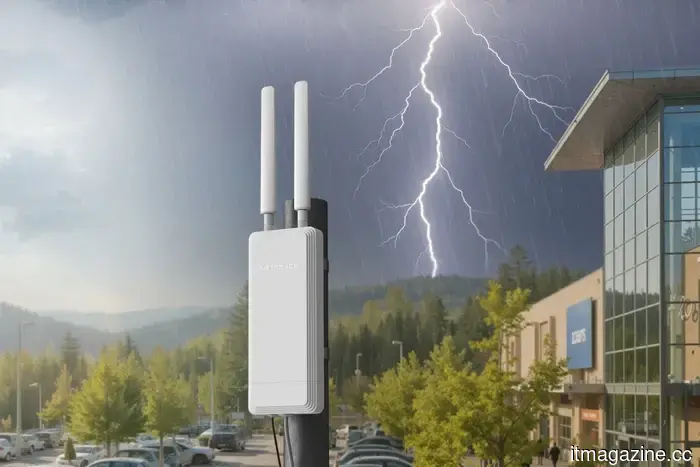 Netcraze has introduced Stellar 6 - an outdoor Wi-Fi 6 access point with PoE support.
The device expands the capabilities of the Netcraze ecosystem in professional scenarios where network equipment requires stable operation outdoors across a wide temperature range and under the influence of adverse weather conditions.
Netcraze has introduced Stellar 6 - an outdoor Wi-Fi 6 access point with PoE support.
The device expands the capabilities of the Netcraze ecosystem in professional scenarios where network equipment requires stable operation outdoors across a wide temperature range and under the influence of adverse weather conditions.
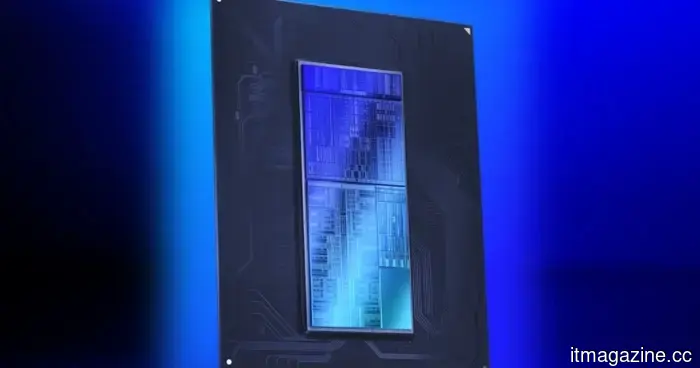 An Intel leak suggests that the forthcoming Nova Lake Edge processors will feature an unusual core configuration.
Intel's Nova Lake Edge is said to be omitting P-cores altogether, opting instead for eight E-cores and 12 Xe graphics cores.
An Intel leak suggests that the forthcoming Nova Lake Edge processors will feature an unusual core configuration.
Intel's Nova Lake Edge is said to be omitting P-cores altogether, opting instead for eight E-cores and 12 Xe graphics cores.
 Drew Houston, the founder of Dropbox, has resigned from his position as CEO.
Drew Houston resigns as CEO of Dropbox after 19 years at the helm. Ashraf Alkarmi, a former executive at Vimeo and Amazon, is set to lead a company whose market capitalization has decreased by 50% since 2018.
Drew Houston, the founder of Dropbox, has resigned from his position as CEO.
Drew Houston resigns as CEO of Dropbox after 19 years at the helm. Ashraf Alkarmi, a former executive at Vimeo and Amazon, is set to lead a company whose market capitalization has decreased by 50% since 2018.
 Dropbox co-founder Drew Houston resigns from his position as CEO.
Drew Houston has resigned as CEO of Dropbox after 19 years. Ashraf Alkarmi, a past executive at Vimeo and Amazon, will succeed him at a company whose market capitalization has decreased by half since 2018.
Dropbox co-founder Drew Houston resigns from his position as CEO.
Drew Houston has resigned as CEO of Dropbox after 19 years. Ashraf Alkarmi, a past executive at Vimeo and Amazon, will succeed him at a company whose market capitalization has decreased by half since 2018.
Brussels intends to reserve two-thirds of the EU mobile-satellite spectrum for companies based in Europe.
The EU plans to allocate two-thirds of its upcoming 2 GHz mobile-satellite-services spectrum exclusively for European companies, allowing Starlink and Kuiper to compete for the remaining one-third.