
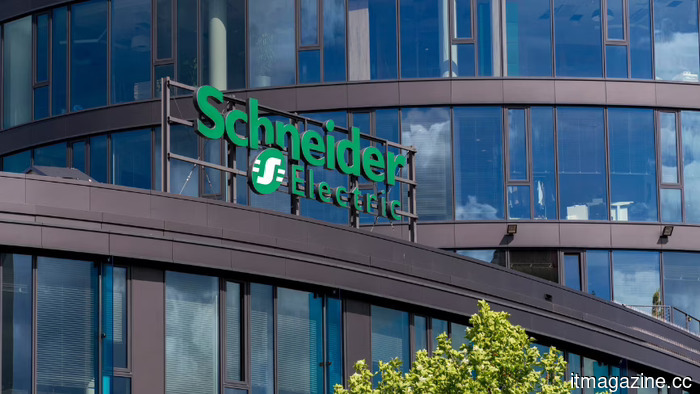
Schneider Electric anticipates that its data center operations in India will surpass the growth of the rest of the company.
Based on a current installed capacity of 1.5 gigawatts and a national strategy aiming for six to eight gigawatts, the French infrastructure group anticipates that its Indian division will become its largest operation within five years. Schneider Electric projects that its data centre business in India will expand at a faster rate than the overall company and outpace its core electrification and automation sectors that have been crucial to its success in other markets.
Deepak Sharma, the managing director and zone president for Greater India, mentioned to Reuters on Monday that this business unit could evolve into Schneider's largest segment within three to five years, driven by India's plans to scale up from roughly 1.5 gigawatts of installed data centre capacity to between six and eight gigawatts. This perspective aligns with what Sharma shared with Indian media earlier this spring. In an exclusive interview with BusinessToday in April, he characterized the opportunity as "exponential," highlighting that while data centres are not currently Schneider's leading sector in India, generation, data centres, and residential sectors are poised to spearhead the next growth phase.
Globally, around 30% of Schneider's revenue—approximately €40 billion annually—already originates from data centres. The scenario in India is noteworthy, similar to the country's larger narrative on AI infrastructure. India generates and consumes about 20% of the global data while accounting for merely 3% of the world's data centre capacity, a disparity that has triggered a series of commitments from hyperscalers and domestic players: Google's $15 billion AI hub in Visakhapatnam, Adani Group's $100 billion ten-year expansion, as well as Microsoft's and Amazon's multi-billion dollar initiatives in India.
Earlier this year, Larsen & Toubro declared a partnership with Nvidia to construct a sovereign AI factory in Chennai. All these projects represent potential clients for Schneider or are already part of its clientele. Over the past year, Schneider has been preparing for this growth. Last year, the company acquired the remaining 35% stake in its Indian subsidiary, SEIPL, from Temasek for €5.5 billion, a move aimed at accelerating local decision-making.
India is now Schneider's third-largest market, employing about 38,000 people, operating 31 factories, and exporting to over 30 countries, including the United States. The company has indicated that the buyout will increase its financing costs by approximately €150 million by 2026. The overall figures illustrate the urgency on both sides. Schneider's Q1 2026 revenue grew organically by 11.2% to €9.77 billion, with the energy management segment that provides power and cooling for data centres rising nearly 13%.
The combined capital expenditure plans for AI by major US hyperscalers are projected to surpass $650 billion, with a significant portion expected to be long-term orders for the grid-to-rack power equipment that Schneider specializes in. India’s unique contribution to this trend is influenced by geographical factors and cost efficiency; Sharma noted that deployment costs per megawatt are at least 30% lower than the global average, encouraging developers to move beyond the traditional clusters of Mumbai, Chennai, Delhi, and Bengaluru into tier-two and tier-three cities.
Edge sites, tailored for the low-latency inference workloads generated by advances in AI, represent the next surge in capacity. Familiar constraints persist, with Sharma identifying the ongoing costs of copper and silver—materials heavily used in Schneider products—as ongoing market pressures. He also mentioned that a prolonged conflict in West Asia could exacerbate issues related to plastics and transportation, while power supply, a critical factor behind every AI data centre announcement, was not specifically addressed.
Essentially, Schneider is betting on the premise that India's 1.5 gigawatts will grow to six to eight gigawatts within the decade, that a significant portion will be constructed, and that the supply chain will rely on equipment suppliers like itself. The coming quarters will reveal if demand aligns with the multitude of announcements made.
Other articles
 On the Vatican stage, Chris Olah from Anthropic states that AI cannot be guided solely by AI laboratories.
During the launch of Pope Leo XIV's first encyclical at the Vatican, Anthropic co-founder Chris Olah stated that AI cannot be directed solely by leading research labs.
On the Vatican stage, Chris Olah from Anthropic states that AI cannot be guided solely by AI laboratories.
During the launch of Pope Leo XIV's first encyclical at the Vatican, Anthropic co-founder Chris Olah stated that AI cannot be directed solely by leading research labs.
 From the Vatican platform, Anthropic's Chris Olah states that artificial intelligence cannot be directed solely by AI laboratories.
During the Vatican event for the release of Pope Leo XIV's inaugural encyclical, Chris Olah, co-founder of Anthropic, emphasized that AI cannot be guided solely by leading laboratories.
From the Vatican platform, Anthropic's Chris Olah states that artificial intelligence cannot be directed solely by AI laboratories.
During the Vatican event for the release of Pope Leo XIV's inaugural encyclical, Chris Olah, co-founder of Anthropic, emphasized that AI cannot be guided solely by leading laboratories.
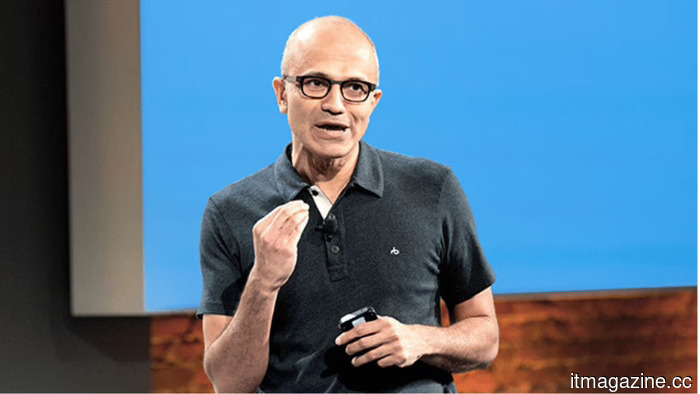 Microsoft's subtle Claude Code retreat and the true expense of enterprise AI
Microsoft is reducing Claude Code licenses within its main product teams. The motivation isn't strategic; it's financial. Has the AI coding experiment come to an end?
Microsoft's subtle Claude Code retreat and the true expense of enterprise AI
Microsoft is reducing Claude Code licenses within its main product teams. The motivation isn't strategic; it's financial. Has the AI coding experiment come to an end?
 India's aspirations in AI depend on transforming 200 million workers into 350 million.
Sandip Patel from IBM India states that by 2030, India has the potential to become the global hub for AI skills. However, the calculations are more complex than the headline figure implies.
India's aspirations in AI depend on transforming 200 million workers into 350 million.
Sandip Patel from IBM India states that by 2030, India has the potential to become the global hub for AI skills. However, the calculations are more complex than the headline figure implies.
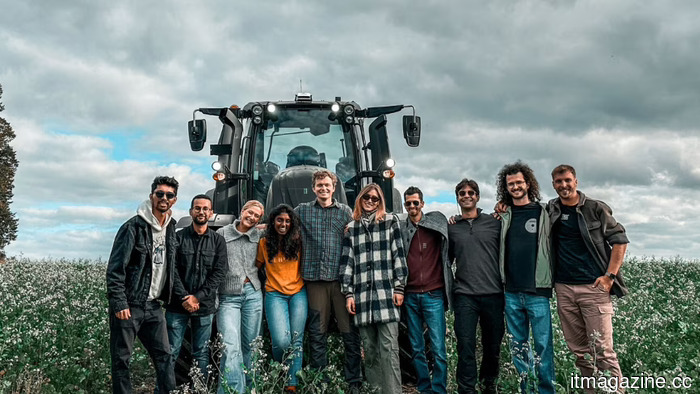 PerPlant secures €1 million to equip tractors with AI cameras, covering 200,000 hectares.
Copenhagen-based agtech company PerPlant has secured €1M to expand its AI precision-spraying system mounted on tractors. New investors include Jytte Rosenmaj from Agreena and Kræn Østergaard Nielsen from Coop.
PerPlant secures €1 million to equip tractors with AI cameras, covering 200,000 hectares.
Copenhagen-based agtech company PerPlant has secured €1M to expand its AI precision-spraying system mounted on tractors. New investors include Jytte Rosenmaj from Agreena and Kræn Østergaard Nielsen from Coop.
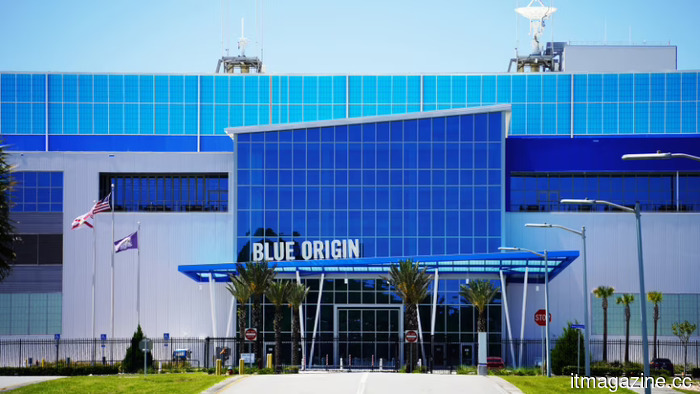 Blue Origin has allocated an additional $600 million to its facility in Florida.
Blue Origin plans to invest $600 million in a new 830,000-square-foot upper-stage facility in Cape Canaveral, shortly after the FAA approved New Glenn for flight once more.
Blue Origin has allocated an additional $600 million to its facility in Florida.
Blue Origin plans to invest $600 million in a new 830,000-square-foot upper-stage facility in Cape Canaveral, shortly after the FAA approved New Glenn for flight once more.
Schneider Electric anticipates that its data center operations in India will surpass the growth of the rest of the company.
Schneider Electric anticipates that its data-centre business in India will surpass core growth, as the country aims to expand its capacity from 1.5 GW to a range of 6 to 8 GW.