
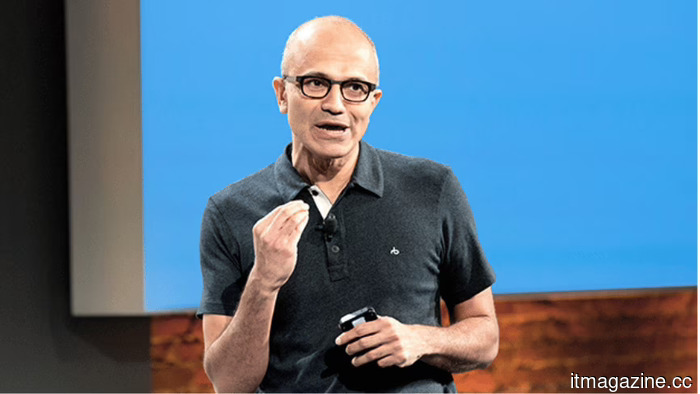
Microsoft’s discreet Claude Code retreat and the actual expenses associated with enterprise AI.
In December of the previous year, Microsoft informed thousands of its engineers, product managers, and designers that they could utilize Claude Code, Anthropic's command-line coding agent, at the company's expense. By spring, this tool had extended well beyond the engineering sector and into various non-technical roles that would have typically waited years for such access during earlier phases of enterprise software. Within Microsoft, the deployment was presented as a learning initiative, while externally, the message was more straightforward: the world’s largest software company, with its own foundational models and coding assistant, opted to pay a competitor to provide a rival product to its employees.
Now, six months later, this experiment is being curtailed. According to reports from Windows Central and others following the initial coverage by The Verge, Microsoft is canceling most direct licenses for Claude Code within its Experiences and Devices division—responsible for products like Windows, Microsoft 365, Outlook, Teams, and Surface. Affected engineers have been instructed to migrate to GitHub Copilot CLI by June 30, the last day of Microsoft's fiscal year. The official explanation is aimed at toolchain unification, but the underlying reason seems to be monetary.
The reduction of Claude Code usage serves as the most convincing indication that, under current token pricing, the economics of enterprise AI coding are not sustainable. This isn't due to the tools being inadequate; in fact, they are proficient enough that engineers use them frequently, and such continuous use disrupts financial calculations.
Uber sets a clear example of this issue. Praveen Neppalli Naga, Uber’s chief technology officer, disclosed to The Information in April that the company exhausted its entire AI coding budget planned for 2026 within just four months. By March, according to Naga’s statistics, Claude Code use had surged from 32 percent to 84 percent among his approximately 5,000 engineers, with individual engineers spending between $500 and $2,000 monthly on tokens. Now, around 70 percent of committed code at Uber is AI-generated, and nearly one in ten live backend updates is made by an agent without human intervention.
“I’m back to the drawing board,” Naga commented, as the budget he anticipated was already surpassed. This statement succinctly encapsulates the situation: the projections were flawed because the variable in question, token consumption, does not behave like traditional user-based licenses and seats. In typical enterprise software agreements, costs are based on users. In contrast, token-based deals hinge on how much the model processes. Agentic coding requires extensive processing, leading to lengthy sessions and generating a substantial context, unlike the simpler autocomplete interactions that initially influenced pricing models.
We have been observing this shift for months. Last November, GitHub halted new sign-ups for Copilot Pro and Pro+ due to the agentic workloads from paying customers causing expenses to exceed their monthly plan costs. The company acknowledged that cost structures designed for light assistance no longer applied.
This situation is not limited to Uber or Microsoft; it reflects a broader industry phenomenon. Bryan Catanzaro, Nvidia's vice president of applied deep learning, stated to Axios in April that, for his team, the cost of computing now surpasses that of the employees who utilize it. Fortune reported in May that heavily utilized token-based AI tools can be more expensive per task than the human engineers they were supposed to support. A 2024 MIT analysis, widely circulated in finance circles since, indicates that AI automation currently appears cheaper than human labor for about 25 percent of roles initially thought to be replaceable.
Contrasting this with spending projections, Gartner anticipates that global AI spending will reach $2.5 trillion this year, marking a 69 percent increase from 2025. The firm now categorizes generative AI in what it terms the trough of disillusionment, predicting that 25 percent of the intended AI budget for 2026 will be pushed to 2027 as many proofs of concept stall in procurement pipelines. An additional Gartner report from April revealed that only 28 percent of AI infrastructure projects fully meet their business objectives. This doesn’t reflect a technology maturing awkwardly; it indicates a market recalibrating its value.
Microsoft's reevaluation aligns with this market adjustment and is not coincidental. There are two interpretations of their recent actions. The first aligns with Microsoft's official statement: that Copilot CLI is the strategic goal, ensuring engineers have ongoing access to Claude models through this avenue, and that the company desires a product it can directly mold with GitHub. This narrative is valid.
However, it’s also a story Microsoft could have communicated any point in the past six months, but chose not to until now. The strategic rationale didn’t shift; what did change was the financial implications.
The second interpretation is more challenging to dismiss. Microsoft is uniquely equipped to understand the true costs of enterprise-level Claude usage, given that its own engineers were among the heaviest users outside of Anthropic's clientele. Reports
Other articles
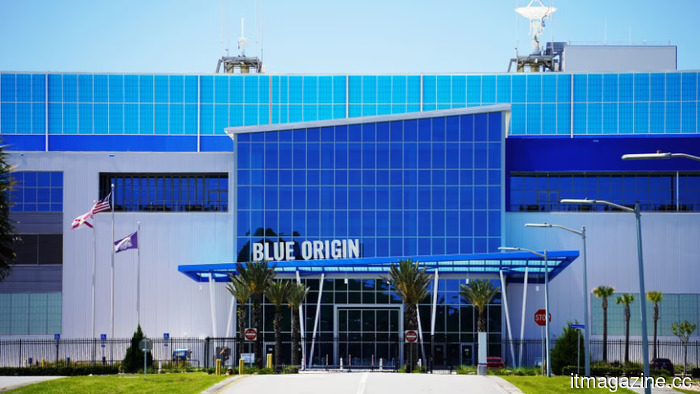 Blue Origin pledges an additional $600 million to its Florida facility.
Blue Origin is set to invest $600 million in a new 830,000-square-foot upper-stage facility located in Cape Canaveral, shortly after the FAA authorized New Glenn to resume flights.
Blue Origin pledges an additional $600 million to its Florida facility.
Blue Origin is set to invest $600 million in a new 830,000-square-foot upper-stage facility located in Cape Canaveral, shortly after the FAA authorized New Glenn to resume flights.
 From the Vatican platform, Anthropic's Chris Olah states that artificial intelligence cannot be directed solely by AI laboratories.
During the Vatican event for the release of Pope Leo XIV's inaugural encyclical, Chris Olah, co-founder of Anthropic, emphasized that AI cannot be guided solely by leading laboratories.
From the Vatican platform, Anthropic's Chris Olah states that artificial intelligence cannot be directed solely by AI laboratories.
During the Vatican event for the release of Pope Leo XIV's inaugural encyclical, Chris Olah, co-founder of Anthropic, emphasized that AI cannot be guided solely by leading laboratories.
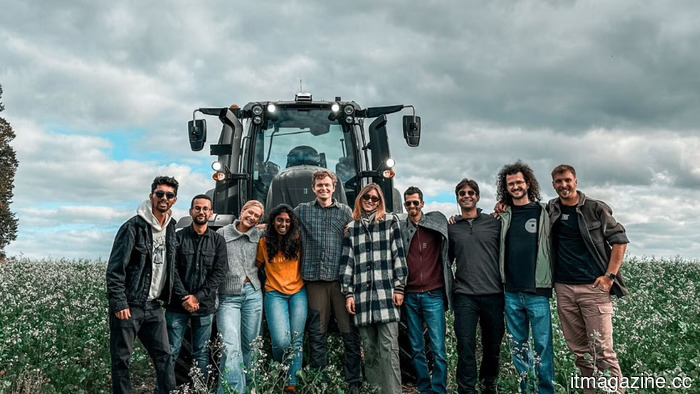 PerPlant secures €1M to implement AI cameras on tractors, with 200,000 hectares already secured.
Copenhagen-based agtech company PerPlant has secured €1M to expand its tractor-mounted AI precision-spraying technology. New investors include Agreena’s Jytte Rosenmaj and Coop’s Kræn Østergaard Nielsen.
PerPlant secures €1M to implement AI cameras on tractors, with 200,000 hectares already secured.
Copenhagen-based agtech company PerPlant has secured €1M to expand its tractor-mounted AI precision-spraying technology. New investors include Agreena’s Jytte Rosenmaj and Coop’s Kræn Østergaard Nielsen.
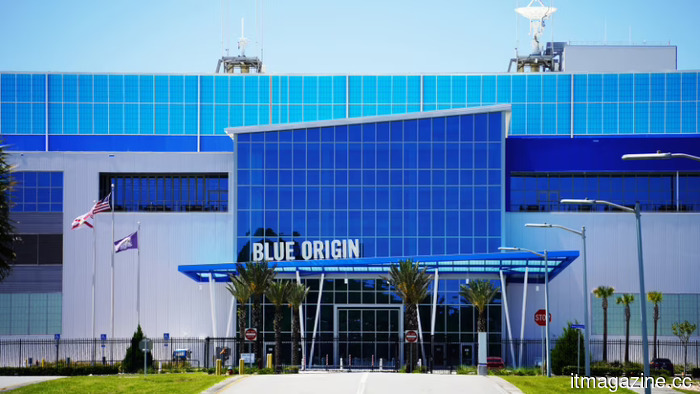 Blue Origin has allocated an additional $600 million to its facility in Florida.
Blue Origin plans to invest $600 million in a new 830,000-square-foot upper-stage facility in Cape Canaveral, shortly after the FAA approved New Glenn for flight once more.
Blue Origin has allocated an additional $600 million to its facility in Florida.
Blue Origin plans to invest $600 million in a new 830,000-square-foot upper-stage facility in Cape Canaveral, shortly after the FAA approved New Glenn for flight once more.
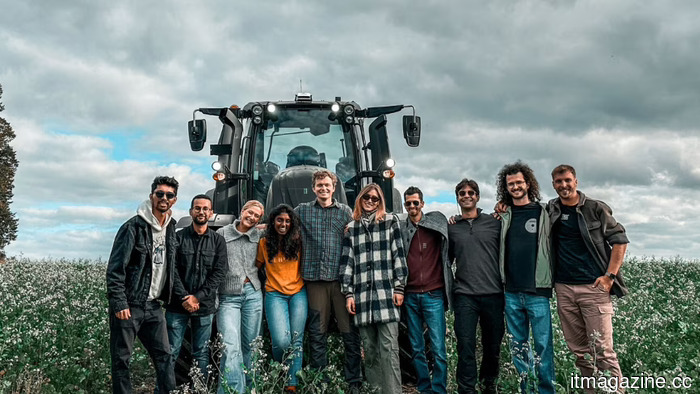 PerPlant secures €1 million to equip tractors with AI cameras, covering 200,000 hectares.
Copenhagen-based agtech company PerPlant has secured €1M to expand its AI precision-spraying system mounted on tractors. New investors include Jytte Rosenmaj from Agreena and Kræn Østergaard Nielsen from Coop.
PerPlant secures €1 million to equip tractors with AI cameras, covering 200,000 hectares.
Copenhagen-based agtech company PerPlant has secured €1M to expand its AI precision-spraying system mounted on tractors. New investors include Jytte Rosenmaj from Agreena and Kræn Østergaard Nielsen from Coop.
 India’s aspirations in AI depend on transforming 200 million workers into 350 million.
Sandip Patel from IBM India believes that by 2030, India has the potential to become the global hub for AI skills. However, the calculations are more complex than the initial figure implies.
India’s aspirations in AI depend on transforming 200 million workers into 350 million.
Sandip Patel from IBM India believes that by 2030, India has the potential to become the global hub for AI skills. However, the calculations are more complex than the initial figure implies.
Microsoft’s discreet Claude Code retreat and the actual expenses associated with enterprise AI.
Microsoft is reducing Claude Code licenses within its primary product teams. This decision is not based on strategy but rather due to costs. Has the AI coding experiment come to an end?