

Reasons for the increasing adoption of AI in EU businesses and the ongoing challenges in keeping pace.
Last December, Eurostat released findings that, if published in another continent, would have been major news. They reported that 20% of European Union businesses with a minimum of ten employees now utilize artificial intelligence in some capacity, up from 13.5% the previous year. This marks a significant increase of six and a half percentage points over just twelve months. In Brussels, this figure was met with quiet satisfaction. An economist at a Berlin think tank shared it with a colleague, simply commenting, “finally.” Meanwhile, an SME owner in a Bucharest co-working space noted the same data and calculated that Romania's figure stood at 5.2%.
This disparity, ranging from Copenhagen's 42% to Bucharest's 5%, defines the starting point for any honest discussion about AI adoption in Europe. The continent has not been stagnant; it has progressed rapidly in some areas while remaining static in others. The aggregate figure of twenty percent both flatters and obscures the reality—it reflects an economy where, on this issue, it no longer functions as a single market.
The prevailing explanation for why Europe lags behind the United States in enterprise AI is rooted in regulatory concerns. According to this view, the AI Act has intimidated boards and tied up legal teams. While there is some truth to this, it isn't the full story. The deeper issue is that European AI adoption is low due to the same factors that have limited tech development in Europe for the past two decades: a lack of capital and a shortage of skilled professionals.
The single market exists only on paper, and companies looking to purchase AI predominantly rely on American providers.
Starting with capital, data from the OECD published in February and referenced by Christine Lagarde in her November address to the European Parliament reveals that nearly three-quarters of all AI venture capital in 2025 was directed toward U.S. companies, amounting to approximately $194 billion. In contrast, the entire European Union attracted only $15.8 billion. This disparity represents a significant difference in scale. Lagarde's speech also highlighted Mario Draghi's earlier analysis, which found that around seventy percent of the GDP per capita gap between the EU and the U.S. is due to productivity differences, with the tech sector accounting for about two-thirds of this productivity gap since the beginning of the century.
These figures are not theoretical; they explain why a French SME contemplating an AI pilot initially seeks a nonexistent budget before opting for an existing service, which is almost always American.
This leads to the second structural issue: three U.S. companies held about seventy percent of the European cloud infrastructure market in 2025, while European providers held around fifteen percent. Any enterprise AI implementation in Europe that doesn't consciously adapt to this reality ends up relying on U.S. computing, billed in dollars, and subject to foreign interpretations of data protection—this concern is real and valid.
As noted, Mistral's CEO Arthur Mensch has been advocating for Europe to “own and operate” its own AI infrastructure, and the company invested $830 million in a Paris data center to emphasize this point. However, achieving this goal remains a considerable challenge.
Internally, companies face a human resource constraint. The OECD's December 2025 report on AI adoption by SMEs, prepared for the G7 presidency, found that half of the surveyed SMEs identified a skills shortage as their main barrier to adoption. Other challenges include maintenance costs (40%), hardware issues (32%), and difficulty understanding the required digital regulations (26%). These responses come from executives who would eagerly adopt AI if they could find personnel to install, operate, and explain it in a language they understand. The Eurostat data mirrors this finding. Approximately fifty-five percent of large enterprises in the EU use AI, while only seventeen percent of smaller companies do. This gap is not philosophical; it reflects the difference between having an in-house data engineer and not having one.
At this point, it may be tempting, especially for an American audience, to view the AI Act as evidence of Europe's prioritization of process over progress. However, the reality is more complicated. The most intrusive provisions of the Act, which pertain to high-risk systems, do not take effect until August 2026. The European Commission is already taking steps to ease the process: in a Digital Omnibus proposal published on November 19, 2025, it aimed to reduce compliance burdens by 25% overall and by 35% for SMEs by 2029 and expanded the simplified framework to firms with up to 750 employees and €150 million in revenue.
The Commission is clearly aware of the same survey data. However, whether it recognizes this in time is uncertain. Industry analyses indicate that EU and UK developers reported launch delays in nearly sixty percent of cases due to the Act, and about two-thirds of European companies still struggle to articulate their obligations under it.
While regulation is not the primary factor hindering European AI adoption, it contributes to the issue,
Другие статьи
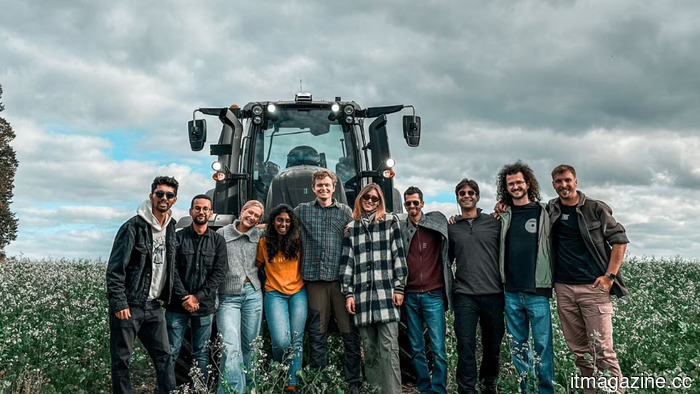 PerPlant привлекла 1 миллион евро для установки ИИ-камер на тракторы и 200 000 гектаров в банке.
Копенгагенская агротехнологическая компания PerPlant привлекла 1 миллион евро для масштабирования своей системы точечного распыления с использованием ИИ, установленной на тракторе. Новые инвесторы: Йитте Розенмай из Agreena и Крен Остергаард Нильсен из Coop.
PerPlant привлекла 1 миллион евро для установки ИИ-камер на тракторы и 200 000 гектаров в банке.
Копенгагенская агротехнологическая компания PerPlant привлекла 1 миллион евро для масштабирования своей системы точечного распыления с использованием ИИ, установленной на тракторе. Новые инвесторы: Йитте Розенмай из Agreena и Крен Остергаард Нильсен из Coop.
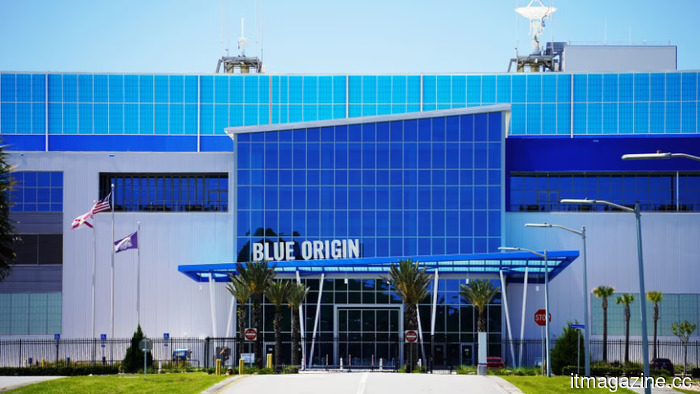 Blue Origin выделяет еще 600 миллионов долларов на свой кампус во Флориде
Blue Origin потратит 600 миллионов долларов на новое здание для верхней ступени площадью 830 000 квадратных футов на мысе Канаверал, через несколько часов после того, как FAA разрешило New Glenn снова летать.
Blue Origin выделяет еще 600 миллионов долларов на свой кампус во Флориде
Blue Origin потратит 600 миллионов долларов на новое здание для верхней ступени площадью 830 000 квадратных футов на мысе Канаверал, через несколько часов после того, как FAA разрешило New Glenn снова летать.
 Амбиции Индии в области ИИ зависят от превращения 200 миллионов работников в 350 миллионов.
Сандип Патель из IBM India говорит, что Индия может стать мировым центром навыков в области ИИ к 2030 году. Арифметика сложнее, чем предполагает заголовок.
Амбиции Индии в области ИИ зависят от превращения 200 миллионов работников в 350 миллионов.
Сандип Патель из IBM India говорит, что Индия может стать мировым центром навыков в области ИИ к 2030 году. Арифметика сложнее, чем предполагает заголовок.
 Венчурное финансирование в Великобритании удвоилось до 10,5 миллиарда долларов в первые четыре месяца 2026 года благодаря трем крупным раундам.
Британские компании привлекли 10,5 миллиарда долларов венчурного капитала в первые четыре месяца 2026 года, сообщает GlobalData, но более 40% пришло всего из трех раундов.
Венчурное финансирование в Великобритании удвоилось до 10,5 миллиарда долларов в первые четыре месяца 2026 года благодаря трем крупным раундам.
Британские компании привлекли 10,5 миллиарда долларов венчурного капитала в первые четыре месяца 2026 года, сообщает GlobalData, но более 40% пришло всего из трех раундов.
 Blue Origin выделяет еще 600 миллионов долларов на свой кампус во Флориде
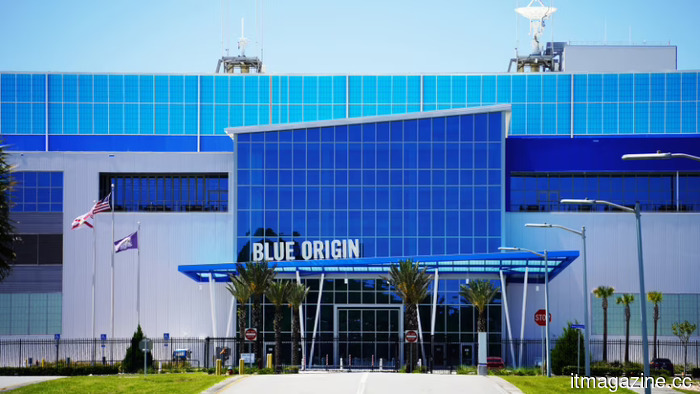
Blue Origin потратит 600 миллионов долларов на новое здание для верхней ступени площадью 830 000 квадратных футов на мысе Канаверал, всего через несколько часов после того, как FAA разрешила снова запускать New Glenn.
Blue Origin выделяет еще 600 миллионов долларов на свой кампус во Флориде
Blue Origin потратит 600 миллионов долларов на новое здание для верхней ступени площадью 830 000 квадратных футов на мысе Канаверал, всего через несколько часов после того, как FAA разрешила снова запускать New Glenn.
 Венчурное финансирование в Великобритании удвоилось до 10,5 млрд долларов в первые четыре месяца 2026 года благодаря трем крупным раундам.
Британские компании привлекли 10,5 млрд долларов венчурного капитала в первые четыре месяца 2026 года, сообщает GlobalData, но более 40% пришло всего из трех раундов.
Венчурное финансирование в Великобритании удвоилось до 10,5 млрд долларов в первые четыре месяца 2026 года благодаря трем крупным раундам.
Британские компании привлекли 10,5 млрд долларов венчурного капитала в первые четыре месяца 2026 года, сообщает GlobalData, но более 40% пришло всего из трех раундов.
Reasons for the increasing adoption of AI in EU businesses and the ongoing challenges in keeping pace.
The adoption of AI in EU enterprises reached 20% in 2025. However, this headline masks a more significant issue that predates the AI Act.