
wingtech-nexperia-china-court-dutch-semiconductor-lawsuit
TL;DR: Wingtech Technology has initiated legal action against its subsidiary Nexperia in a Chinese court, aiming for at least 8 billion yuan ($1.1 billion) in damages regarding the Dutch government's seizure of the chipmaker. The suit cites China's Anti-Foreign Sanctions Law, setting a precedent for how Chinese firms may resist Western semiconductor restrictions.
Wingtech Technology is suing its subsidiary, Nexperia, in a Chinese court, seeking damages of at least 8 billion yuan (approximately $1.1 billion). The lawsuit, filed at the Dongguan Intermediate People’s Court, represents a significant legal challenge against a European government's expropriation of a Chinese-owned chip manufacturer.
The legal dispute revolves around the Dutch government's action in October 2025 to take control of Nexperia, a semiconductor company in Nijmegen acquired by Wingtech in 2019. The Netherlands invoked the Goods Availability Act, a Cold War-era legislation from 1952, citing “serious governance shortcomings” and threats to European economic security. Following this, Wingtech’s chairman was suspended from all roles on Nexperia's board.
This incident marks the first instance of a European government forcibly taking control of a Chinese-owned tech firm. The Netherlands asserted that Nexperia’s large-scale chip production—servicing automotive, consumer electronics, and industrial clients across Europe—was too crucial to remain under Chinese management.
Wingtech contends that the seizure infringed upon its rights as both a shareholder and investor. The lawsuit references China’s Anti-Foreign Sanctions Law, enacted in 2021 to equip Chinese entities with legal mechanisms to counter what Beijing views as discriminatory foreign actions. Should the court rule favorably for Wingtech, it could establish a precedent for how Chinese firms might react to Western semiconductor restrictions.
The Dongguan filing holds strategic importance. While Chinese courts cannot jurisdictionally address the Dutch government, they might issue remedies concerning Nexperia’s operations within China, which is relevant because Nexperia continues to depend on Chinese factories for part of its chip production.
China has already retaliated through regulatory means. Following the Dutch seizure, Beijing prohibited Nexperia from exporting chips produced at its Chinese plants, disrupting part of the company's supply chain. Nexperia has since secured wafer production capacity with local suppliers for 2026 and is expediting wafer verification from Wingtech’s foundry, Wingsky Semi.
The financial impact has been significant for both parties. Wingtech's net loss increased to 8.7 billion yuan in 2025, partially due to the loss of control over Nexperia. The company has indicated it will also pursue a separate claim under the China-Netherlands bilateral investment treaty if court actions do not restore control.
This lawsuit arises at a time when semiconductor supply chains play a critical role in the broader technological rivalry between China and Western nations. The US has urged the Netherlands and Japan to impose stricter export controls on chip-manufacturing equipment, with a specific focus on ASML, the Dutch company producing essential machines for advanced chip fabrication.
US pressure reportedly influenced the Nexperia seizure, as Bloomberg indicated the US called for the removal of Wingtech’s Chinese CEO from Nexperia before the Dutch government acted. However, the Netherlands has denied that this decision stemmed from US directives, framing it instead as a measure of sovereign economic security.
For the European semiconductor industry, the outcome of this case is significant beyond just this company. Nexperia employs thousands across Europe and manufactures billions of chips each year. Should Beijing’s retaliatory efforts disrupt supply, European manufacturers relying on these components would face repercussions.
The lawsuit also tests the effectiveness of China’s Anti-Foreign Sanctions Law outside its borders. Legal experts have debated the statute's applicability since its introduction. A ruling in favor of Wingtech wouldn't compel the Dutch government to reverse its decision, but it could complicate Nexperia's assets or operations under Chinese jurisdiction.
Wingtech presents its case as a defense of shareholder rights, while the Dutch government views its intervention as a means of protecting European technological sovereignty. Both positions highlight that chip supply chains are influenced by factors beyond mere commercial interests. The decision from the Dongguan court may not resolve the wider conflict, but it will indicate how far Chinese legal institutions are willing to push back.
Other articles
 The AI era didn't eliminate trust in marketing; instead, it elevated the standards for achieving it.
Consumers have transitioned from looking for information to desiring certainty. An experienced marketer discusses why brands that fail to withstand the verification phase will be outperformed by those that succeed.
The AI era didn't eliminate trust in marketing; instead, it elevated the standards for achieving it.
Consumers have transitioned from looking for information to desiring certainty. An experienced marketer discusses why brands that fail to withstand the verification phase will be outperformed by those that succeed.
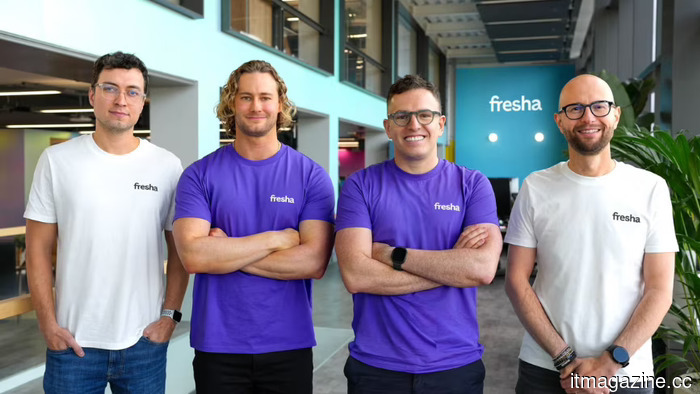 Fresha, based in London, achieves unicorn status following an $80 million funding round led by KKR.
Fresha, a beauty and wellness booking platform based in London, has secured $80 million from KKR, achieving a valuation of over $1 billion and gaining entry into the UK unicorn club.
Norway's $2.3 trillion fund opposes Elkann's position on the Meta board.
Norway's sovereign wealth fund chose not to cast its vote on Elkann's reappointment to the Meta board and supported shareholder proposals regarding AI data privacy and hate speech.
Fresha, based in London, achieves unicorn status following an $80 million funding round led by KKR.
Fresha, a beauty and wellness booking platform based in London, has secured $80 million from KKR, achieving a valuation of over $1 billion and gaining entry into the UK unicorn club.
Norway's $2.3 trillion fund opposes Elkann's position on the Meta board.
Norway's sovereign wealth fund chose not to cast its vote on Elkann's reappointment to the Meta board and supported shareholder proposals regarding AI data privacy and hate speech.
 wingtech-nexperia-china-court-dutch-semiconductor-legal-case
Wingtech is demanding 8 billion yuan in damages from Nexperia following the Dutch government's takeover of the chipmaker, citing China's Anti-Foreign Sanctions Law.
wingtech-nexperia-china-court-dutch-semiconductor-legal-case
Wingtech is demanding 8 billion yuan in damages from Nexperia following the Dutch government's takeover of the chipmaker, citing China's Anti-Foreign Sanctions Law.
 Starbucks withdraws its AI inventory tool after nine months due to ongoing issues with misidentifying the milks.
Starbucks has discontinued its AI inventory tool in North American stores nine months after its introduction, citing concerns over reliability and returning to manual counting methods.
Starbucks withdraws its AI inventory tool after nine months due to ongoing issues with misidentifying the milks.
Starbucks has discontinued its AI inventory tool in North American stores nine months after its introduction, citing concerns over reliability and returning to manual counting methods.
 The majority of data breaches begin with a compromised password. Here's how to address that issue.
Stolen credentials account for 80% of breaches, but many teams continue to share passwords via Slack. Proton Pass for Business encrypts all data starting at $1.99 per user per month.
The majority of data breaches begin with a compromised password. Here's how to address that issue.
Stolen credentials account for 80% of breaches, but many teams continue to share passwords via Slack. Proton Pass for Business encrypts all data starting at $1.99 per user per month.
wingtech-nexperia-china-court-dutch-semiconductor-lawsuit
Wingtech is pursuing 8 billion yuan in damages from Nexperia following the Dutch government's takeover of the chipmaker, citing China's Anti-Foreign Sanctions Law.