

The AI era didn't eliminate trust in marketing; instead, it elevated the standards for achieving it.
Over the past thirty years, I have observed the evolution of consumer behavior in television, search, and social media. Each transition altered tactics, yet the core logic of decision-making remained unchanged. What I am currently witnessing is different, and I know I’m not alone in this observation. Every experienced marketing professional I converse with, regardless of whether their background is in traditional media or digital platforms, shares a similar sentiment: there has been a fundamental shift, and the previous strategies are not yielding the same results as they once did.
This is not merely a change in platforms; it is a psychological transformation. For the first time in my career, I am seeing users shift from merely seeking information to looking for certainty, and this distinction is monumental.
When Behavior Was Predictable
I recall the time when a celebrity’s image on television was nearly a guarantee of success. Brand loyalty closely mirrored fan loyalty. If your brand ambassador had a loyal following, that audience would gravitate toward your product. The formula was straightforward and had stood the test of time: attention leads to association, and association leads to purchase. This consistently worked for decades.
The arrival of the internet digitized this predictability rather than dismantling it. Platforms like Google and Yahoo transformed discovery into a structured, keyword-focused process. Users would search, engines would return ranked results, and businesses that topped those results captured the customer. For a significant period, through various algorithm updates and the rise of paid search and SEO competition, the fundamental principle remained intact: maintain visibility, and you'll be selected.
Both eras focused on the same objective: reach. The key question was who could present their message to the largest audience most frequently? This question shaped marketing strategies for almost thirty years.
What Has Actually Changed
The change I’m highlighting is not about which platform is currently ahead or behind; it goes much deeper and involves how people make decisions.
The trustworthiness of celebrities has declined in a way it never had before. It's not that people distrust them; rather, modern consumers are aware of the commercial landscape they navigate. They recognize that endorsements are transactions and, with global information at their fingertips, they understand that a single endorsement is insufficient to justify a purchase.
Younger consumers, especially those in Gen Z and late millennials, have moved almost entirely toward valuing personal experiences—either their own or those of friends in their immediate circles, rather than relying on famous personalities. They seek relatability, and even then, they confirm the information.
Moreover, the distinction between online and offline interactions has largely vanished. A consumer who sees a product in-store may pull out their phone before deciding to buy, and someone who receives a recommendation from a friend will verify it before taking action. Actions that once belonged to separate realms—such as browsing a physical shelf, reading an online review, or consulting a peer—now occur together, fluidly, and continuously.
What the Research Showed Me
To examine whether my professional observations reflected broader behavioral trends, I conducted an in-person survey in mid-2025 with nearly 500 participants, representing a diverse sample of college students, professionals, homemakers, and retirees from various age groups and economic backgrounds. The results confirmed the patterns I had sensed.
Among 16 to 20-year-olds, 87% stated their primary trust for purchase decisions lies with friends, parents, or teachers—people in their immediate circles. In the 21 to 30 age bracket, 73% combine peer input with social media and selected individuals they follow, yet 96% in this group indicated they re-verify suggestions before acting on them. Nearly everyone demonstrated this behavior. For those aged 31 to 40, 65% exhibited similar verification habits. Even among individuals aged 41 and up, 44% follow this pattern, albeit at a slower rate, yet still in the same direction.
The consistent theme across all age groups is that trust is no longer assumed; it is earned and verified. Consumers from all generations have become active validators rather than passive recipients.
Are LLMs an Innovation or a Response to Market Pressure?
When examining the history of technology, a pattern emerges about every ten to fifteen years: radio transitioned to television, television to the internet, internet to search engines, and search engines to social media. Each evolution didn’t just introduce a new platform; it altered buyer behavior. Therefore, for marketers seeking to understand the AI era, the initial question should not be about “how do I optimize for this platform?” but rather “how has buyer behavior evolved, and what are the underlying reasons?”
The emergence of large language models—such as ChatGPT, Gemini, and Perplexity—is a direct response to the psychological shift I am highlighting. These technologies did not create the verification instinct of modern consumers; they catered to it.
Traditional search engines offered a list of options and left the user to navigate through competing claims. LLMs, on the other hand, synthesize information, compiling
Other articles
 Starbucks withdraws its AI inventory tool after nine months due to ongoing issues with misidentifying the milks.
Starbucks has discontinued its AI inventory tool in North American stores nine months after its introduction, citing concerns over reliability and returning to manual counting methods.
Kawasaki Heavy partners with Nvidia on physical AI, and the rideable robotic horse receives a foundational model.
Kawasaki Heavy Industries surged 12% following the announcement of a collaboration in physical-AI with Nvidia, Microsoft, Fujitsu, and Analog Devices, with its CORLEO robot taking center stage in the display.
Starbucks withdraws its AI inventory tool after nine months due to ongoing issues with misidentifying the milks.
Starbucks has discontinued its AI inventory tool in North American stores nine months after its introduction, citing concerns over reliability and returning to manual counting methods.
Kawasaki Heavy partners with Nvidia on physical AI, and the rideable robotic horse receives a foundational model.
Kawasaki Heavy Industries surged 12% following the announcement of a collaboration in physical-AI with Nvidia, Microsoft, Fujitsu, and Analog Devices, with its CORLEO robot taking center stage in the display.
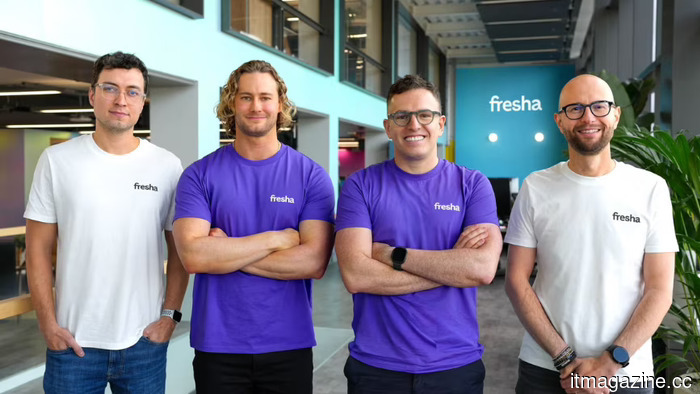 Fresha in London achieves unicorn status following an $80M funding round led by KKR.
Fresha, a beauty and wellness booking platform located in London, has secured $80 million from KKR, achieving a valuation exceeding $1 billion and entering the ranks of UK unicorns.
Fresha in London achieves unicorn status following an $80M funding round led by KKR.
Fresha, a beauty and wellness booking platform located in London, has secured $80 million from KKR, achieving a valuation exceeding $1 billion and entering the ranks of UK unicorns.
 wingtech-nexperia-china-court-dutch-semiconductor-lawsuit
Wingtech is pursuing 8 billion yuan in damages from Nexperia following the Dutch government's takeover of the chipmaker, citing China's Anti-Foreign Sanctions Law.
wingtech-nexperia-china-court-dutch-semiconductor-lawsuit
Wingtech is pursuing 8 billion yuan in damages from Nexperia following the Dutch government's takeover of the chipmaker, citing China's Anti-Foreign Sanctions Law.
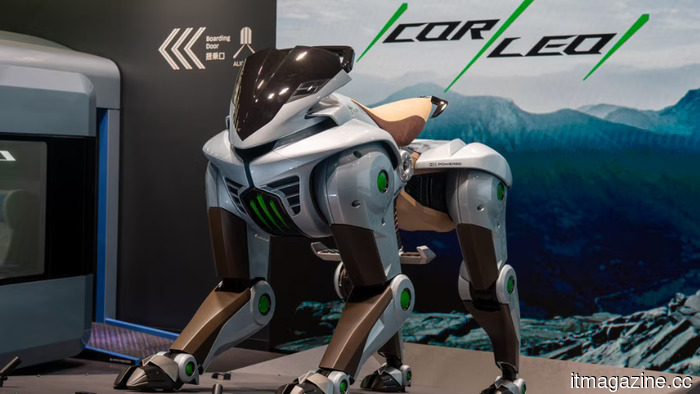 Kawasaki Heavy partners with Nvidia for physical AI, while the rideable robotic horse receives a foundational model.
Kawasaki Heavy Industries surged 12% following the announcement of a physical-AI collaboration with Nvidia, Microsoft, Fujitsu, and Analog Devices, featuring its CORLEO robot as the highlight of the presentation.
Kawasaki Heavy partners with Nvidia for physical AI, while the rideable robotic horse receives a foundational model.
Kawasaki Heavy Industries surged 12% following the announcement of a physical-AI collaboration with Nvidia, Microsoft, Fujitsu, and Analog Devices, featuring its CORLEO robot as the highlight of the presentation.
 The excitement surrounding Salesforce's Agentforce exceeds its actual delivery.
Salesforce secured 29,000 Agentforce agreements, yet its stock has decreased by 30% in 2026, and demonstration showcases continue to be unfinished projects.
The excitement surrounding Salesforce's Agentforce exceeds its actual delivery.
Salesforce secured 29,000 Agentforce agreements, yet its stock has decreased by 30% in 2026, and demonstration showcases continue to be unfinished projects.
The AI era didn't eliminate trust in marketing; instead, it elevated the standards for achieving it.
Consumers have transitioned from looking for information to desiring certainty. An experienced marketer discusses why brands that fail to withstand the verification phase will be outperformed by those that succeed.