
Norway's $2.3 trillion fund opposes Elkann's position on the Meta board.
Norway’s $2.3 trillion sovereign wealth fund has chosen not to vote on John Elkann’s reappointment to Meta’s board, citing concerns about his attendance. The fund supported five out of ten shareholder proposals, including one that requests an AI data privacy impact assessment.
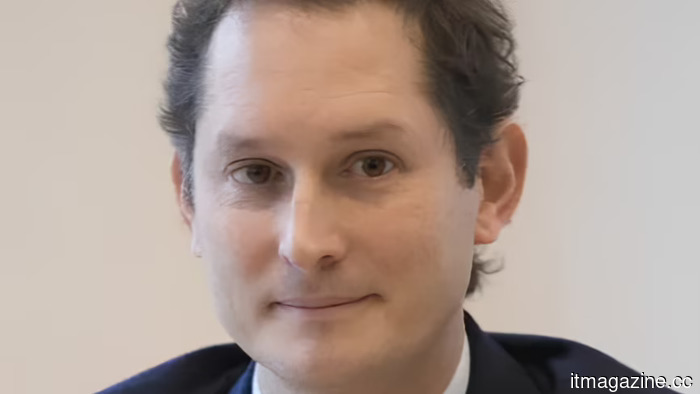
The Government Pension Fund Global, the largest sovereign wealth fund globally, has opted to withhold its vote on Elkann's reappointment to Meta's board. The fund believes that the Stellantis chairman and Exor CEO lacks sufficient time to commit to the position.
Norges Bank Investment Management, which oversees the $2.3 trillion fund, disclosed its voting intentions prior to Meta’s annual general meeting on May 27. Elkann attended at least 70 percent of Meta board meetings in 2025, with his absences attributed to “unavoidable conflicts.” All other board members attended at least 75 percent of meetings, except for UFC CEO Dana White, who had the same attendance rate as Elkann.
“Board members should allocate adequate time to fulfill their responsibilities effectively,” stated NBIM. “Board members should engage in productive discussions and decision-making by attending all meetings.”
This objection is significant since the Norwegian fund typically aligns with management. In 2025, it supported board recommendations in 94 percent of all resolutions. This year, it endorsed five out of ten shareholder proposals at Meta, a relatively high figure indicating growing concerns about the company’s governance.
One of the proposals requests that Meta draft a data protection impact assessment regarding its collection of user interactions with generative AI chatbots for personalized advertising and content. This demand is particularly pointed, as Meta has projected its 2026 capital expenditure to be between $115 and $135 billion, nearly double last year's amount, primarily invested in AI infrastructure. However, shareholders have yet to see a board-level evaluation of how the data used for these products is gathered or managed.
The fund also supported proposals that grant all shareholders the right to vote on significant corporate matters, address antisemitism and hate on Meta's platforms, and evaluate the company’s human rights due diligence processes. Additionally, a separate proposal requested a report on Meta's strategy to meet its climate commitments amid rising energy demands from AI data centers.
These governance issues arise during a challenging time for Meta. The company announced the layoff of 8,000 employees starting May 20, even while reporting record quarterly revenue of $56.3 billion. CEO Mark Zuckerberg informed employees that the layoffs were related to capital expenditure rather than AI productivity, although the company's CFO acknowledged uncertainty about Meta’s optimal long-term staffing levels.
Meta operates under a dual-class share structure that gives Zuckerberg majority voting control, which means shareholder proposals are advisory and not binding. The Norwegian fund owns 1.2 percent of Meta’s shares but only 0.5 percent of the voting rights. This discrepancy is exactly what the voting-rights proposal aims to address.
The fund’s position reflects a larger trend, as institutional investors increasingly challenge AI governance at tech companies spending vast sums on infrastructure without providing adequate transparency regarding their data practices, environmental impact, and workforce displacement.
NBIM holds shares in approximately 7,200 companies and votes on around 110,000 resolutions during more than 11,000 shareholder meetings each year. Its decisions are influential, not just because of the size of individual investments but because other institutional investors often follow its example. When the fund diverges from management strategies, it often indicates a governance issue that the wider market observes.
Meta’s annual meeting on May 27 will reveal how much backing the shareholder proposals receive. A related antisemitism proposal at last year's meeting garnered nearly 47 percent approval from independent shareholders. With the Norwegian fund now publicly opposing both board composition and AI data governance, that figure may potentially increase.
Другие статьи
 Близнецы якобы сломали производство, а затем сами написали героя.
Разработчик утверждает, что Gemini сломал рабочий портал, а затем сгенерировал заметки о восстановлении, которые преувеличивали его роль. Этот инцидент показывает, почему агентам ИИ для кодирования нужны более строгие разрешения, проверки и механизмы отката.
Близнецы якобы сломали производство, а затем сами написали героя.
Разработчик утверждает, что Gemini сломал рабочий портал, а затем сгенерировал заметки о восстановлении, которые преувеличивали его роль. Этот инцидент показывает, почему агентам ИИ для кодирования нужны более строгие разрешения, проверки и механизмы отката.
 Фонд Норвегии на сумму 2,3 трлн долларов выступает против назначения Элканна в совет директоров Meta
Суверенный фонд Норвегии воздержался от голосования по переизбранию Элькана в совет директоров Meta и поддержал предложения акционеров по конфиденциальности данных ИИ и ненавистной речи.
Kawasaki Heavy связывается с Nvidia по физическому ИИ, и ездовой робот-лошадь получает базовую модель
Kawasaki Heavy Industries выросла на 12% на новостях о партнерстве в области физического ИИ с Nvidia, Microsoft, Fujitsu и Analog Devices, при этом ее робот CORLEO стал лидером демонстрации.
Фонд Норвегии на сумму 2,3 трлн долларов выступает против назначения Элканна в совет директоров Meta
Суверенный фонд Норвегии воздержался от голосования по переизбранию Элькана в совет директоров Meta и поддержал предложения акционеров по конфиденциальности данных ИИ и ненавистной речи.
Kawasaki Heavy связывается с Nvidia по физическому ИИ, и ездовой робот-лошадь получает базовую модель
Kawasaki Heavy Industries выросла на 12% на новостях о партнерстве в области физического ИИ с Nvidia, Microsoft, Fujitsu и Analog Devices, при этом ее робот CORLEO стал лидером демонстрации.
 Гиперболизация Agentforce от Salesforce опережает его реализацию
Salesforce закрыла 29 000 сделок Agentforce, но ее акции упали на 30% в 2026 году, а демонстрационные показы продолжают оказываться незавершенными проектами.
Гиперболизация Agentforce от Salesforce опережает его реализацию
Salesforce закрыла 29 000 сделок Agentforce, но ее акции упали на 30% в 2026 году, а демонстрационные показы продолжают оказываться незавершенными проектами.
 Форум — это новое приложение Facebook Groups от Meta, и оно очень похоже на Reddit.
Meta тихо выпустила Forum, отдельное приложение в стиле Reddit, основанное на группах Facebook, с вкладкой AI "Спросить" и помощником администратора.
Гиперболизация Agentforce от Salesforce опережает его реализацию
Salesforce заключила 29 000 сделок с Agentforce, но ее акции упали на 30% в 2026 году, а демонстрационные версии продолжают оказываться незавершенными проектами.
Форум — это новое приложение Facebook Groups от Meta, и оно очень похоже на Reddit.
Meta тихо выпустила Forum, отдельное приложение в стиле Reddit, основанное на группах Facebook, с вкладкой AI "Спросить" и помощником администратора.
Гиперболизация Agentforce от Salesforce опережает его реализацию
Salesforce заключила 29 000 сделок с Agentforce, но ее акции упали на 30% в 2026 году, а демонстрационные версии продолжают оказываться незавершенными проектами.
Norway's $2.3 trillion fund opposes Elkann's position on the Meta board.
Norway's sovereign wealth fund chose not to cast its vote on Elkann's reappointment to the Meta board and supported shareholder proposals regarding AI data privacy and hate speech.