

The AI era didn't destroy trust in marketing; instead, it elevated the standards for gaining it.
Over the course of three decades, I have observed the evolution of consumer behavior in television, search, and social media. While each transition necessitated a change in tactics, the fundamental decision-making logic remained unchanged. However, what I’m witnessing now is markedly different. I am not alone in this observation; every experienced marketing professional I converse with—regardless of whether they have a background in traditional media or digital platforms—reflects a similar sentiment: a fundamental transformation has occurred, rendering old strategies ineffective.
This shift is not merely a change in platforms; it is psychological. For the first time in my career, I am witnessing a transition among users from seeking information to seeking certainty, which fundamentally alters everything.
When Behavior Was Predictable
I recall an era when the presence of a celebrity on television almost guaranteed success. Brand loyalty was closely aligned with fan loyalty; if your brand ambassador had a dedicated following, that audience would inevitably choose your product. It was a straightforward, proven method: attention leads to association, which in turn leads to purchase. This consistently worked for many decades.
The arrival of the internet digitized that predictability rather than dismantling it. Search engines like Google and Yahoo transformed discovery into a structured, keyword-based approach. Users would search, and engines would return ranked results, with businesses appearing at the top of those lists capturing customer interest. For years, even through various algorithm updates and the advent of paid search, the core principle remained intact: visibility meant selection.
Both of these eras valued the same principle: reach. The question of who could reach the most people the most frequently dominated marketing strategies for nearly thirty years.
What Has Actually Changed
The change I'm noting extends beyond which platform is prevailing or faltering. It penetrates deeper; it concerns how consumers make decisions. The credibility of celebrities has diminished in ways it previously had not. It's not that people completely distrust celebrities; rather, modern consumers are more aware of the commercial landscape surrounding them. They recognize that endorsements are transactions and, with global information readily accessible, understand that a single endorsement is insufficient justification for making a purchase.
Younger consumers, particularly Gen Z and older millennials, have shifted towards prioritizing personal experience. They tend to rely on their own experiences or those of people within their immediate social circles—individuals who are relatable rather than famous. And even in those cases, they seek verification.
Moreover, the distinction between online and offline has largely disappeared. Consumers who see a product in a store will check it on their phones before purchasing. A customer who hears a recommendation from a friend will verify it before making a decision. Behaviors that once operated in separate realms, like browsing physical shelves, reading online reviews, or consulting peers, now coexist fluidly and continuously.
What the Research Showed Me
To verify the observations I was gathering from my professional experience against broader behavioral trends, I conducted an in-person survey in mid-2025 involving nearly 500 participants. This was not a formal academic study, but rather a diverse sampling of college students, working professionals, homemakers, and retirees from different age groups and economic backgrounds. The results supported the patterns I had been detecting.
Among individuals aged 16 to 20, 87% indicated that they primarily trust friends, parents, or teachers in making purchase decisions. In the 21 to 30 age demographic, 73% merge peer input with insights from social media and specific individuals they follow, yet 96% in that group reported that they double-check recommendations before taking action, nearly everyone. Among those aged 31 to 40, 65% exhibited similar verification behaviors, and even in the 41-and-over segment, 44% followed the same trend—though at a slower pace, but nonetheless in the same direction.
The recurring theme across all age groups is clear: trust is no longer simply given; it has to be earned and subsequently verified. Consumers across all generations are active validators rather than passive recipients of information.
Are LLMs an Innovation or a Response to Market Pressure?
Historically, a consistent pattern has emerged approximately every ten to fifteen years: radio transitioned to television, television to the internet, the internet to search engines, and search engines to social media. Each evolution not only created new platforms but also altered buyer behavior. Therefore, if you are a marketer navigating the AI era, the crucial question is not “how do I optimize for this platform?” but rather “how has buyer behavior changed, and why?”
The emergence of large language models—such as ChatGPT, Gemini, and Perplexity—serves as a direct response to the psychological shift I have described. These tools did not originate the verification instinct in modern consumers; they addressed it.
Traditional search engines provided a list of options and left users to sift through competing claims. In contrast, LLMs synthesize information. They compile data from multiple sources and deliver structured answers. For consumers whose instinct is to verify, cross-check,
Other articles
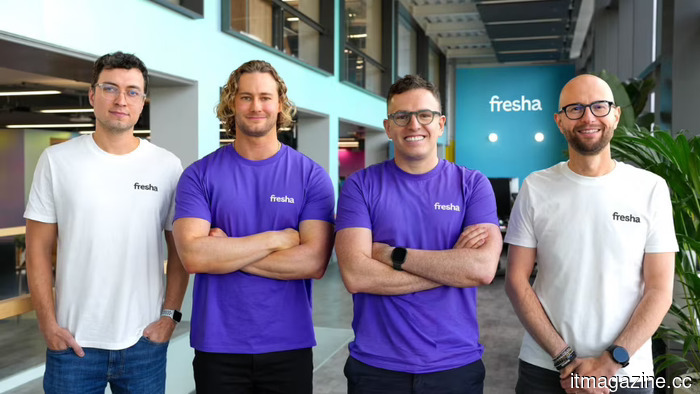 Fresha in London achieves unicorn status with an $80M funding round led by KKR.
Fresha, a beauty and wellness booking platform based in London, has secured $80 million from KKR, achieving a valuation exceeding $1 billion and entering the UK unicorn club.
Fresha in London achieves unicorn status with an $80M funding round led by KKR.
Fresha, a beauty and wellness booking platform based in London, has secured $80 million from KKR, achieving a valuation exceeding $1 billion and entering the UK unicorn club.
 The excitement surrounding Salesforce's Agentforce exceeds its actual performance.
Salesforce finalized 29,000 Agentforce transactions, yet its stock has declined by 30% in 2026, and demonstration showcases continue to be under development.
The excitement surrounding Salesforce's Agentforce exceeds its actual performance.
Salesforce finalized 29,000 Agentforce transactions, yet its stock has declined by 30% in 2026, and demonstration showcases continue to be under development.
 The AI era didn’t eliminate trust in marketing; instead, it set a higher standard for achieving it.
Consumers have moved from looking for information to desiring certainty. An experienced marketer discusses why brands that fail to withstand the verification moment will be outperformed by those that succeed.
The AI era didn’t eliminate trust in marketing; instead, it set a higher standard for achieving it.
Consumers have moved from looking for information to desiring certainty. An experienced marketer discusses why brands that fail to withstand the verification moment will be outperformed by those that succeed.
 The majority of data breaches begin with a compromised password. Here's how to address that issue.
Stolen credentials account for 80% of breaches, but many teams continue to share passwords via Slack. Proton Pass for Business encrypts all data starting at $1.99 per user per month.
The majority of data breaches begin with a compromised password. Here's how to address that issue.
Stolen credentials account for 80% of breaches, but many teams continue to share passwords via Slack. Proton Pass for Business encrypts all data starting at $1.99 per user per month.
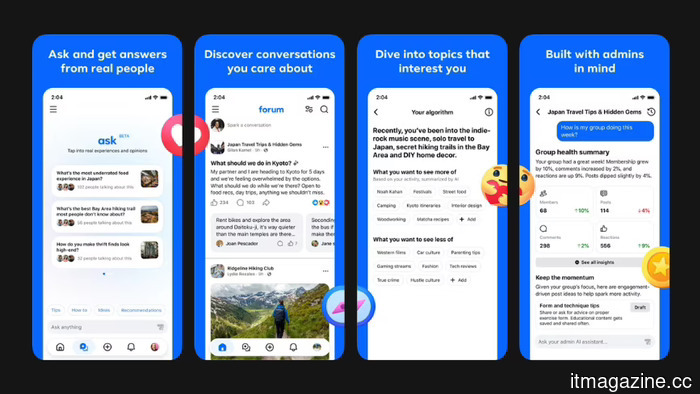 Forum is Meta's latest app for Facebook Groups, and it bears a strong resemblance to Reddit.
Meta has discreetly launched Forum, an independent app resembling Reddit that is based on Facebook Groups, featuring an AI "Ask" tab and an admin assistant.
Forum is Meta's latest app for Facebook Groups, and it bears a strong resemblance to Reddit.
Meta has discreetly launched Forum, an independent app resembling Reddit that is based on Facebook Groups, featuring an AI "Ask" tab and an admin assistant.
 Norway's $2.3 trillion fund opposes Elkann's position on the Meta board.
Norway's sovereign wealth fund abstained from voting on Elkann's reappointment to the Meta board and supported shareholder initiatives regarding AI data privacy and hate speech.
Norway's $2.3 trillion fund opposes Elkann's position on the Meta board.
Norway's sovereign wealth fund abstained from voting on Elkann's reappointment to the Meta board and supported shareholder initiatives regarding AI data privacy and hate speech.
The AI era didn't destroy trust in marketing; instead, it elevated the standards for gaining it.
Consumers have transitioned from looking for information to pursuing certainty. An experienced marketer elaborates on why brands that fail to endure the verification moment will fall behind those that succeed.