
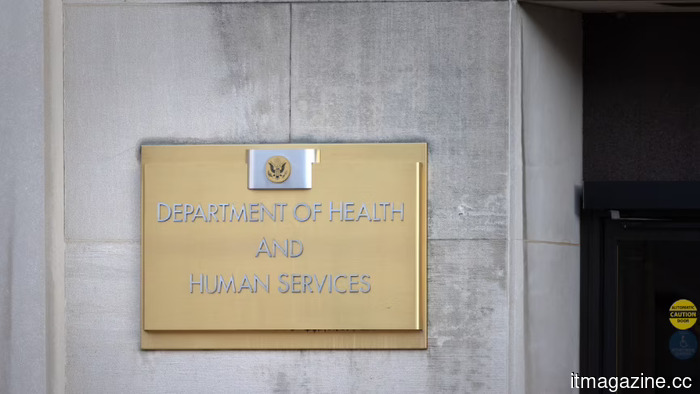
HHS initiates AI project to identify fraud and waste in federal health programs.
The Department of Health and Human Services is transitioning from a “pay and chase” approach to real-time AI screening for Medicare, Medicaid, CHIP, and the Marketplace. The US Department of Health and Human Services has initiated an artificial intelligence program designed to identify fraud and waste across federal health programs, building on a strategy first presented in February. This new strategy aims to replace the existing "pay and chase" model with immediate claim screening prior to payments, as reported by Reuters on Wednesday.
According to a previous joint announcement from HHS, the program encompasses Medicare, Medicaid, the Children's Health Insurance Program, and the Health Insurance Marketplace. In the February announcement, HHS Secretary Robert F. Kennedy Jr., Vice President JD Vance, and CMS Administrator Mehmet Oz described the transition as a move away from the timeworn practice of paying claims upfront and conducting investigations afterward, to what the agency refers to as a “detect and deploy” model. This model utilizes AI technologies to identify suspicious claims at the approval stage.
The scale of improper payments underscores the need for this shift. Medicare's fee-for-service program alone reportedly incurred approximately $28.83 billion in improper payments during fiscal 2025, alongside another $23.67 billion in Medicare Part C. A separate report from the Government Accountability Office in April indicated that improper payments across the government totaled around $186 billion for the year, primarily concentrated in five programs, including Medicare and Medicaid.
The initiative is supported by a formal Request for Information (RFI) that HHS and CMS issued in late February, inviting input from the industry on analytics methods, AI tools, and data-sharing strategies. The RFI closed on March 30 and will inform a proposed rule known as CRUSH, short for “Comprehensive Regulations to Uncover Suspicious Healthcare.”
The May initiative seems to be a step forward following this consultation, although HHS and CMS have yet to release the complete list of vendors or the technical framework involved. Concurrent pilot programs have been underway. The HHS Office of Inspector General has piloted a machine-learning model that evaluates providers based on billing behaviors statistically linked to fraud, which CMS reports contributed to a 59% increase in total Medicare program-integrity savings, rising from $26.3 billion the previous year to $41.9 billion in fiscal 2025.
Part of this increase is attributed to improved screening of new enrollees, including a six-month nationwide moratorium on new home health and hospice enrollments instituted on May 13.
The primary risk of shifting from post-payment reviews to pre-payment AI screening lies in the consequences of false positives for providers. A claim that is flagged and causes delays in payment to a genuine practice, especially smaller ones, can significantly impact their cash flow. Industry groups have already urged CMS, through the RFI process, to establish clear appeal rights and criteria for human review before any AI-flagged denial is finalized. However, such safeguards have yet to be incorporated into the regulations.
What HHS has not made public includes which model vendors are being utilized, whether the system will use de-identified or fully identifiable claims data, and how the agency plans to audit the error rates of the models. The CRUSH rulemaking will eventually need to address these questions. For now, the initiative is being implemented amidst notably high improper payment figures and an increased federal interest in leveraging AI for compliance, which is considerably higher than recent trends.
Other articles
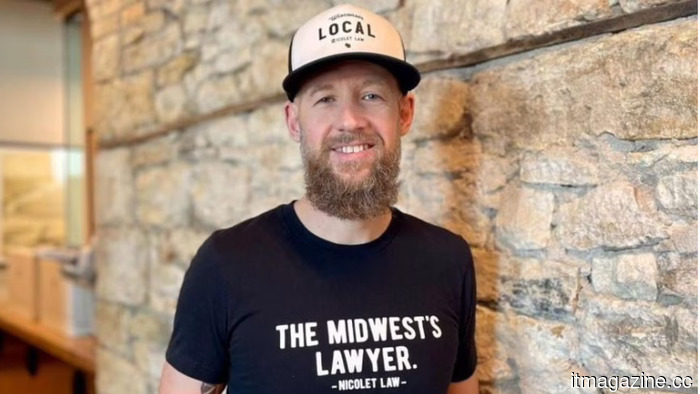 How Russell Nicolet created a personal injury firm from the ground up, without a guide.
Russell Nicolet, a first-generation law student, started Nicolet Law as a solo practice. He received training from leading trial lawyers across the country and grew the firm into a personal injury operation spanning multiple states.
How Russell Nicolet created a personal injury firm from the ground up, without a guide.
Russell Nicolet, a first-generation law student, started Nicolet Law as a solo practice. He received training from leading trial lawyers across the country and grew the firm into a personal injury operation spanning multiple states.
 HHS initiates an AI project aimed at identifying fraud and waste in federal health programs.
HHS has introduced an AI initiative to conduct real-time screenings of Medicare, Medicaid, CHIP, and Marketplace claims for fraud, moving away from the previous "pay and chase" approach.
HHS initiates an AI project aimed at identifying fraud and waste in federal health programs.
HHS has introduced an AI initiative to conduct real-time screenings of Medicare, Medicaid, CHIP, and Marketplace claims for fraud, moving away from the previous "pay and chase" approach.
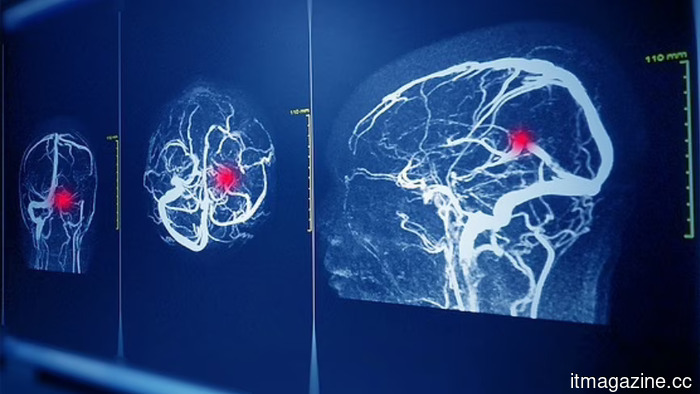 Within the subtle transformation of clinical decision-making
CARA Systems, a spinout from NYU, employs AI-powered imaging and patient-specific analytics to assist neurospecialists in making more uniform and personalized choices regarding the risk of intracranial aneurysms.
Within the subtle transformation of clinical decision-making
CARA Systems, a spinout from NYU, employs AI-powered imaging and patient-specific analytics to assist neurospecialists in making more uniform and personalized choices regarding the risk of intracranial aneurysms.
 Elon Musk will receive a record-breaking salary if he establishes a colony of one million people on Mars.
Elon Musk’s compensation plan for SpaceX could lead to a substantial stock grant if the company achieves a significant valuation and establishes a colony on Mars with one million inhabitants.
Elon Musk will receive a record-breaking salary if he establishes a colony of one million people on Mars.
Elon Musk’s compensation plan for SpaceX could lead to a substantial stock grant if the company achieves a significant valuation and establishes a colony on Mars with one million inhabitants.
HHS initiates AI project to identify fraud and waste in federal health programs.
HHS has introduced an AI initiative to conduct real-time screenings of Medicare, Medicaid, CHIP, and Marketplace claims for fraud, moving away from the traditional "pay and chase" approach.