
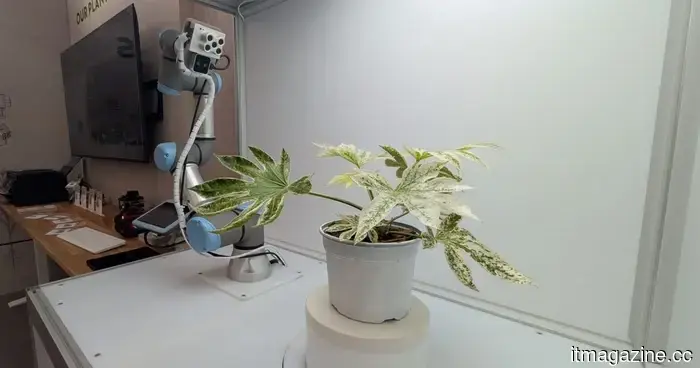
A compassionate robot recently secured a silver medal at one of the largest flower exhibitions in the world.
University of Lincoln
When you imagine the Chelsea Flower Show, robots likely aren't the first thing you think of. However, the University of Lincoln attended with such technology and earned a Silver Gilt medal.
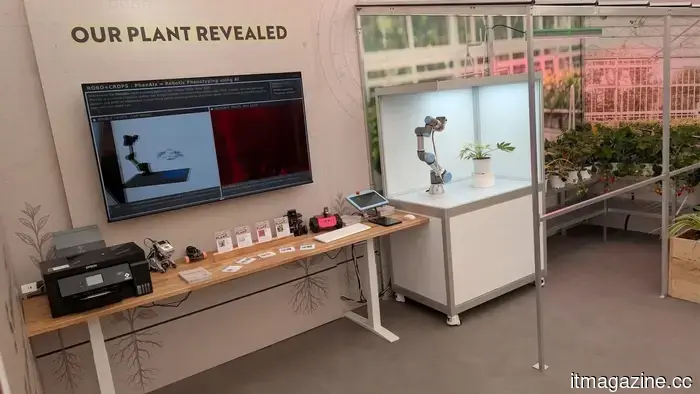
The display, titled RoboCrops: Plant Selection, Beyond the Visible, was created by the University’s Lincoln Institute for Agri-Food Technology (LIAT) and was located in the show's GreenSTEM zone, which highlights exhibits at the crossroads of horticulture, science, technology, and the environment.
What role does a robot play at a flower show?
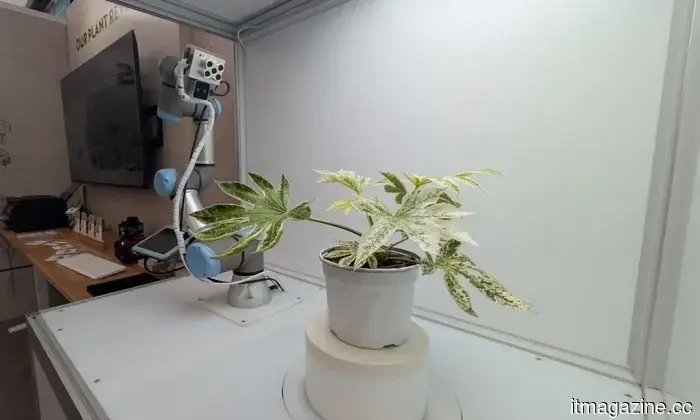
The highlight of the exhibit was PhenAIx, a robotic system that essentially conducts health assessments for plants. It utilizes advanced imaging and AI to detect subtle indications of stress, disease potential, and performance problems that may go unnoticed by the naked eye.
University of Lincoln
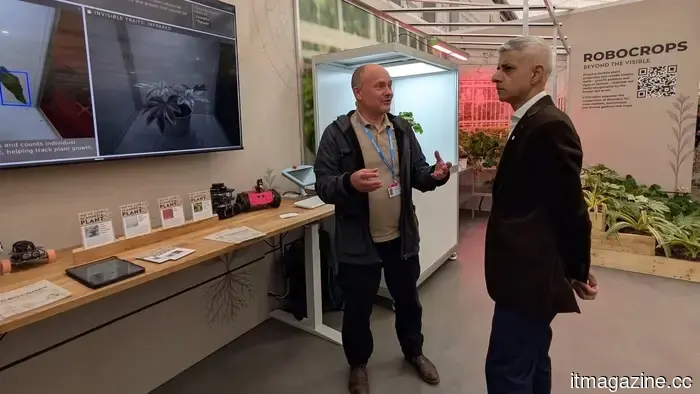
It's akin to an X-Ray or MRI specifically for crops. This technology assists plant breeders by identifying more resilient crop varieties more swiftly than conventional methods. The exhibit drew considerable attention, with even London Mayor Sadiq Khan stopping by to discuss the potential for this technology to address broader challenges in food production.
University of Lincoln
The University aims to inspire young visitors, especially those from rural and agricultural backgrounds who may not initially envision careers in AI or robotics. Professor Simon Pearson MBE, the founding director of LIAT, noted that the interest shown by young attendees was among the week’s most gratifying aspects.
What does this imply for the future of food?
The exhibit highlighted how cross-disciplinary collaboration in STEM can be crucial in tackling our food crisis. The focus is on aiding breeders in discovering stronger, more resilient plant varieties more quickly than traditional approaches allow.
Varieties capable of enduring heat, surviving drought, and flourishing with limited resources will have a higher chance of thriving in an increasingly warming climate. This is particularly significant given the trajectory of global food security.
Rachit is an experienced tech journalist with over seven years in the consumer technology field.
This robot barista is aiming to transform championship coffee into a scalable business
Some concepts seem theoretical until they manifest in something as routine as your morning coffee. Artly is exploring this notion with Jarvis, its robotic barista system, which is already serving drinks at locations like Muji in Portland, Oregon. The company seeks to convert a process traditionally reliant on human skill, repetition, and instinct into a system that can consistently deliver the same results at scale.
What sets Jarvis apart from typical automation narratives is that Artly is not merely developing the coffee equivalent of a vending machine. Its aim is to imitate the techniques, standards, and workflow of a world-class barista closely enough that the experience feels deliberate rather than mechanical. According to Dan Gaul, founder of Digital Trends, who experienced it firsthand at the Portland site, the coffee was unexpectedly good.
Read more
Magic Cue, one of the most innovative Android features on Pixel phones, is expanding to more apps
Google's most overlooked feature for the Pixel 10 is finally getting the third-party integration and redesign necessary to fulfill its promise as a proactive AI assistant.
I found Magic Cue to be a feature that generated excitement ahead of the Pixel 10 launch. However, after the initial stage demonstration, it hardly made an appearance in everyday use or in any practical manner.
Google seems to have recognized this. During the I/O 2026 event, the company quietly announced that the feature will be expanded, potentially with a redesign. While it may not have been the main announcement, it could reignite enthusiasm among Pixel 10 users.
Research indicates that educational institutions should be cautious about relying too heavily on AI text detectors
A study from the University of Florida reveals that these tools are so unreliable that the entire foundation for claims regarding AI-generated academic writing may need reassessment.
This raises a disconcerting issue for academic institutions relying on AI detectors to monitor student and researcher submissions: the tools do not perform as dependably as these institutions assume.
A paper presented by researchers from the University of Florida at the 2026 IEEE Symposium on Security and Privacy concludes that commercially available AI-generated text detectors are “poorly suited for deployment in academic or high-stakes contexts.”
Read more




Altri articoli
 IBM secures $1 billion as the U.S. supports nine quantum firms with $2 billion.
The US Department of Commerce has entered into nine letters of intent under the CHIPS Act, totaling $2 billion, which includes acquiring equity in companies such as IBM, D-Wave, Rigetti, and others.
IBM secures $1 billion as the U.S. supports nine quantum firms with $2 billion.
The US Department of Commerce has entered into nine letters of intent under the CHIPS Act, totaling $2 billion, which includes acquiring equity in companies such as IBM, D-Wave, Rigetti, and others.
 Major tech companies are starting to prioritize child safety, but TikTok and YouTube are falling short.
Snap, Meta, and Roblox have come to an agreement to implement new anti-grooming measures following Ofcom's public appeal for action, whereas TikTok and YouTube still need to provide significant clarification.
Major tech companies are starting to prioritize child safety, but TikTok and YouTube are falling short.
Snap, Meta, and Roblox have come to an agreement to implement new anti-grooming measures following Ofcom's public appeal for action, whereas TikTok and YouTube still need to provide significant clarification.
 AMD's Ryzen AI Max 400 chip comes with 192GB of memory, but acquiring one can be quite challenging.
AMD's Gorgon Halo processors elevate the memory limit to 192GB and present a strong argument for on-premises AI computation.
AMD's Ryzen AI Max 400 chip comes with 192GB of memory, but acquiring one can be quite challenging.
AMD's Gorgon Halo processors elevate the memory limit to 192GB and present a strong argument for on-premises AI computation.
 AI is significantly enhancing the capabilities of "wizards" on 4Chan who receive requests to remove clothing from images of women.
A recent ISD analysis and reporting from WIRED reveal how users on 4chan are creating a repeatable system for nonconsensual AI-generated nudes that relies on requests, status updates, and the use of private platforms.
AI is significantly enhancing the capabilities of "wizards" on 4Chan who receive requests to remove clothing from images of women.
A recent ISD analysis and reporting from WIRED reveal how users on 4chan are creating a repeatable system for nonconsensual AI-generated nudes that relies on requests, status updates, and the use of private platforms.
 AI is energizing "wizards" on 4Chan who fulfill requests to alter images of women by nudifying them.
A recent analysis by ISD and a report from WIRED reveal how users on 4chan are establishing a systematic approach to creating nonconsensual AI-generated nude images, which relies on requests, status updates, and the transfer of content between private platforms.
AI is energizing "wizards" on 4Chan who fulfill requests to alter images of women by nudifying them.
A recent analysis by ISD and a report from WIRED reveal how users on 4chan are establishing a systematic approach to creating nonconsensual AI-generated nude images, which relies on requests, status updates, and the transfer of content between private platforms.
 The Vivaldi 8.0 update has made returning to Chrome more challenging than ever.
Vivaldi 8.0 presents a comprehensive new Unified design, along with six preset layouts and an exceptionally refined appearance that may just persuade you to switch.
The Vivaldi 8.0 update has made returning to Chrome more challenging than ever.
Vivaldi 8.0 presents a comprehensive new Unified design, along with six preset layouts and an exceptionally refined appearance that may just persuade you to switch.
A compassionate robot recently secured a silver medal at one of the largest flower exhibitions in the world.
The University of Lincoln was awarded a Silver Gilt medal at the RHS Chelsea Flower Show 2026 for an exhibition that employs robots and artificial intelligence to assess plant health and influence the future of food.