
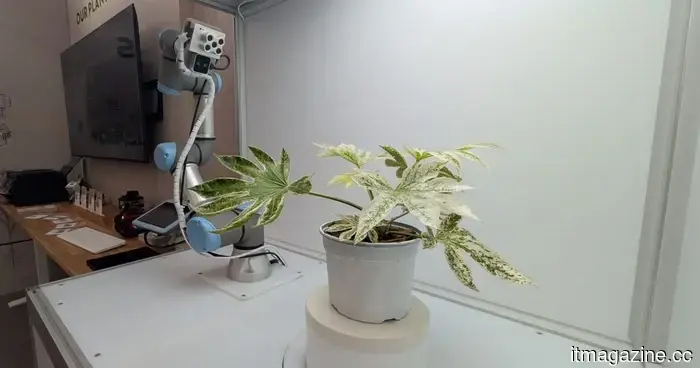
A compassionate robot has recently achieved a silver medal at one of the largest flower exhibitions in the world.
**University of Lincoln**
When you think about the Chelsea Flower Show, robots are likely not the first thing that comes to mind. However, the University of Lincoln showcased a robotic innovation and earned a Silver Gilt medal.
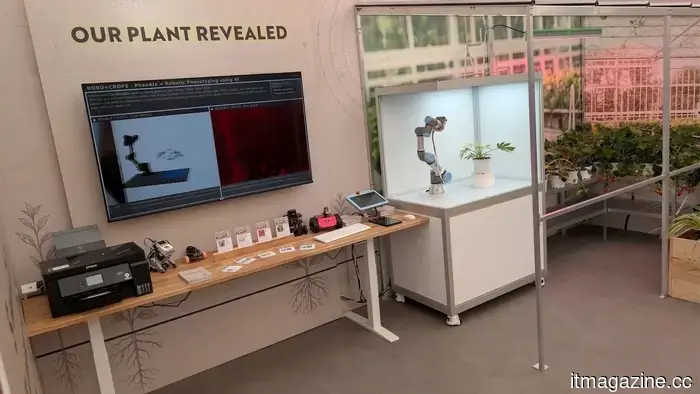
The installation, titled RoboCrops: Plant Selection, Beyond the Visible, was created by the University’s Lincoln Institute for Agri-Food Technology (LIAT) and situated within the show’s GreenSTEM zone, a section focused on exhibits that bridge horticulture, science, technology, and the environment.
What role does a robot have at a flower show?
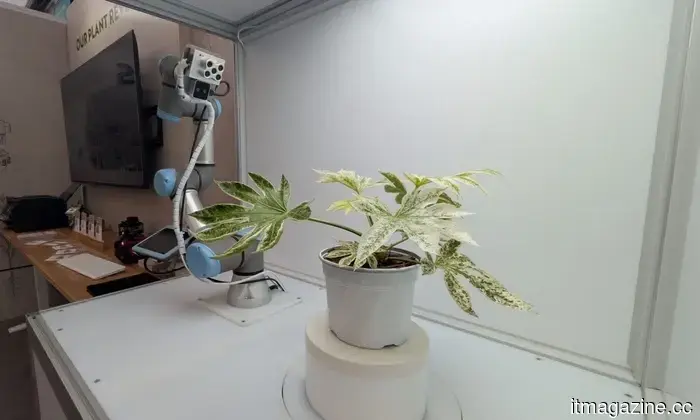
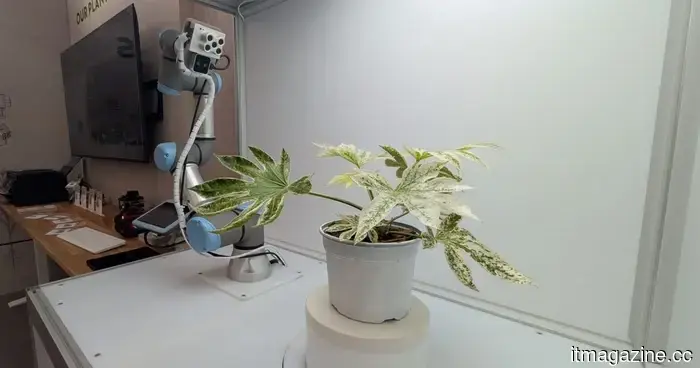
The highlight of the exhibit was PhenAIx, a robotic system that conducts health assessments for plants. Utilizing advanced imaging and artificial intelligence, it identifies subtle indicators of stress, potential disease, and performance issues that might go unnoticed by the naked eye.
University of Lincoln
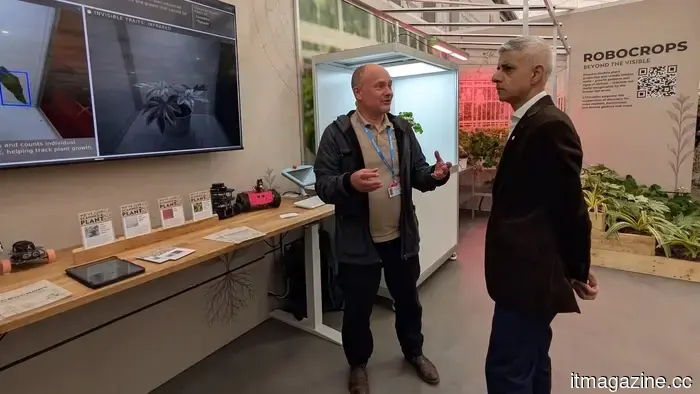
It functions similar to X-Ray or MRI technology, but for crops. This system can assist plant breeders in more rapidly identifying robust crops compared to traditional methods. The exhibit was a hit, attracting even the Mayor of London, Sadiq Khan, who discussed the potential for this technology to address broader food production challenges.
University of Lincoln
The University aims to inspire young visitors, especially those from rural and agricultural backgrounds who might not envision careers in AI or robotics. Professor Simon Pearson MBE, Founding Director of LIAT, noted that the interest shown by young attendees was one of the most fulfilling aspects of the week.
What does this imply for the future of food?
The exhibit highlighted the benefits of interdisciplinary collaboration in STEM for addressing food security issues. The goal is to expedite the breeding of stronger, more resilient plant varieties compared to conventional methods.
Varieties capable of withstanding higher temperatures, surviving drought, and thriving with minimal resources are more likely to endure in the climate we are shaping through global warming. This is of significant importance given the trajectory of global food security.
**Rachit** is an experienced technology journalist with over seven years of covering the consumer technology field.
**This robotic barista aims to transform championship coffee into a scalable business.**
Some concepts may seem theoretical until they materialize in a routine setting like your morning coffee. Artly is attempting to tackle this challenge with Jarvis, its robotic barista system already serving beverages at various locations, including Muji in Portland, Oregon. The company's mission is to turn a process traditionally reliant on human skill, repetition, and intuition into a system that consistently delivers the same results at scale.
What sets Jarvis apart from standard automation narratives is that Artly is not simply creating a coffee vending machine. Instead, its objective is to closely emulate the techniques, standards, and workflow of a top-tier barista to ensure the experience remains intentional rather than automated. According to Dan Gaul, founder of Digital Trends, who visited the Portland location to experience it firsthand, the coffee was surprisingly good.
**Read more**
**Magic Cue, one of the most advanced Android features on Pixel phones, is expanding to more apps.**
Google's most underutilized feature on the Pixel 10 is finally receiving the third-party expansion and redesign necessary to become the proactive AI assistant it was intended to be.
Magic Cue was something that excited me about the Pixel 10 launch. However, after the initial demonstration, the feature rarely came into play in everyday use, let alone in a beneficial manner.
Google seems to have recognized this. At I/O 2026, the company quietly revealed that the feature will be expanded, along with potential redesign plans. While it may not have been the main announcement, it certainly has the potential to rekindle excitement among Pixel 10 users.
**Research indicates that educational institutions should not place excessive trust in AI text detectors.**
A study from the University of Florida reveals that these tools are so unreliable that the foundation for claims regarding AI-generated academic writing may need to be re-evaluated entirely.
Here’s a troubling consideration for every academic institution currently utilizing AI detectors to monitor student and researcher submissions: these tools do not function as reliably as institutions believe. A paper presented at this week’s 2026 IEEE Symposium on Security and Privacy by University of Florida researchers concludes that the commercially available AI text detectors are “poorly suited for deployment in academic or high-stakes contexts.”
**Read more**



Other articles
 Major tech companies are beginning to prioritize child safety, but TikTok and YouTube are falling short.
Snap, Meta, and Roblox have committed to implementing new anti-grooming initiatives following Ofcom's public appeal for action, while TikTok and YouTube still need to clarify their positions.
Major tech companies are beginning to prioritize child safety, but TikTok and YouTube are falling short.
Snap, Meta, and Roblox have committed to implementing new anti-grooming initiatives following Ofcom's public appeal for action, while TikTok and YouTube still need to clarify their positions.
 A compassionate robot recently secured a silver medal at one of the largest flower exhibitions in the world.
The University of Lincoln was awarded a Silver Gilt medal at the RHS Chelsea Flower Show 2026 for an exhibition that employs robots and artificial intelligence to assess plant health and influence the future of food.
A compassionate robot recently secured a silver medal at one of the largest flower exhibitions in the world.
The University of Lincoln was awarded a Silver Gilt medal at the RHS Chelsea Flower Show 2026 for an exhibition that employs robots and artificial intelligence to assess plant health and influence the future of food.
 AI is significantly enhancing the capabilities of "wizards" on 4Chan who receive requests to remove clothing from images of women.
A recent ISD analysis and reporting from WIRED reveal how users on 4chan are creating a repeatable system for nonconsensual AI-generated nudes that relies on requests, status updates, and the use of private platforms.
AI is significantly enhancing the capabilities of "wizards" on 4Chan who receive requests to remove clothing from images of women.
A recent ISD analysis and reporting from WIRED reveal how users on 4chan are creating a repeatable system for nonconsensual AI-generated nudes that relies on requests, status updates, and the use of private platforms.
 IBM secures $1 billion as the US supports nine quantum companies with a total of $2 billion.
The US Department of Commerce has finalized nine letters of intent under the CHIPS Act, totaling $2 billion, which involves equity investments in companies such as IBM, D-Wave, Rigetti, and others.
IBM secures $1 billion as the US supports nine quantum companies with a total of $2 billion.
The US Department of Commerce has finalized nine letters of intent under the CHIPS Act, totaling $2 billion, which involves equity investments in companies such as IBM, D-Wave, Rigetti, and others.
 Anthropic is set to establish an office in Milan, aligning its expansion in Italy with a rebranding effort spearheaded by the Vatican.
According to Reuters, Anthropic plans to establish a Milan office to strengthen its commercial presence in Italy, furthering its expansion in Europe, which already includes locations in London, Dublin, Zurich, Paris, and Munich.
Anthropic is set to establish an office in Milan, aligning its expansion in Italy with a rebranding effort spearheaded by the Vatican.
According to Reuters, Anthropic plans to establish a Milan office to strengthen its commercial presence in Italy, furthering its expansion in Europe, which already includes locations in London, Dublin, Zurich, Paris, and Munich.
 Countless Windows computers in schools are being swapped out for MacBook Neo and iPads.
Kansas City Public Schools is swapping out thousands of Windows PCs and Chromebooks for MacBook Neo laptops and iPads, presenting a significant classroom challenge for Apple as Intel promotes more affordable Windows alternatives.
Countless Windows computers in schools are being swapped out for MacBook Neo and iPads.
Kansas City Public Schools is swapping out thousands of Windows PCs and Chromebooks for MacBook Neo laptops and iPads, presenting a significant classroom challenge for Apple as Intel promotes more affordable Windows alternatives.
A compassionate robot has recently achieved a silver medal at one of the largest flower exhibitions in the world.
The University of Lincoln received a Silver Gilt medal at the RHS Chelsea Flower Show 2026 for their exhibit, which employs robots and AI to assess plant health and influence the future of food.