
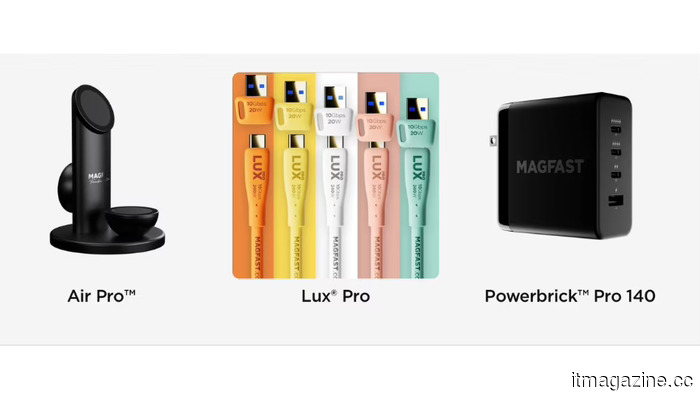
How a startup transformed supporters into advocates: MAGFAST disrupted traditional crowdfunding.
TL;DRMAGFAST navigated the challenges that often lead to the failure of hardware crowdfunding projects by opting for complete transparency instead of spin. Founder Seymour Segnit rebuilt the manufacturing process entirely and maintained open communication during each setback, resulting in a community where 75% of investors are also customers, with top buyers averaging over $1,500 in lifetime value.
Consider Kevin. It’s 2014, and he has just backed the Coolest Cooler on Kickstarter, an innovative portable cooler featuring a blender, Bluetooth speaker, and USB charger. For him, it seems like he’s discovered a unique, exciting product before anyone else, and he eagerly shares it with his friends, checking his email for updates.
Then, he waits.
The latest buzz from the EU tech scene, a story from our wise founder Boris, and some questionable AI art arrive in your inbox every week, for free. Sign up now! The campaign has garnered $13 million from over 62,000 backers, becoming one of Kickstarter's most funded projects, making the subsequent silence all the more perplexing. News emerges that the company has begun selling its product on Amazon while many backers remain empty-handed. Ultimately, the Coolest Cooler collapses, and a third of its initial backers, including Kevin, never receive their orders.
Kevin’s experience is not unique; only about 39% of Kickstarter campaigns meet their funding targets, and on Indiegogo, merely 24% of projects raise over $50,000, with the average campaign attracting around $8,000—far too little for a significant production run. A Wharton School study indicates backers should anticipate that about one in ten supported projects will fail completely. For every billion-dollar acquisition like Oculus Rift, there are numerous well-produced campaign videos for products that never progress beyond the prototype phase, resulting in frustrated backers. Investing is a gamble on a vision and, more specifically, on the people behind it.
This highlights the importance of recognizing and appreciating what Seymour Segnit has accomplished with MAGFAST.
Seymour’s first attempt at crowdfunding saw tens of thousands of chargers shipped but ultimately failed due to rapid growth. He regrouped, absorbed the lessons learned, and in 2017, launched MAGFAST.
MAGFAST was not merely a single product; it embodied a grand vision for a new kind of integrated charging system—a modular, magnetic family of products designed for seamless compatibility. He identified a vast, rapidly-growing market for improved charging solutions, noting that traditional cables are unattractive, prone to tangling and breaking. Thus, he developed a cable-free charging technology that snaps into place, anticipating what Apple would later term MagSafe. Understanding the visibility of chargers in everyday settings, he focused on enhancing convenience, durability, and design.
Seymour approached this challenge with a unique background: starting as an engineering student at Oxford, he later spent years in copywriting and ad management at top advertising agencies, hosted a radio show at London’s Capital FM, and co-founded a venture-backed Silicon Valley startup. His diverse experiences shaped him into a resilient and well-rounded leader.
The market quickly validated the premium integrated charging system concept, as MAGFAST earned over $250,000 in pre-orders within the first 15 minutes of launch and surpassed $600,000 by day’s end. Seymour clearly knew how to generate demand.
However, manufacturing turned out to be significantly more challenging. The consumer hardware production process is unforgiving and often misunderstood from the outside. “Critics label small, underfunded companies as ‘scams’ and ‘frauds’ when issues arise,” Segnit explains. “While some bad actors do exist, they are not the norm. The entrepreneurs I know are dedicated, optimistic, and hardworking, and my team is perhaps the most committed of all. Launching a hardware startup demands real perseverance for the long haul.”
The advantages largely favor large companies with substantial marketing resources and high volume. Smaller startups must struggle to attract customers and deal with elevated unit costs.
The initial manufacturers chosen for MAGFAST underestimated both manufacturing timelines and unit costs. As schedules extended and updates became increasingly difficult to deliver with enthusiasm, some backers lost patience and exited, some vocally and publicly.
Nevertheless, Seymour and MAGFAST persevered (they have since published around 300 video updates!). Not with hollow reassurances designed to sound apologetic while progress stalled, but with direct and consistent communication. He informed his community of the reality of their situation. Eventually, the first products from MAGFAST's integrated family began shipping, receiving considerable praise, although not in sufficient quantity for profitability.
In 2024, under the guidance of the team from the equity funding partner Netcapital, Segnit made bold decisions. He severed ties with the original manufacturers, reduced overhead, rebuilt the supply chain from the ground up, and managed factory relationships directly instead of relying on intermediaries.
Throughout this process, Segnit resisted the urge to conceal the company's struggles
Other articles
 The smart glasses from Google and Xreal, known as Project Aura, are set to be released later this year.
Xreal's Project Aura smart glasses incorporate built-in display units, offering an extensive field of view.
The smart glasses from Google and Xreal, known as Project Aura, are set to be released later this year.
Xreal's Project Aura smart glasses incorporate built-in display units, offering an extensive field of view.
 Wove app examines garments for PFAS and microplastics | TNW
Wove is the inaugural app designed to scan common clothing items for PFAS, microplastics, and concealed toxins, providing safety ratings and cleaner options for consumers.
QIZ Security and Google Cloud collaborate on encryption that is safe against quantum threats.
QIZ Security partners with Google Cloud to assist businesses in identifying cryptographic weaknesses and transitioning to post-quantum encryption ahead of upcoming deadlines.
Wove app examines garments for PFAS and microplastics | TNW
Wove is the inaugural app designed to scan common clothing items for PFAS, microplastics, and concealed toxins, providing safety ratings and cleaner options for consumers.
QIZ Security and Google Cloud collaborate on encryption that is safe against quantum threats.
QIZ Security partners with Google Cloud to assist businesses in identifying cryptographic weaknesses and transitioning to post-quantum encryption ahead of upcoming deadlines.
 ChatGPT, Claude, Gemini, and Grok are not prepared to inform American voters.
Chatbots are not dependable for news. The midterms are 167 days away. Here's an examination of what the available research indicates about ChatGPT, Claude, Gemini, and Grok, along with the actions being taken by the labs.
ChatGPT, Claude, Gemini, and Grok are not prepared to inform American voters.
Chatbots are not dependable for news. The midterms are 167 days away. Here's an examination of what the available research indicates about ChatGPT, Claude, Gemini, and Grok, along with the actions being taken by the labs.
 Gemini is now capable of creating videos, summarizing your morning, and handling digital tasks while you rest.
Google's Gemini app is receiving a significant update that includes cinematic video creation, morning summaries, more detailed responses, and a round-the-clock agent to assist with tasks.
Gemini is now capable of creating videos, summarizing your morning, and handling digital tasks while you rest.
Google's Gemini app is receiving a significant update that includes cinematic video creation, morning summaries, more detailed responses, and a round-the-clock agent to assist with tasks.
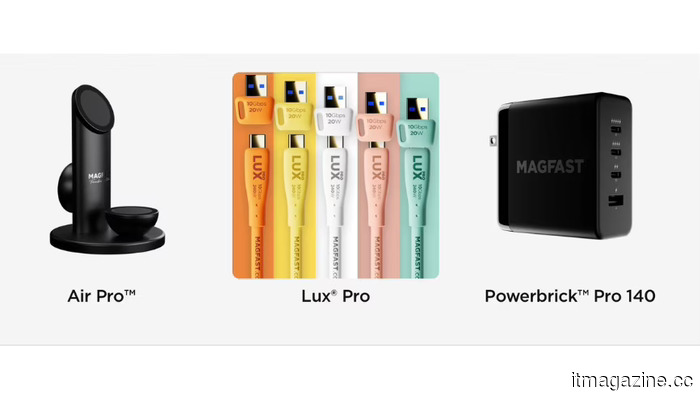 How one startup transformed investors into advocates: MAGFAST changed the crowdfunding landscape.
Following initial manufacturing challenges, MAGFAST founder Seymour Segnit restructured his supply chain, maintained a high level of transparency, and transformed crowdfunding supporters into loyal customers and investors.
How one startup transformed investors into advocates: MAGFAST changed the crowdfunding landscape.
Following initial manufacturing challenges, MAGFAST founder Seymour Segnit restructured his supply chain, maintained a high level of transparency, and transformed crowdfunding supporters into loyal customers and investors.
How a startup transformed supporters into advocates: MAGFAST disrupted traditional crowdfunding.
Following initial manufacturing challenges, MAGFAST founder Seymour Segnit restructured his supply chain, maintained a high level of transparency, and transformed crowdfunding backers into loyal customers and investors.