
How one startup transformed investors into advocates: MAGFAST changed the crowdfunding landscape.
TL;DR MAGFAST navigated the challenges that often hinder hardware crowdfunding projects by prioritizing radical transparency instead of spin. Founder Seymour Segnit rebuilt the manufacturing process from the ground up and maintained open communication throughout the difficulties, resulting in a community where 75% of investors are also customers, and the average lifetime value of top buyers exceeds $1,500.
Imagine Kevin in 2014, who backed the Coolest Cooler on Kickstarter, a portable cooler featuring a blender, a Bluetooth speaker, and a USB charger. He thought he had found something unique and exciting, telling his friends and eagerly awaiting updates.
The campaign raised $13 million from over 62,000 backers, becoming one of Kickstarter’s most funded projects, which made the ensuing silence even more perplexing. News emerged that the company started selling the product on Amazon while many original backers, including Kevin, were left empty-handed. Ultimately, the Coolest Cooler failed, and a third of its initial backers never received what they had paid for.
Kevin’s experience is not an anomaly; only about 39% of Kickstarter projects reach their funding goals. On Indiegogo, just 24% raise over $50,000, averaging around $8,000 per campaign, which is insufficient for significant production runs. A Wharton School study indicates that backers should statistically anticipate that about one in ten supported projects will fail entirely. For every billion-dollar success like the Oculus Rift, many well-produced campaign videos depict products that never progress beyond the prototype stage, leaving frustrated backers behind. Investing in these campaigns means betting on a vision and, more importantly, on the individuals behind it.
This context highlights the importance of understanding and appreciating what Seymour Segnit has achieved with MAGFAST. Following a previous crowdfunding attempt that shipped tens of thousands of chargers but ultimately failed due to rapid growth, Segnit consolidated his learnings and launched MAGFAST in 2017.
MAGFAST isn't a single device but represents a comprehensive vision for an integrated charging system, featuring a modular family of magnetic products designed to work together seamlessly. Segnit identified a growing market demand for improved charging solutions, designing a cable-free technology that employs magnetic connections, anticipating Apple’s later MagSafe branding. He recognized that chargers are ubiquitous yet often neglect convenience, durability, and aesthetics.
Seymour brought a unique skill set to the table: he started as an engineering student at Oxford, then spent years in advertising at premier agencies, hosted a radio show, and co-founded a venture-backed startup in Silicon Valley. This diverse experience helped shape him into a resilient and well-rounded leader.
The market quickly validated the concept of a premium integrated charging system, with MAGFAST generating over $250,000 in pre-orders within just 15 minutes of launch and surpassing $600,000 by the end of the first day. Seymour understood how to generate demand.
However, manufacturing the products proved to be significantly more challenging. Consumer hardware production is often unforgiving, and when small, underfunded companies face setbacks, critics are quick to label them as scams. According to Segnit, while some opportunistic actors do exist, most entrepreneurs are hardworking and dedicated. Launching a hardware startup demands considerable long-term perseverance.
Large companies with substantial marketing budgets dominate the market, placing smaller startups at a disadvantage as they struggle to attract customers while covering higher production costs. MAGFAST’s initial manufacturers miscalculated both the production timelines and unit costs, leading to extended delays and difficult updates that caused some backers to lose patience and withdraw their support, sometimes vocally.
Despite these obstacles, Segnit and MAGFAST remained transparent, sharing around 300 video updates with their community. Instead of offering empty apologies, they communicated openly about the company's situation. The first products from MAGFAST’s integrated collection eventually shipped to positive feedback, though not enough volume to yield profitability.
In 2024, encouraged by their equity funding partner Netcapital, Segnit made bold decisions. He severed ties with the original manufacturers, reduced overhead costs, rebuilt the supply chain from square one, and established direct relationships with factories, eliminating intermediaries.
Throughout this process, Segnit refrained from concealing any company challenges from its supporters, many of whom had become part-owners of MAGFAST through crowdfunding initiatives. This transparency came at a financial cost, but Segnit valued it more.
The changes significantly improved the company's trajectory, with MAGFAST Gen2, a newly conceived product line featuring some of the most advanced charging devices, beginning deliveries by late 2025. Customers who remained loyal recognized the changes, with individuals like David M expressing their appreciation for the commitment during tough times and their excitement for future products.
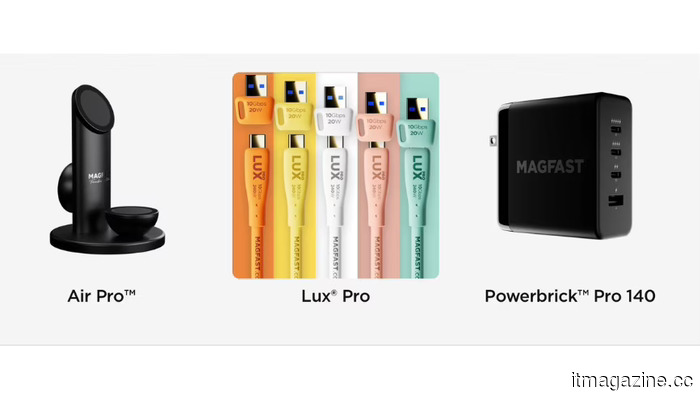
MAGFAST Gen2 products distinctly stand apart in their category. While acknowledging that charging cables are not disappearing soon, MAGFAST's Lux and Lux Pro USB cables are top-tier, high-performance, and durable. Air Pro is the only charging base station capable of wirelessly charging three devices simultaneously at full
Other articles
 Apple Sports is all set to monitor every World Cup disappointment as it happens.
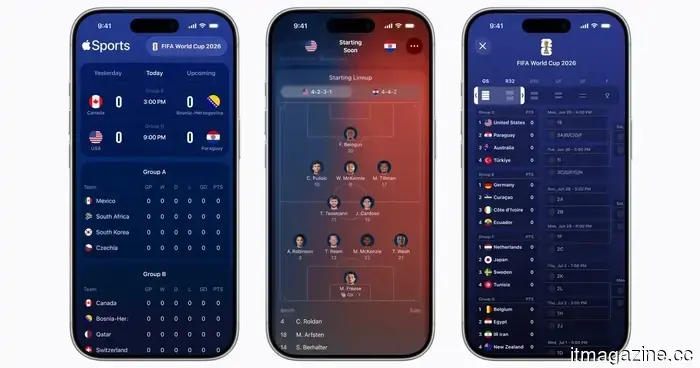
Apple Sports is broadening its international reach with World Cup features such as bracket displays, visual formations, widgets, Live Activities, and one-tap access to Apple TV.
QIZ Security collaborates with Google Cloud to develop quantum-safe encryption solutions.
QIZ Security partners with Google Cloud to assist businesses in identifying cryptographic vulnerabilities and transitioning to post-quantum encryption before the deadlines become more stringent.
Apple Sports is all set to monitor every World Cup disappointment as it happens.
Apple Sports is broadening its international reach with World Cup features such as bracket displays, visual formations, widgets, Live Activities, and one-tap access to Apple TV.
QIZ Security collaborates with Google Cloud to develop quantum-safe encryption solutions.
QIZ Security partners with Google Cloud to assist businesses in identifying cryptographic vulnerabilities and transitioning to post-quantum encryption before the deadlines become more stringent.
 ChatGPT, Claude, Gemini, and Grok are not prepared to inform American voters.
Chatbots are not dependable for news. The midterms are 167 days away. Here's an examination of what the available research indicates about ChatGPT, Claude, Gemini, and Grok, along with the actions being taken by the labs.
ChatGPT, Claude, Gemini, and Grok are not prepared to inform American voters.
Chatbots are not dependable for news. The midterms are 167 days away. Here's an examination of what the available research indicates about ChatGPT, Claude, Gemini, and Grok, along with the actions being taken by the labs.
 Google Pomelli is now capable of creating your entire brand from the ground up.
Google Pomelli has become more intelligent. This AI marketing tool is now capable of creating your brand identity, generating brand books, and designing a full website for your small business.
Google Pomelli is now capable of creating your entire brand from the ground up.
Google Pomelli has become more intelligent. This AI marketing tool is now capable of creating your brand identity, generating brand books, and designing a full website for your small business.
 Google Play is introducing app previews similar to TikTok and incorporating AI-driven search features.
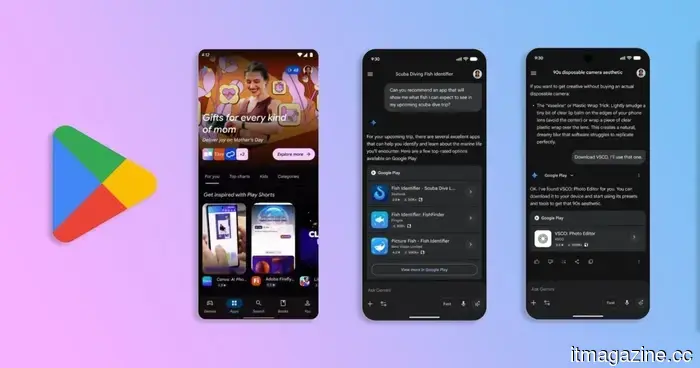
Google has announced the integration of Google Play with the Gemini app, which will enhance app and content discovery. The company has also introduced Play Shorts, a short video feed for exploring apps, along with Ask Play, a conversational AI search feature that assists users in finding the appropriate apps.
Google Play is introducing app previews similar to TikTok and incorporating AI-driven search features.
Google has announced the integration of Google Play with the Gemini app, which will enhance app and content discovery. The company has also introduced Play Shorts, a short video feed for exploring apps, along with Ask Play, a conversational AI search feature that assists users in finding the appropriate apps.
 Android 17 is at long last receiving Apple’s Handoff feature, and it’s overdue.
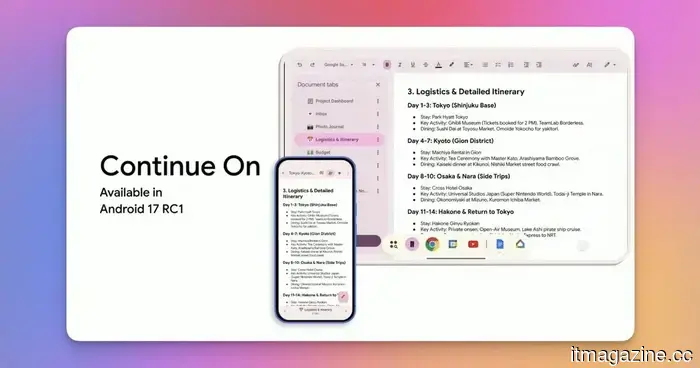
Android 17's new Continue On feature enables you to launch an app on your phone and immediately resume your activity on your tablet with a simple tap.
Android 17 is at long last receiving Apple’s Handoff feature, and it’s overdue.
Android 17's new Continue On feature enables you to launch an app on your phone and immediately resume your activity on your tablet with a simple tap.
How one startup transformed investors into advocates: MAGFAST changed the crowdfunding landscape.
Following initial manufacturing challenges, MAGFAST founder Seymour Segnit restructured his supply chain, maintained a high level of transparency, and transformed crowdfunding supporters into loyal customers and investors.