
At I/O 2026, Google introduces voice prompts for Docs, Keep, and Gmail.
TL;DR: At I/O 2026, Google introduced voice-based features for Docs, Keep, and Gmail, allowing users to create documents, organize notes, and search their inboxes through speech rather than typing. These capabilities utilize Gemini AI and will be available this summer for premium subscribers and Workspace business users.
Google is focusing on the idea that the future of productivity software will rely on voice rather than keyboards. During its I/O 2026 developer conference on Monday, the company showcased voice-based prompting tools for Docs, Keep, and Gmail, driven by its Gemini AI models.
The standout feature, Docs Live, enables users to create and modify documents exclusively through voice commands. In a demonstration, Google illustrated a user directing the tool to extract résumé details from Drive, incorporate event logistics from an email chain, and add some humorous stories, all in one continuous, spontaneous flow of speech. The premise is that voice can accommodate longer, more intricate prompts than most people are willing to type, and that current models can adeptly follow along even if a speaker deviates mid-sentence.
CEO Sundar Pichai described this transition as inevitable, claiming that users will soon routinely use voice for document creation and editing. While this is an ambitious statement, the technical foundation seems to be in place. Google recently released a separate dictation tool named Rambler, integrated into its Gboard keyboard, which eliminates filler words and manages multilingual code-switching seamlessly. Rambler was launched earlier this month for Samsung Galaxy and Google Pixel devices.
Keep is also receiving a voice upgrade. Users will be able to vocalize a stream of disorganized thoughts, ranging from gift suggestions to grocery lists to home renovation ideas, with the AI sorting the transcriptions into distinct, organized notes. The concept isn't new, as apps like Voicenotes and AudioPen have provided voice-to-structured-text options for years, and desktop dictation tools such as Wispr Flow, Monologue, and Aqua Voice have established dedicated user bases. What Google adds is scale: Keep is already integrated into the larger Workspace ecosystem, allowing voice notes to directly flow into Docs, Sheets, and other applications in the suite.
Gmail is also enhancing its functionality with a feature called Gmail Live, a voice interface for the inbox. Instead of entering search queries, users can verbally request specific information, such as flight confirmation codes, Airbnb check-in details, or their child's school schedule, and receive spoken responses based on their emails. This acts as an AI assistant for your email, capable of understanding context well enough to manage multi-part requests.
The overall trend is evident: users are posing increasingly complex, multi-faceted questions to AI tools, and voice serves as a more intuitive interface for such interactions compared to a text box. Google isn't the only company recognizing this trend; its recent Cloud Next conference highlighted an array of agentic AI features across Workspace, and competitors like OpenAI and Apple are also racing to incorporate voice-first AI into their productivity solutions.
The new voice functionalities will be available this summer for Google AI Premium subscribers and Google Workspace business users. Whether utilizing voice for document interaction will become a common practice remains to be seen, but Google seems determined that the dominance of keyboards in productivity is due for change.
Other articles
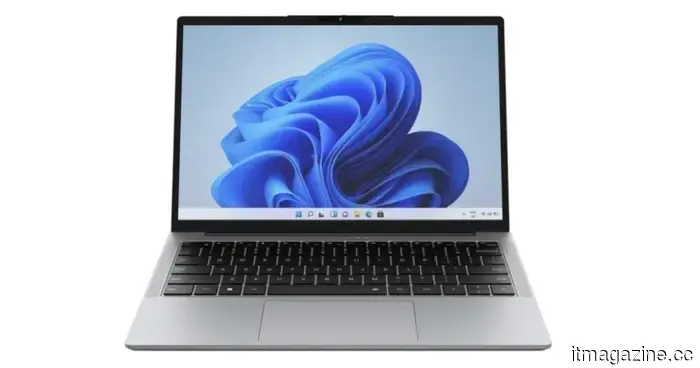 Chuwi's UniBook is a $449 laptop vying for the title held by the MacBook Neo, offering substantial features.
Chuwi's UniBook features Intel's latest Wildcat Lake Core 3 processor, along with a 14-inch display that covers 100% of the sRGB spectrum, ample ports, and an estimated price of $449.
Chuwi's UniBook is a $449 laptop vying for the title held by the MacBook Neo, offering substantial features.
Chuwi's UniBook features Intel's latest Wildcat Lake Core 3 processor, along with a 14-inch display that covers 100% of the sRGB spectrum, ample ports, and an estimated price of $449.
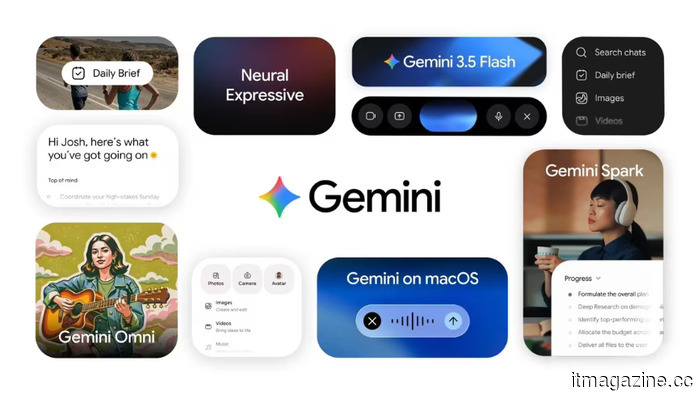 At I/O 2026, Google Gemini introduces Daily Brief and a redesign of Neural Expressive.
At I/O 2026, Google introduced Daily Brief, a redesigned Neural Expressive, and the Spark AI agent for Gemini's 900 million users, intensifying its competition with ChatGPT and Claude.
At I/O 2026, Google Gemini introduces Daily Brief and a redesign of Neural Expressive.
At I/O 2026, Google introduced Daily Brief, a redesigned Neural Expressive, and the Spark AI agent for Gemini's 900 million users, intensifying its competition with ChatGPT and Claude.
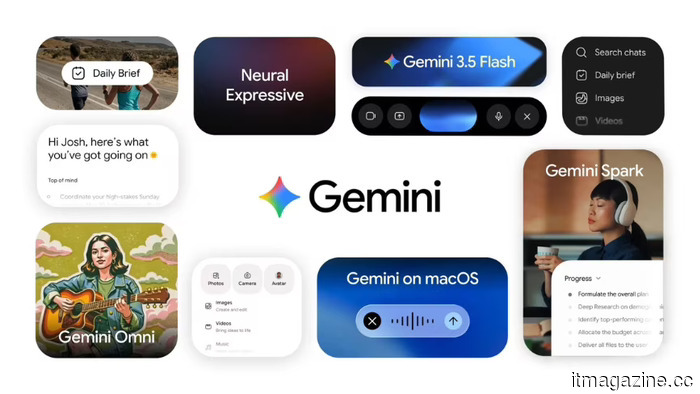 At I/O 2026, Google Gemini introduces the Daily Brief and a redesign of Neural Expressive.
At I/O 2026, Google introduced the Daily Brief, a redesigned Neural Expressive, and the Spark AI agent aimed at Gemini's 900 million users, intensifying its competition with ChatGPT and Claude.
At I/O 2026, Google Gemini introduces the Daily Brief and a redesign of Neural Expressive.
At I/O 2026, Google introduced the Daily Brief, a redesigned Neural Expressive, and the Spark AI agent aimed at Gemini's 900 million users, intensifying its competition with ChatGPT and Claude.
 At I/O 2026, Google substitutes the search box with AI agents.
At I/O 2026, Google revealed its most significant redesign of Search in 25 years, featuring information agents, a generative UI, and mini-apps driven by Gemini 3.5 Flash.
At I/O 2026, Google substitutes the search box with AI agents.
At I/O 2026, Google revealed its most significant redesign of Search in 25 years, featuring information agents, a generative UI, and mini-apps driven by Gemini 3.5 Flash.
 Google substitutes the search box with AI agents at I/O 2026.
At I/O 2026, Google revealed its most significant Search overhaul in 25 years, featuring information agents, a generative user interface, and mini-apps driven by Gemini 3.5 Flash.
Google substitutes the search box with AI agents at I/O 2026.
At I/O 2026, Google revealed its most significant Search overhaul in 25 years, featuring information agents, a generative user interface, and mini-apps driven by Gemini 3.5 Flash.
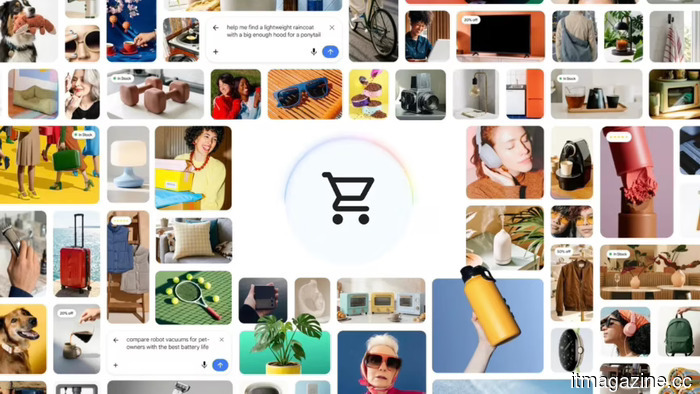 Google introduces Universal Cart and refreshes AP2 at I/O 2026.
Google introduced Universal Cart, an AI-driven shopping center that integrates Search, Gemini, YouTube, and Gmail, while also updating its Agent Payments Protocol for automated transactions.
Google introduces Universal Cart and refreshes AP2 at I/O 2026.
Google introduced Universal Cart, an AI-driven shopping center that integrates Search, Gemini, YouTube, and Gmail, while also updating its Agent Payments Protocol for automated transactions.
At I/O 2026, Google introduces voice prompts for Docs, Keep, and Gmail.
At I/O 2026, Google introduced voice-activated AI functionalities for Docs, Keep, and Gmail, enabling users to generate documents and search their inboxes through speech rather than typing.