
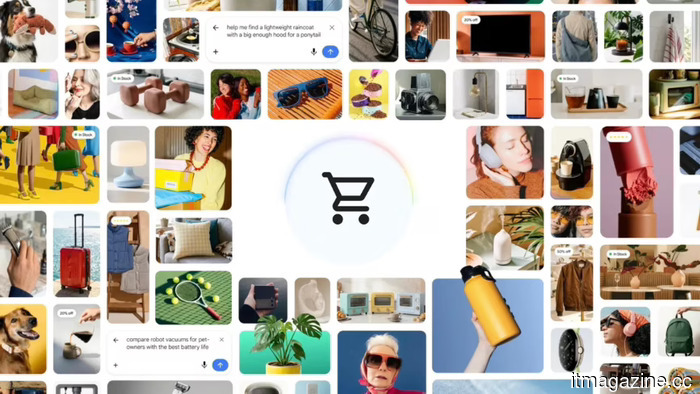
Google announces Universal Cart and releases AP2 updates at I/O 2026.
TL;DR: Google introduced Universal Cart at I/O 2026, an AI-enhanced shopping hub allowing users to collect products from Search, Gemini, YouTube, and Gmail into a single, ongoing cart with deal monitoring and compatibility checks. Additionally, it has upgraded its Agent Payments Protocol (AP2) to enable AI agents to make purchases independently and is broadening its Universal Commerce Protocol access to more countries and sectors.
Google has launched Universal Cart, an AI-driven shopping hub that allows users to compile products from its various platforms—Search, Gemini, YouTube, and Gmail—into one continuous cart, as announced during I/O 2026. This feature, which is rolling out in the US today, aims to position Google as a key intermediary in online commerce.
Universal Cart goes beyond merely storing items. Utilizing Gemini, it tracks price reductions, provides price history, issues restock notifications, and performs AI compatibility assessments. A demonstration showcased how a user assembling a custom PC could incorporate parts from different retailers and receive alerts if, for example, a selected processor was incompatible with a chosen motherboard, along with alternative suggestions.
The feature is built upon the existing Google Wallet framework for rewards and loyalty points, and integrates with the Universal Commerce Protocol (UCP), an open standard launched by Google in January 2026. UCP provides a unified framework for AI-driven commerce, enabling direct checkout through Google or a smooth transition to a merchant’s website. An update in March 2026 enhanced it with cart management, real-time catalog inquiries, and identity linking, ensuring shoppers retain loyalty benefits when purchasing through Google’s platforms. Launch partners include Nike, Sephora, Target, Ulta Beauty, Walmart, Wayfair, and Shopify retailers like Fenty and Steve Madden.
The timing is crucial. Chinese tech giants have already rolled out AI shopping agents on a large scale, with Alibaba's Qwen assistant reaching 300 million monthly active users on Taobao. Amazon has integrated Alexa into its search bar, combining its Rufus chatbot and Alexa+ assistant for a cohesive shopping experience. Google is clearly striving to stay competitive in what McKinsey predicts could be a $5 trillion agentic commerce market by 2030. The stakes are high: the company that dominates the AI shopping landscape will significantly influence consumer spending.
In tandem with Universal Cart, Google has revised its Agent Payments Protocol (AP2), an open framework introduced in September 2025 with over 60 partners, including PayPal, Mastercard, and American Express. AP2 facilitates AI agents in making payments on behalf of users within predetermined limits, utilizing cryptographically signed digital contracts known as “Mandates” to ensure a secure audit trail for transactions. The latest version 0.2.0 of the protocol, released in April 2026, added “Human Not Present” payments, enabling agents to autonomously acquire items like limited-release tickets as soon as they become available. Google has contributed AP2 to the FIDO Alliance, indicating its goal to establish the protocol as an industry-standard rather than a proprietary solution.
The broader venture into agentic commerce extends beyond the United States. UCP-powered checkout is expanding to Canada and Australia, with the UK set to follow. Google also aims to apply the protocol to other areas, including hotel bookings and local food delivery, along with YouTube in the US.
Universal Cart is expected to be available on the Gemini app this summer, with integrations for YouTube and Gmail to come afterwards. For consumers, the appeal lies in convenience: a single cart, ongoing deal tracking, and AI that shops on their behalf. For Google, the strategy is more calculated. By positioning itself as the mediating layer among shoppers, merchants, and payment providers, it can gather data and exert influence at every phase of the purchasing process.
How retailers perceive this as either a beneficial distribution channel or a potential threat to their direct customer relationships may depend on how much traffic Google directs to them and the associated costs. Some retailers are already reporting traffic decreases of up to 30% as consumers move from traditional search to AI agent inquiries. Google's Universal Cart could hasten this trend or, if its open protocols gain traction, assist merchants in reaching customers wherever they are.
Other articles
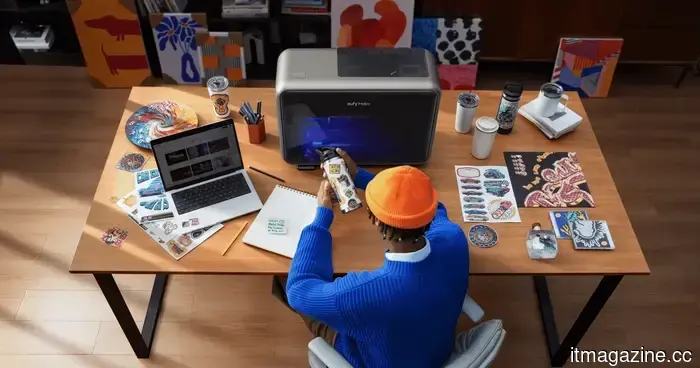 The Design Trade-Offs Influencing Contemporary UV Printing Systems
UV printing depends on precisely regulated chemical reactions, with even minor changes in ink behavior impacting the output, maintenance, and long-term reliability. As this technology is adopted by smaller studios and home environments, the discussion surrounding open versus closed ink systems increasingly revolves around finding a balance between flexibility, stability, and user-friendliness.
The Design Trade-Offs Influencing Contemporary UV Printing Systems
UV printing depends on precisely regulated chemical reactions, with even minor changes in ink behavior impacting the output, maintenance, and long-term reliability. As this technology is adopted by smaller studios and home environments, the discussion surrounding open versus closed ink systems increasingly revolves around finding a balance between flexibility, stability, and user-friendliness.
 Google showcases Android audio glasses created in collaboration with Gentle Monster and Warby Parker.
Google has provided us with an initial glimpse of the Android XR audio glasses, which are driven by Gemini and set to be released later this year.
Google showcases Android audio glasses created in collaboration with Gentle Monster and Warby Parker.
Google has provided us with an initial glimpse of the Android XR audio glasses, which are driven by Gemini and set to be released later this year.
 Discord automatically encrypts all voice and video calls.
Discord has enabled end-to-end encryption for all voice and video calls, and no opt-in is necessary. The DAVE protocol ensures that even Discord cannot eavesdrop.
Discord automatically encrypts all voice and video calls.
Discord has enabled end-to-end encryption for all voice and video calls, and no opt-in is necessary. The DAVE protocol ensures that even Discord cannot eavesdrop.
 Google Antigravity 2.0 has been released, featuring a Command Line Interface (CLI), Software Development Kit (SDK), and AI agents.
At I/O 2026, Google introduced Antigravity 2.0, featuring multi-agent orchestration, a new command-line interface tool, a software development kit for custom agents, and a $100/month AI Ultra plan.
Google Antigravity 2.0 has been released, featuring a Command Line Interface (CLI), Software Development Kit (SDK), and AI agents.
At I/O 2026, Google introduced Antigravity 2.0, featuring multi-agent orchestration, a new command-line interface tool, a software development kit for custom agents, and a $100/month AI Ultra plan.
 Discord automatically encrypts all voice and video calls.
Discord has enabled end-to-end encryption for all voice and video calls automatically, without the need for users to opt in. The DAVE protocol ensures that even Discord itself cannot eavesdrop.
Discord automatically encrypts all voice and video calls.
Discord has enabled end-to-end encryption for all voice and video calls automatically, without the need for users to opt in. The DAVE protocol ensures that even Discord itself cannot eavesdrop.
 Google substitutes the search box with AI agents at I/O 2026.
At I/O 2026, Google introduced its most significant redesign of Search in 25 years, featuring information agents, a generative user interface, and mini-apps driven by Gemini 3.5 Flash.
Google substitutes the search box with AI agents at I/O 2026.
At I/O 2026, Google introduced its most significant redesign of Search in 25 years, featuring information agents, a generative user interface, and mini-apps driven by Gemini 3.5 Flash.
Google announces Universal Cart and releases AP2 updates at I/O 2026.
Google introduced Universal Cart, an AI-driven shopping platform that integrates Search, Gemini, YouTube, and Gmail, while also announcing enhancements to its Agent Payments Protocol for automated purchases.