
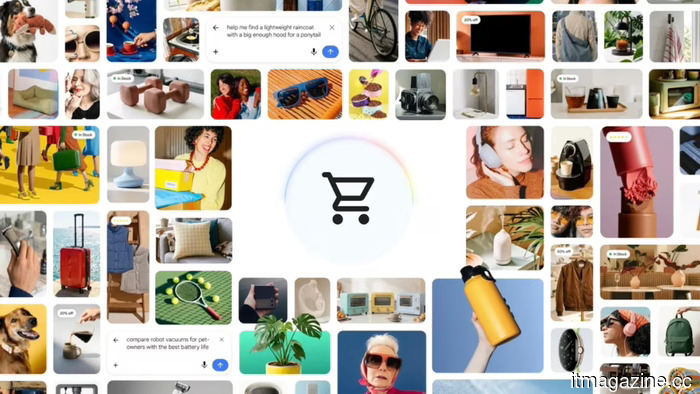
Google introduces Universal Cart and announces updates to AP2 at I/O 2026.
**TL;DR**: At I/O 2026, Google introduced Universal Cart, an AI-driven shopping hub that enables users to compile products from its platforms—Search, Gemini, YouTube, and Gmail—into a single ongoing cart with features like deal tracking and compatibility checks. The company also updated its Agent Payments Protocol (AP2) to allow AI agents to make purchases independently, and it plans to extend its Universal Commerce Protocol to additional countries and sectors.
Google has launched Universal Cart, an AI-enhanced shopping hub revealed at I/O 2026, which allows users to gather products from its ecosystem, including Search, Gemini, YouTube, and Gmail, into a single, persistent cart. This feature, available in the US starting today, marks Google’s most ambitious effort to establish itself as a primary intermediary in online commerce.
Universal Cart serves more than just a storage option for products. With capabilities powered by Gemini, it tracks price reductions, provides price history, sends notifications for restocked items, and conducts AI compatibility checks. A demonstration by Google showcased how a user assembling a custom PC could add parts from various retailers and receive automatic alerts regarding any incompatibilities, along with suggestions for alternatives.
This feature utilizes Google Wallet's existing framework for managing rewards and loyalty points and connects with the Universal Commerce Protocol (UCP), an open standard introduced by Google in January 2026. UCP helps create a unified framework for AI-fueled commerce, allowing direct checkouts through Google or easy transitions to a merchant’s website. A March 2026 update enhanced cart management, real-time catalog inquiries, and identity linking, ensuring that shoppers can keep their loyalty benefits when purchasing via Google’s platforms. Initial partners include Nike, Sephora, Target, Ulta Beauty, Walmart, Wayfair, and Shopify sellers like Fenty and Steve Madden.
The timing is crucial, as China's tech giants have already rolled out AI shopping agents widely, with Alibaba's Qwen assistant reaching 300 million active users monthly on Taobao. Meanwhile, Amazon has integrated Alexa into its search bar, merging its Rufus chatbot and Alexa+ assistant for a seamless shopping experience. Google is evidently striving to keep up in a projected $5 trillion agent-based commerce market by 2030, as highlighted by McKinsey. The implications are significant: the entity that governs the primary AI shopping interface will have a substantial influence over billions in consumer spending.
In conjunction with Universal Cart, Google has also upgraded its Agent Payments Protocol (AP2), an open framework initially introduced in September 2025, which includes over 60 collaborators such as PayPal, Mastercard, and American Express. AP2 permits AI agents to carry out payments on behalf of users within predefined limits, using cryptographically signed digital contracts known as “Mandates” to ensure a secure audit trail for each transaction. The most recent v0.2.0 update, released in April 2026, added “Human Not Present” payments, enabling agents to automatically purchase items like limited-edition tickets as soon as they become available. Google has contributed AP2 to the FIDO Alliance, aiming to establish it as an industry-wide standard rather than a proprietary mechanism.
The broader initiative into agentic commerce extends beyond the US. UCP-enabled checkouts are set to expand into Canada and Australia, with plans for the UK to follow. Google also aims to apply the protocol in more sectors, such as hotel reservations and local food delivery, along with YouTube in the US.
Universal Cart is anticipated to be available on the Gemini app this summer, with integrations for YouTube and Gmail to come afterward. For consumers, the appeal lies in convenience: a unified cart, ongoing deal tracking, and AI that actively shops on their behalf. For Google, the strategy is more tactical. By positioning itself as the connection point between shoppers, merchants, and payment systems, it can gather data and exert influence over each stage of the purchasing process.
Retailers’ perceptions of this as an advantageous distribution channel or a threat to their direct customer relationships will likely hinge on the volume of traffic Google directs their way and the associated costs. Some retailers have reported traffic drops of up to 30% as consumers transition from traditional search to AI agent queries. Google’s Universal Cart could either hasten this shift or, if its open protocols gain traction, assist merchants in reaching customers wherever they are.
Other articles
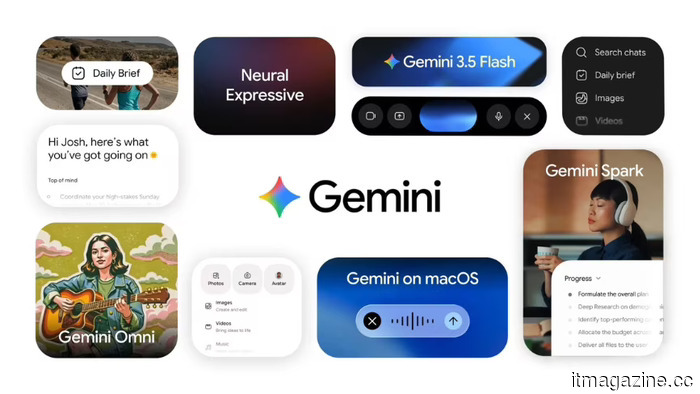 At I/O 2026, Google Gemini introduces the Daily Brief and a redesign of Neural Expressive.
At I/O 2026, Google introduced the Daily Brief, a redesigned Neural Expressive, and the Spark AI agent aimed at Gemini's 900 million users, intensifying its competition with ChatGPT and Claude.
At I/O 2026, Google Gemini introduces the Daily Brief and a redesign of Neural Expressive.
At I/O 2026, Google introduced the Daily Brief, a redesigned Neural Expressive, and the Spark AI agent aimed at Gemini's 900 million users, intensifying its competition with ChatGPT and Claude.
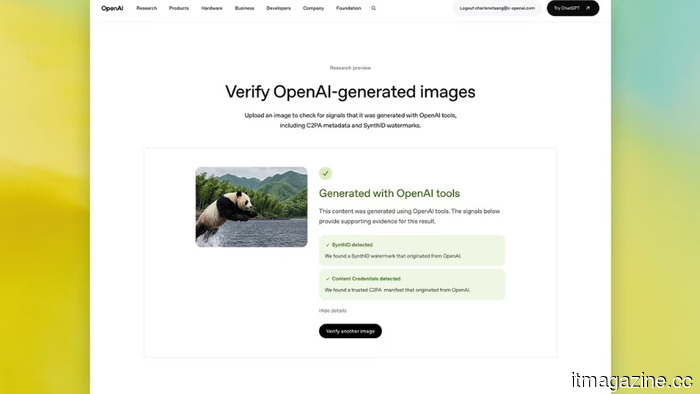 OpenAI incorporates C2PA metadata and SynthID watermarks into AI-generated images.
OpenAI has become a participant in the C2PA standard and has teamed up with Google to incorporate invisible SynthID watermarks, establishing a dual-layer system for identifying images generated by AI.
OpenAI incorporates C2PA metadata and SynthID watermarks into AI-generated images.
OpenAI has become a participant in the C2PA standard and has teamed up with Google to incorporate invisible SynthID watermarks, establishing a dual-layer system for identifying images generated by AI.
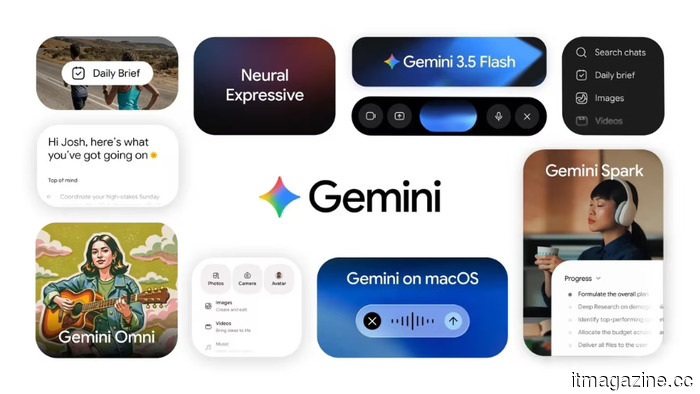 Google Gemini introduces Daily Brief and a redesign of Neural Expressive at I/O 2026.
At I/O 2026, Google introduces Daily Brief, a redesigned Neural Expressive, and a Spark AI agent for Gemini's 900 million users, intensifying its competition with ChatGPT and Claude.
Google Gemini introduces Daily Brief and a redesign of Neural Expressive at I/O 2026.
At I/O 2026, Google introduces Daily Brief, a redesigned Neural Expressive, and a Spark AI agent for Gemini's 900 million users, intensifying its competition with ChatGPT and Claude.
 You can now explore AI-generated versions of actual locations with Google’s Project Genie.
Google's experimental Project Genie has evolved beyond solely creating worlds from imagination. With the integration of Street View, the distinction between actual locations and AI-generated environments is beginning to blur in intriguing ways.
You can now explore AI-generated versions of actual locations with Google’s Project Genie.
Google's experimental Project Genie has evolved beyond solely creating worlds from imagination. With the integration of Street View, the distinction between actual locations and AI-generated environments is beginning to blur in intriguing ways.
 Google introduced the Gemini Spark agentic AI assistant during I/O 2026.
At I/O 2026, Google introduced Gemini Spark, a persistent AI agent that handles tasks through Gmail, navigates Chrome, and operates continuously on cloud VMs for AI Ultra subscribers.
Google introduced the Gemini Spark agentic AI assistant during I/O 2026.
At I/O 2026, Google introduced Gemini Spark, a persistent AI agent that handles tasks through Gmail, navigates Chrome, and operates continuously on cloud VMs for AI Ultra subscribers.
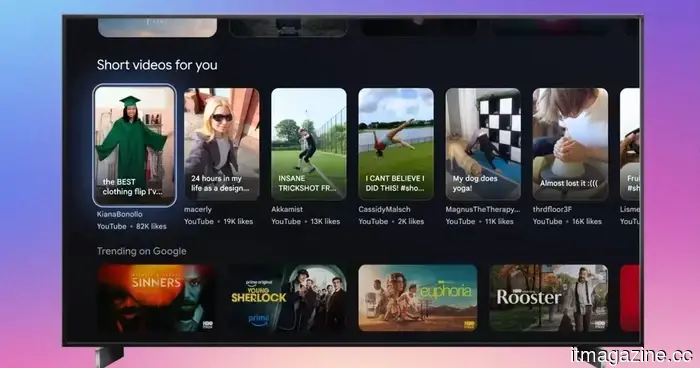 Google aims to transform your TV remote with Gemini and pointer controls.
Google is transforming the future of televisions with Gemini-enhanced discovery and a new method for navigating applications. Nonetheless, the most significant shift might not be on the display itself, but rather in your remote control.
Google aims to transform your TV remote with Gemini and pointer controls.
Google is transforming the future of televisions with Gemini-enhanced discovery and a new method for navigating applications. Nonetheless, the most significant shift might not be on the display itself, but rather in your remote control.
Google introduces Universal Cart and announces updates to AP2 at I/O 2026.
Google introduced Universal Cart, an AI shopping platform that integrates Search, Gemini, YouTube, and Gmail, along with enhancements to its Agent Payments Protocol for autonomous transactions.