
At I/O 2026, Google substitutes the search box with AI agents.
**TL;DR** At I/O 2026, Google announced a major transformation of its Search, replacing the classic search box with an AI-driven interface utilizing Gemini 3.5 Flash. This update introduces "information agents" that continuously track the web, a generative UI that creates custom tools in real-time, and mini-apps that users can develop through natural language commands.
For 25 years, Google Search has featured a simple blank white rectangle with a blinking cursor, instructing users to distill their questions into a few keywords. However, during its annual I/O developer conference, Google proclaimed that this era has ended.
The company presented an "intelligent search box," an adaptable input field powered by Gemini 3.5 Flash that can take text, images, files, videos, and open Chrome tabs. Instead of presenting a list of links, the revamped interface immerses users in AI-generated interactive experiences that include custom visualizations, tools, and "information agents" that monitor the internet continuously.
Liz Reid, Google's vice president and head of Search, described this update as "the biggest upgrade to our iconic search box since it was introduced over 25 years ago." Google's approach is not merely to enhance autocomplete but to fundamentally redefine the core interaction between its flagship service and the billions of monthly users.
**From keywords to conversations, from links to agents.**
Numbers associated with the announcement are impressive. AI Overviews, which provides AI-generated summaries above traditional results, now serves 2.5 billion monthly users. The conversational AI Mode, introduced a year ago, has surpassed one billion monthly users, with queries doubling every quarter. For context, OpenAI reported that ChatGPT reached 900 million weekly active users in February 2026.
In response to competitive pressure, Google is not retreating to its previous model but is pushing further into the realm of agency. The featured information agents operate 24/7, analyzing blogs, news sites, social media, and real-time financial, shopping, and sports data to notify users about relevant updates. This resembles Google Alerts, but enhanced with a modern language model capable of nuanced reasoning.
Information agents will become available this summer for Google AI Pro and Ultra subscribers in the U.S., while the new search box will start its global rollout this week.
**Generative UI and mini-apps in Search.**
Google also introduced "generative UI," which allows Gemini 3.5 Flash to create custom widgets, simulations, and visual tools on demand. For instance, a query about mortgage rates could yield a live calculator, while asking about a hiking trail might result in an interactive map with elevation information.
Even more ambitious is Antigravity, Google’s platform for building agent-driven experiences directly integrated into Search. Users can describe a “mini-app” in natural language—like a fitness tracker or wedding planner—and Search will generate it instantly, sourcing real-time data from reviews, maps, and local information. Mini-apps will also launch this summer for AI Pro and Ultra subscribers.
Generative UI will be available for free to all users, highlighting Google’s strategy to engage a wide user base while reserving the most advanced agentic features for paying customers.
**What this means for the open web.**
This change has significant ramifications for publishers and the overall web ecosystem. If Google’s AI can synthesize information, create interactive tools, and deploy background agents to monitor updates, the motivation for users to click through to source websites decreases. Referral traffic from Google Search has already been dropping as AI Overviews have broadened, and these new functionalities are likely to exacerbate that trend.
The European Union is already noticing this shift. In April, the European Commission introduced measures mandating Google to share anonymized search data with competing search engines and AI chatbot providers under the Digital Markets Act, with a compliance deadline of July 27, 2026. As Google’s search interface begins to resemble a self-sufficient AI application, it is expected to face increasing regulatory scrutiny.
This evolution is not occurring in isolation; the industry is quickly advancing towards AI-driven search paradigms, with companies like OpenAI and Perplexity developing conversational alternatives. Google’s edge lies in its scale—2.5 billion monthly users creates a barrier few competitors can overcome—but the company evidently believes that the best defense is to transform its product into something unrecognizable compared to the version that shaped the internet era.
The traditional search box is obsolete. Long live the search agent.
Other articles
 Gemini 3.5 Flash is the new default AI model from Google, designed to perform actions rather than merely provide answers.
Today, Google unveiled Gemini 3.5 Flash, the most advanced model in its Flash series to date. The company claims it surpasses Gemini 3.1 Pro in coding and agency benchmarks and operates at four times the speed of similar frontier models.
At I/O 2026, Google introduces voice prompting features for Docs, Keep, and Gmail.
At I/O 2026, Google introduced voice-enabled AI capabilities for Docs, Keep, and Gmail, allowing users to generate documents and search their emails through voice commands rather than typing.
Gemini 3.5 Flash is the new default AI model from Google, designed to perform actions rather than merely provide answers.
Today, Google unveiled Gemini 3.5 Flash, the most advanced model in its Flash series to date. The company claims it surpasses Gemini 3.1 Pro in coding and agency benchmarks and operates at four times the speed of similar frontier models.
At I/O 2026, Google introduces voice prompting features for Docs, Keep, and Gmail.
At I/O 2026, Google introduced voice-enabled AI capabilities for Docs, Keep, and Gmail, allowing users to generate documents and search their emails through voice commands rather than typing.
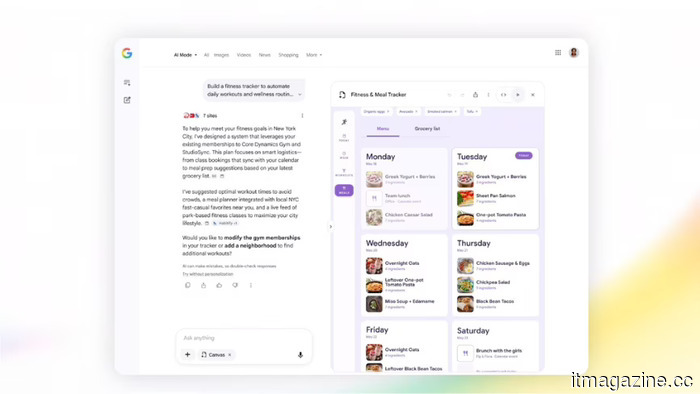 Google introduces always-on information agents in Search during I/O 2026.
Google's updated information agents operate around the clock in AI Mode, consolidating news, monitoring prices, and sending alerts, thereby replacing the previous Google Alerts system with intelligent AI.
Google introduces always-on information agents in Search during I/O 2026.
Google's updated information agents operate around the clock in AI Mode, consolidating news, monitoring prices, and sending alerts, thereby replacing the previous Google Alerts system with intelligent AI.
 Google introduces Android CLI 1.0 for AI programming assistants.
Google's stable Android CLI 1.0 allows AI agents such as Claude Code, Codex, and Antigravity to access Android Studio's toolchain directly from the command line.
Google introduces Android CLI 1.0 for AI programming assistants.
Google's stable Android CLI 1.0 allows AI agents such as Claude Code, Codex, and Antigravity to access Android Studio's toolchain directly from the command line.
 You can now explore AI-created versions of actual locations with Google’s Project Genie.
Google's experimental Project Genie is moving beyond creating worlds solely from imagination. With the inclusion of Street View, the distinction between actual locations and AI-generated environments is beginning to blend in intriguing ways.
You can now explore AI-created versions of actual locations with Google’s Project Genie.
Google's experimental Project Genie is moving beyond creating worlds solely from imagination. With the inclusion of Street View, the distinction between actual locations and AI-generated environments is beginning to blend in intriguing ways.
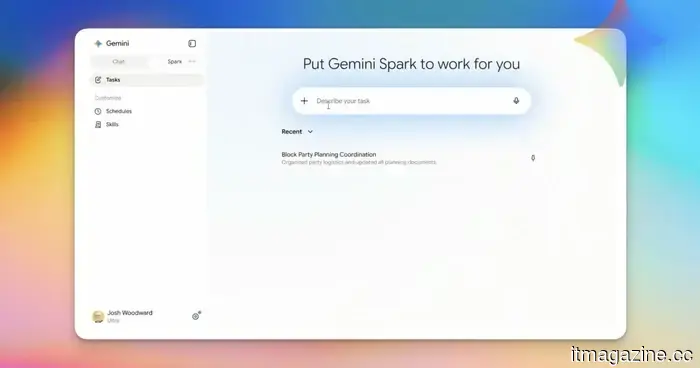 Google's latest Gemini Spark AI assistant is capable of handling your tasks while you manage your life.
Google's Gemini Spark is an innovative AI agent designed to manage multi-step tasks in the background, operate across Google's applications, and continue functioning even when you shut your laptop.
Google's latest Gemini Spark AI assistant is capable of handling your tasks while you manage your life.
Google's Gemini Spark is an innovative AI agent designed to manage multi-step tasks in the background, operate across Google's applications, and continue functioning even when you shut your laptop.
At I/O 2026, Google substitutes the search box with AI agents.
At I/O 2026, Google revealed its most significant redesign of Search in 25 years, featuring information agents, a generative UI, and mini-apps driven by Gemini 3.5 Flash.