
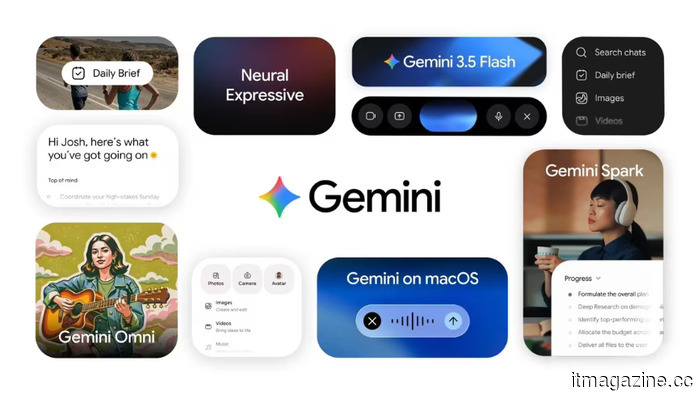
At I/O 2026, Google Gemini introduces Daily Brief and a redesign of Neural Expressive.
**TL;DR** Google announced significant updates to the Gemini app at I/O 2026, featuring a tailored Daily Brief digest, a redesign named Neural Expressive, and a cloud-based AI agent called Spark. The app now boasts 900 million monthly users, with the new tools positioning Gemini as a proactive assistant instead of merely a reactive chatbot.
During the opening keynote of I/O 2026, Google introduced a series of enhancements to its Gemini app, notably the Daily Brief feature, which provides a customised morning summary by integrating information from a user's inbox, calendar, and task list for a prioritised daily overview. This feature offers suggestions for next steps, highlighting the most urgent items first. Daily Brief is set to roll out today to subscribers of Google AI Plus, Pro, and Ultra in the United States.
This update coincides with a significant surge in Gemini's user numbers. Google announced that the app now has over 900 million monthly active users across more than 230 countries and in 70 languages, a jump from around 400 million during last year's I/O. This makes it, according to Google, the most widely accessible generative AI tool globally.
A visual overhaul called ‘Neural Expressive’
Alongside Daily Brief, a new design approach for the Gemini app was introduced. Named Neural Expressive, this update features smooth animations, vibrant color schemes, fresh typography, and haptic feedback. Responses now avoid large blocks of text; instead, crucial information is highlighted at the top, allowing users to scroll for additional details. Relevant inline images, narrated videos, timelines, and interactive visuals are included to replace written explanations.
The redesign is now being implemented on Android, iOS, and the web. It integrates Gemini Live, the voice conversational interface, directly into the main experience, enabling users to switch between typing and speaking seamlessly. For Google, this redesign aims to make AI interactions feel more like consulting a personal assistant rather than interacting with a search engine.
Gemini Spark: the agent that operates while you rest
The standout addition is Gemini Spark, a cloud-based AI agent built on the new Gemini 3.5 Flash model. Spark is intended to take proactive action across Gmail, Docs, and other linked Google services, continuing its operations even when a user locks their phone or shuts their laptop. Running on Google Cloud infrastructure means no device needs to remain active.
Spark will be available in beta for select testers this week and for US-based Google AI Ultra subscribers starting next week. The Ultra subscription has also been adjusted in price, reduced from $250 per month to $100, a strategic move to strengthen Google’s position against OpenAI’s ChatGPT and Anthropic’s Claude. The $100 Ultra plan includes five times the usage limits of the $20 AI Pro plan, 20 terabytes of cloud storage, YouTube Premium, and beta access to Spark.
Gemini Omni and the expansion into video
Google also introduced Gemini Omni, a new AI video model capable of processing images, audio, and text as inputs to create videos. Omni had been previewed earlier this month within the Gemini interface, following a UI string leak prior to I/O. This model is expected to be implemented in Google Flow and YouTube Shorts, providing creators with multimodal video tools within their existing platforms.
The Omni announcement represents a broader competition in AI-generated video, where Google is vying not only with OpenAI but also with ByteDance’s Seedance and other emerging contenders. Early reviews suggest that Omni performs well in adhering to prompts and in-chat editing, although its overall generation quality in the initial Flash tier may not match that of its competitors.
Implications for the AI assistant landscape
Collectively, these updates indicate that Google is evolving Gemini from a reactive chatbot into a more proactive personal operating system. Daily Brief manages morning activities, Neural Expressive improves user interface appeal, and Spark aims to operate autonomously around the clock. This strategy aligns with Meta’s Mark Zuckerberg's vision for AI agents and OpenAI's operator-style features.
It remains to be seen whether users will welcome a morning briefing from their AI assistant or if Spark’s autonomous task management will raise more privacy concerns than it alleviates. However, with Google integrating Gemini into various applications, from factory robots to mobile apps, the company appears to be betting on a future where AI is not just a singular chatbot but a cohesive network that supports everyday life.
Other articles
 Google Antigravity 2.0 has been released, featuring a CLI, SDK, and AI agents.
Google introduces Antigravity 2.0 during I/O 2026, featuring multi-agent orchestration, a new command-line interface tool, a software development kit for custom agents, and an AI Ultra plan priced at $100 per month.
Google Antigravity 2.0 has been released, featuring a CLI, SDK, and AI agents.
Google introduces Antigravity 2.0 during I/O 2026, featuring multi-agent orchestration, a new command-line interface tool, a software development kit for custom agents, and an AI Ultra plan priced at $100 per month.
 Google Antigravity 2.0 has been released, featuring a Command Line Interface (CLI), Software Development Kit (SDK), and AI agents.
At I/O 2026, Google introduced Antigravity 2.0, featuring multi-agent orchestration, a new command-line interface tool, a software development kit for custom agents, and a $100/month AI Ultra plan.
Google Antigravity 2.0 has been released, featuring a Command Line Interface (CLI), Software Development Kit (SDK), and AI agents.
At I/O 2026, Google introduced Antigravity 2.0, featuring multi-agent orchestration, a new command-line interface tool, a software development kit for custom agents, and a $100/month AI Ultra plan.
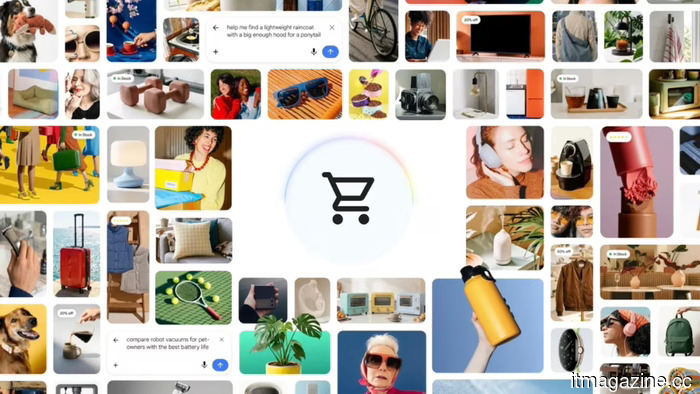 Google introduces Universal Cart and announces updates to AP2 at I/O 2026.
Google introduced Universal Cart, an AI shopping platform that integrates Search, Gemini, YouTube, and Gmail, along with enhancements to its Agent Payments Protocol for autonomous transactions.
Google introduces Universal Cart and announces updates to AP2 at I/O 2026.
Google introduced Universal Cart, an AI shopping platform that integrates Search, Gemini, YouTube, and Gmail, along with enhancements to its Agent Payments Protocol for autonomous transactions.
 Google substitutes the search box with AI agents at I/O 2026.
At I/O 2026, Google revealed its most significant Search overhaul in 25 years, featuring information agents, a generative user interface, and mini-apps driven by Gemini 3.5 Flash.
Google substitutes the search box with AI agents at I/O 2026.
At I/O 2026, Google revealed its most significant Search overhaul in 25 years, featuring information agents, a generative user interface, and mini-apps driven by Gemini 3.5 Flash.
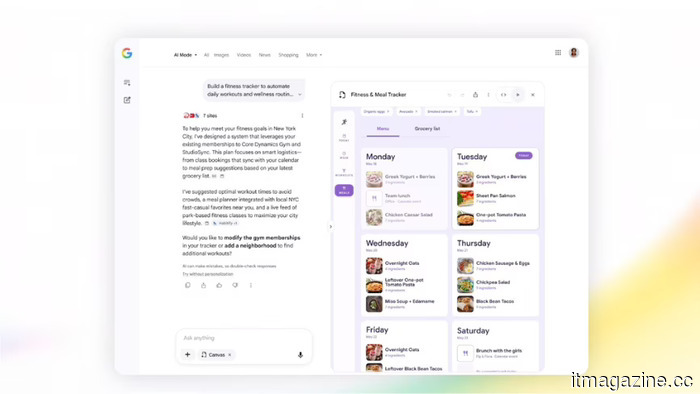 Google introduces always-on information agents in Search during I/O 2026.
Google's updated information agents operate around the clock in AI Mode, consolidating news, monitoring prices, and sending alerts, thereby replacing the previous Google Alerts system with intelligent AI.
Google introduces always-on information agents in Search during I/O 2026.
Google's updated information agents operate around the clock in AI Mode, consolidating news, monitoring prices, and sending alerts, thereby replacing the previous Google Alerts system with intelligent AI.
At I/O 2026, Google Gemini introduces Daily Brief and a redesign of Neural Expressive.
At I/O 2026, Google introduced Daily Brief, a redesigned Neural Expressive, and the Spark AI agent for Gemini's 900 million users, intensifying its competition with ChatGPT and Claude.