
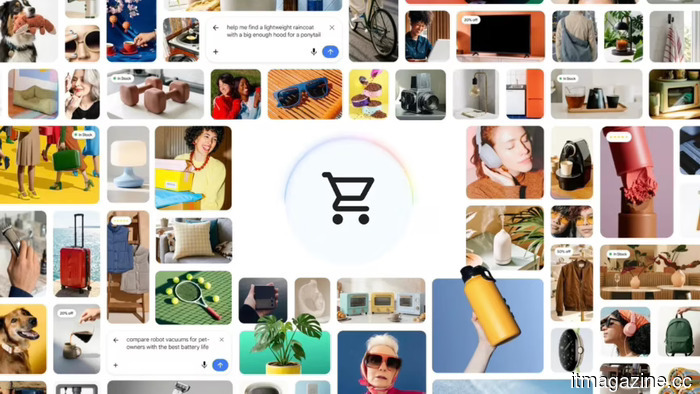
Google introduces Universal Cart and refreshes AP2 at I/O 2026.
**TL;DR** Google introduced Universal Cart at I/O 2026, an AI-driven shopping platform that allows users to compile products from Search, Gemini, YouTube, and Gmail into a single, lasting cart that tracks deals and checks compatibility. Additionally, it has upgraded its Agent Payments Protocol (AP2) to permit AI agents to make purchases independently and is broadening its Universal Commerce Protocol to different countries and sectors.
Google has launched Universal Cart, an AI-enhanced shopping platform disclosed at I/O 2026, enabling users to add items from its ecosystem—Search, Gemini, YouTube, and Gmail—into one consistent cart. The feature, which is being deployed in the US today, marks Google's most ambitious effort yet to establish itself as the primary intermediary in online retail.
Universal Cart serves more than just a storage space for products. Utilizing Gemini, it actively tracks price drops, displays price history, sends restock notifications, and performs AI compatibility assessments. Google's demonstration illustrated a situation where a user assembling a custom PC could gather components from various retailers and receive automatic notifications if a processor was incompatible with a chosen motherboard, along with recommendations for suitable alternatives.
This feature is constructed on the existing framework of Google Wallet for rewards and loyalty programs and integrates with the Universal Commerce Protocol (UCP), an open standard that Google released in January 2026. UCP establishes a standardized communication method for AI-driven commerce, facilitating direct checkout through Google or seamless transitioning to a merchant's own site. A March 2026 update enhanced cart management, real-time catalog inquiries, and identity linking, allowing shoppers to retain loyalty benefits when purchasing via Google’s platforms. Launch partners include Nike, Sephora, Target, Ulta Beauty, Walmart, Wayfair, and Shopify brands like Fenty and Steve Madden.
The timing is significant. Chinese tech giants have already rolled out AI shopping agents extensively, with Alibaba’s Qwen assistant reaching 300 million monthly active users on Taobao. Amazon has integrated Alexa directly into its search bar, combining its Rufus chatbot and Alexa+ assistant into a cohesive shopping experience. Google is evidently racing to keep up in a market expected to reach $5 trillion in agent-driven commerce by 2030, according to McKinsey. The implications are immense: control over the default AI shopping interface could dictate where billions of consumer dollars are directed.
Alongside Universal Cart, Google has revised its Agent Payments Protocol (AP2), initially announced in September 2025, with over 60 partners like PayPal, Mastercard, and American Express. AP2 permits AI agents to execute payments on behalf of users within established limits, utilizing digitally signed contracts called “Mandates” that ensure a secure audit trail for each transaction. The latest version v0.2.0, released in April 2026, introduced “Human Not Present” payments, enabling agents to autonomously buy items like limited-release tickets the moment they become available. Google has contributed AP2 to the FIDO Alliance, indicating its goal to establish the protocol as an industry standard rather than a proprietary tool.
The wider initiative into agent-driven commerce is extending beyond the US. UCP-enabled checkout is expanding to Canada and Australia, with the UK planned for the future. Google also aims to implement the protocol in more sectors, including hotel bookings and local food delivery, as well as in YouTube in the US.
Universal Cart is set to be available in the Gemini app this summer, with future integrations for YouTube and Gmail. For consumers, the appeal lies in convenience: a single cart, ongoing deal monitoring, and AI that actively shops on their behalf. For Google, the strategy is more about gaining influence. By positioning itself as the coordinating layer among consumers, retailers, and payment providers, it stands to gather data and sway each stage of the purchasing process.
Whether retailers see this as a beneficial distribution channel or a challenge to their direct customer connections will largely depend on the traffic Google drives to them and the associated costs. Some retailers are already noting traffic decreases of up to 30% as consumers transition from traditional searches to AI agent inquiries. Google’s Universal Cart could accelerate this shift or, if its open protocols gain traction, assist merchants in reaching customers wherever they may be.
Other articles
 Google Antigravity 2.0 is launched, featuring a CLI, SDK, and AI agents.
At I/O 2026, Google introduced Antigravity 2.0, featuring multi-agent orchestration, a new command-line interface tool, a software development kit for custom agents, and a $100 monthly AI Ultra subscription plan.
Gmail Live enables you to use AI for voice-searching your inbox.
Google's updated Gmail Live feature incorporates Gemini AI, enabling users to voice their questions about their inbox. It will be launched this summer, along with a broadened AI Inbox for additional subscribers.
Google Antigravity 2.0 is launched, featuring a CLI, SDK, and AI agents.
At I/O 2026, Google introduced Antigravity 2.0, featuring multi-agent orchestration, a new command-line interface tool, a software development kit for custom agents, and a $100 monthly AI Ultra subscription plan.
Gmail Live enables you to use AI for voice-searching your inbox.
Google's updated Gmail Live feature incorporates Gemini AI, enabling users to voice their questions about their inbox. It will be launched this summer, along with a broadened AI Inbox for additional subscribers.
 Android Halo might be the crucial connection between Android and AI agents.
Google's latest Android Halo feature suggests a future where AI subtly supports you rather than requiring your constant focus. The most intriguing aspect is how minimally it interferes with your activities.
Android Halo might be the crucial connection between Android and AI agents.
Google's latest Android Halo feature suggests a future where AI subtly supports you rather than requiring your constant focus. The most intriguing aspect is how minimally it interferes with your activities.
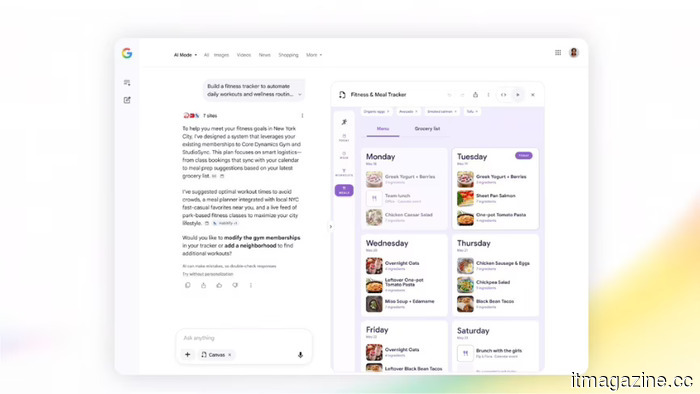 Google introduces always-on information agents in Search at I/O 2026.
Google's updated information agents operate continuously in AI Mode, compiling news, monitoring prices, and sending alerts, transforming the previous Google Alerts system into an agent-driven AI model.
Google introduces always-on information agents in Search at I/O 2026.
Google's updated information agents operate continuously in AI Mode, compiling news, monitoring prices, and sending alerts, transforming the previous Google Alerts system into an agent-driven AI model.
 Google introduces Pics, an AI design application aimed at competing with Canva.
At I/O 2026, Google introduced Pics, an AI-driven design tool integrated into Workspace that creates graphics based on text prompts, posing competition to Canva and Claude Design.
Google introduces Pics, an AI design application aimed at competing with Canva.
At I/O 2026, Google introduced Pics, an AI-driven design tool integrated into Workspace that creates graphics based on text prompts, posing competition to Canva and Claude Design.
 Google unveils the Gemini Spark agentic AI assistant during I/O 2026.
At I/O 2026, Google introduced Gemini Spark, an AI agent that is always active and can handle tasks through Gmail, navigate in Chrome, and operates continuously on cloud VMs for AI Ultra subscribers.
Google unveils the Gemini Spark agentic AI assistant during I/O 2026.
At I/O 2026, Google introduced Gemini Spark, an AI agent that is always active and can handle tasks through Gmail, navigate in Chrome, and operates continuously on cloud VMs for AI Ultra subscribers.
Google introduces Universal Cart and refreshes AP2 at I/O 2026.
Google introduced Universal Cart, an AI-driven shopping center that integrates Search, Gemini, YouTube, and Gmail, while also updating its Agent Payments Protocol for automated transactions.