

Take-Two CEO Strauss Zelnick confirms that GTA 6 does not utilize any generative AI.
TL;DR Take-Two's CEO Strauss Zelnick announced that generative AI plays "zero part" in the development of GTA 6, emphasizing that Rockstar's worlds are meticulously "handcrafted" with attention to every detail. The game is set to release on November 19, 2026, approximately 18 months later than its original internal timeline. Although Take-Two utilizes AI for testing and productivity across about 200 internal projects, Zelnick firmly opposes its use for creative content.
When the highly anticipated game finally launches on November 19, 2026, not a single aspect of its extensive open world—be it buildings, street corners, or neighborhoods—will be generated by a large language model. This is the clear assertion from Strauss Zelnick, CEO of Take-Two Interactive, who reiterated that generative AI has "zero part" in the creation of Grand Theft Auto VI by Rockstar Games.
"Their worlds are handcrafted. That's what sets them apart," Zelnick stated. "They are constructed meticulously, building by building, street by street, neighborhood by neighborhood."
This statement comes at a time when the gaming industry, much like other creative fields, is examining the role of generative AI in the production process. Google’s Project Genie and various startups have shown that AI can create game-like environments from text descriptions and video snippets. Elon Musk even suggested that AI could generate a project as grand as GTA 6, to which Zelnick responded by pointing out that AI could just as easily replace CEOs.
A handcrafted approach amid automation
Take-Two is not disregarding artificial intelligence; the company gives its employees access to enterprise versions of ChatGPT and Claude. Currently, about 200 internal projects are investigating how AI can enhance productivity in both creative and executive areas. Zelnick differentiates between AI as a supportive tool for testing and optimization, and AI as a creative engine generating the assets, stories, and world-building integral to a flagship title.
"Do I believe tools alone can produce great entertainment products? No, there's no proof of that," Zelnick said.
This position places Take-Two at one end of a growingly divided discussion. In the tech sector, firms shifting payroll to AI investments are hopeful that generative models will soon take over roles previously held by human experts. In gaming, studios have started applying AI to draft dialogue, create texture variations, and fill environments on a larger scale, promising quicker development and lower costs. Critics contend, however, that this risks homogenizing creative output and raises concerns about the quality and security of AI-generated code.
Why Rockstar can afford to decline
Rockstar's capacity to reject generative shortcuts stems from its unique financial situation. Since its release in 2013, GTA V has generated billions through its online platform, providing the studio with a level of financial stability rare among developers. This cushion has allowed Rockstar to accommodate an 18-month delay from its initial target of spring 2025 without inciting the investor anxiety that often forces other studios into rushed launches or budget cuts.
GTA 6 will launch on PlayStation 5 and Xbox Series X/S, with anticipated prices starting around $69.99 for the standard edition and possibly reaching $119.99 for premium packages, although these prices have not yet been officially verified. A major global marketing campaign is scheduled to kick off in summer 2026, indicating that Take-Two is gearing up for a significant entertainment launch.
The broader implications for creative industries
Zelnick's position extends beyond gaming as it challenges the prevailing belief in Silicon Valley that generative AI will ultimately replace creative labor. Earlier this year, Jensen Huang stated that AI would transform every profession, and the influx of investments into generative tools indicates market consensus. Yet, the CEO of the world's leading gaming publisher argues that handcrafted work is still what distinguishes quality, rather than merely a cost to be streamlined.
The situation is not straightforward. Take-Two's implementation of AI for testing and workflow enhancements demonstrates that even companies dedicated to human-led creation recognize the advantages of machine assistance. The industry has yet to determine where this line is drawn and whether audiences can perceive the difference. Initial experiments on AI’s impact on storytelling indicate that consumers may be more critical than some technologists expect, especially regarding the complex systems that characterize open-world games.
At present, GTA 6 serves as the most costly and significant trial of the idea that human craftsmanship still holds value. If Rockstar creates a world that feels significantly more enriching than anything a generative model could produce, Zelnick’s gamble will appear to be astute. However, if the gap narrows more quickly than anticipated, the next wave of blockbuster games might not have the option to decline such technologies.
Other articles
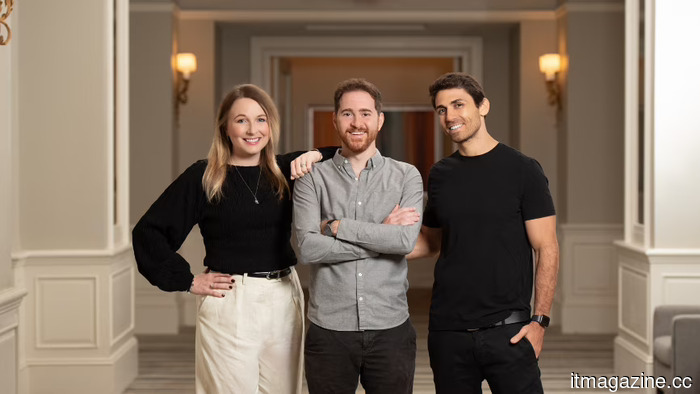 Unframe secures an additional $50 million from Highland Europe, reaching a total contract value of $100 million within a year.
Unframe has secured an extra $50 million in funding led by Highland Europe, bringing its total funding to $100 million. The enterprise-AI delivery platform based in Cupertino reports that it has surpassed $100 million in Total Contract Value (TCV) within 12 months, achieving a 400% Net Revenue Retention (NRR).
Unframe secures an additional $50 million from Highland Europe, reaching a total contract value of $100 million within a year.
Unframe has secured an extra $50 million in funding led by Highland Europe, bringing its total funding to $100 million. The enterprise-AI delivery platform based in Cupertino reports that it has surpassed $100 million in Total Contract Value (TCV) within 12 months, achieving a 400% Net Revenue Retention (NRR).
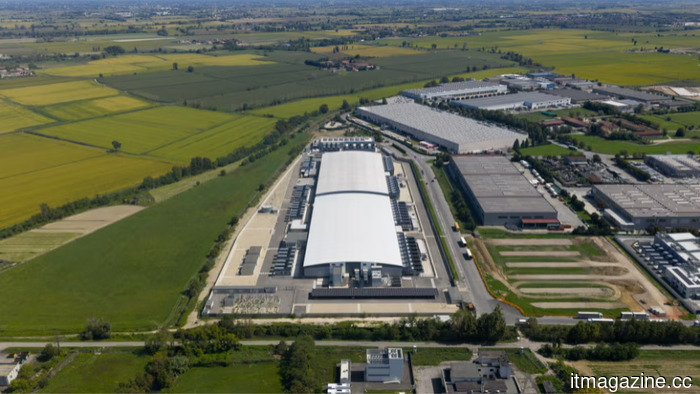 Meta's Hyperion data center: $200 billion investment, 10 gas plants, and 4,000 acres in rural Louisiana dedicated to AI.
Hyperion will provide 5 GW of AI computing, supported by 10 gas-fired facilities constructed by Entergy. The $27 billion funding is arranged off-balance-sheet through Blue Owl Capital as Meta's capital expenditures for 2026 reach $145 billion.
Hitachi teams up with Anthropic to implement Claude for 290,000 employees.
Hitachi plans to deploy Anthropic's Claude AI to 290,000 employees globally, provide training for 100,000 AI specialists, and integrate frontier AI into its essential infrastructure solutions.
Hitachi collaborates with Anthropic to implement Claude for 290,000 employees.
Hitachi plans to launch Anthropic's Claude AI for 290,000 employees globally, educate 100,000 AI professionals, and integrate frontier AI into its essential infrastructure solutions.
Meta's Hyperion data center: $200 billion investment, 10 gas plants, and 4,000 acres in rural Louisiana dedicated to AI.
Hyperion will provide 5 GW of AI computing, supported by 10 gas-fired facilities constructed by Entergy. The $27 billion funding is arranged off-balance-sheet through Blue Owl Capital as Meta's capital expenditures for 2026 reach $145 billion.
Hitachi teams up with Anthropic to implement Claude for 290,000 employees.
Hitachi plans to deploy Anthropic's Claude AI to 290,000 employees globally, provide training for 100,000 AI specialists, and integrate frontier AI into its essential infrastructure solutions.
Hitachi collaborates with Anthropic to implement Claude for 290,000 employees.
Hitachi plans to launch Anthropic's Claude AI for 290,000 employees globally, educate 100,000 AI professionals, and integrate frontier AI into its essential infrastructure solutions.
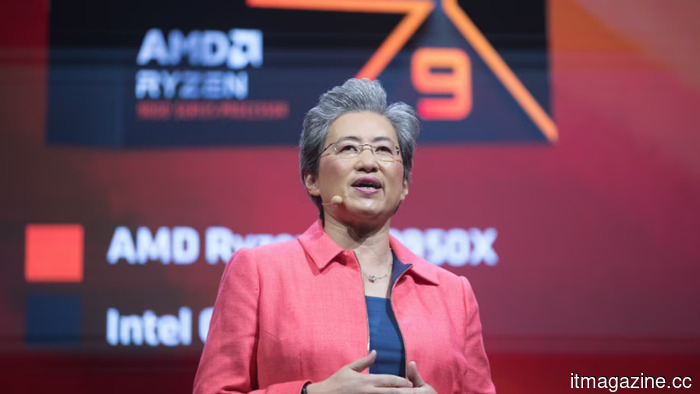 AMD's CEO Lisa Su meets with China's He Lifeng to talk about collaboration in the semiconductor industry | TNW
AMD's Lisa Su met with Vice Premier He Lifeng in Beijing, committing to increased investment in China as U.S. export regulations continue to alter the semiconductor landscape.
AMD's CEO Lisa Su meets with China's He Lifeng to talk about collaboration in the semiconductor industry | TNW
AMD's Lisa Su met with Vice Premier He Lifeng in Beijing, committing to increased investment in China as U.S. export regulations continue to alter the semiconductor landscape.
 Motif, backed by Temasek, introduces the Clarity AI financial intelligence system | TNW
Swiss startup Motif has introduced Clarity, an AI system designed to monitor the evolution of financial relationships over time and to enable advisory agents that institutions can implement within a matter of days.
Motif, backed by Temasek, introduces the Clarity AI financial intelligence system | TNW
Swiss startup Motif has introduced Clarity, an AI system designed to monitor the evolution of financial relationships over time and to enable advisory agents that institutions can implement within a matter of days.
Take-Two CEO Strauss Zelnick confirms that GTA 6 does not utilize any generative AI.
Strauss Zelnick states that the worlds in Rockstar games are constructed "building by building, street by street" without the use of generative AI, as GTA 6 aims for a launch in November 2026.