
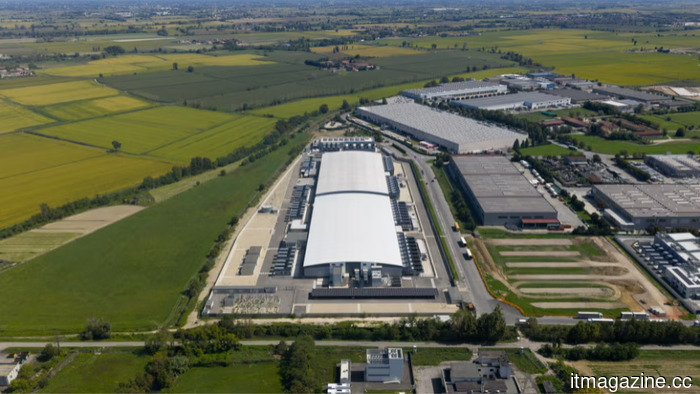
Meta's Hyperion data center: $200 billion investment, 10 gas plants, and 4,000 acres in rural Louisiana dedicated to AI.
**TL;DR** Meta's Hyperion AI data center campus in Richland Parish, Louisiana, is projected to exceed $200 billion in costs. The facility spans nearly 4,000 acres and will require 10 gas-fired power plants generating over 7 gigawatts of power, financed via a $27 billion off-balance-sheet deal with Wall Street.
Meta is constructing the most costly private infrastructure project in U.S. history. The Hyperion campus in Richland Parish, Louisiana, is now estimated to cost more than $200 billion, a figure that has steadily increased from the initial $10 billion announced in December 2024. Covering nearly 4,000 acres, the development will require 10 gas-fired power plants capable of generating over 7 gigawatts of energy, financed through a $27 billion deal that keeps most of the debt off Meta's balance sheet. This is seen as a substantial gamble that the returns from AI infrastructure will justify an unprecedented level of expenditure.
**Project Overview**
Hyperion will comprise up to nine buildings on a site that has expanded since Meta first acquired land there. Earlier this year, the company bought an additional 1,400 acres, making the total campus about four times the size of Central Park. The facility is designed to provide 5 gigawatts of computing power, with an additional 2.5 gigawatts for support systems, cooling, and infrastructure, and is expected to become operational by 2030.
To supply power, Entergy Louisiana is constructing 10 gas-fired power plants, increasing the original three planned to ten. In March 2026, Meta agreed with Entergy for seven additional facilities that will generate 5.2 gigawatts, in addition to the initial three. Meta will fund the construction of all 10 plants and has pledged to finance 2.5 gigawatts of new renewable energy, along with 240 miles of new transmission lines and battery storage. The two entities are also considering the potential use of nuclear power for future needs.
**Economic Impact**
The project is expected to create over 500 permanent jobs and employ more than 5,000 construction workers during peak phases. Furthermore, Meta has allocated $300 million towards improving local infrastructure, including roads, water systems, and wastewater facilities in nearby communities.
**Financing Details**
The initial $27 billion financing represents an innovative approach to funding large-scale infrastructure. Meta has pioneered new financing models for data centers, and Hyperion extends this concept. Blue Owl Capital, a private credit investment firm, owns 80% of the project through a special-purpose vehicle called Beignet, while Meta controls the remaining 20%. Meta will operate and lease the facility long-term, incorporating a four-year exit clause into the lease framework.
BlackRock has purchased over $3 billion in bonds issued by the joint venture, arranged by Morgan Stanley. This off-balance-sheet structure permits Meta to build at scale without burdening its balance sheet with the full $27 billion, which is significant as the company's total capital expenditure forecast for 2026 has risen to between $125 billion and $145 billion. Additionally, Louisiana has provided a sales tax exemption on the AI chips for the facility, potentially saving hundreds of millions throughout the project's duration.
**Political Involvement**
Hyperion has garnered political attention at various levels. Mark Zuckerberg has made the project a personal priority, directly appealing to President Trump, House Speaker Mike Johnson, and Louisiana Governor Jeff Landry. Trump mentioned the project in an August 2025 Cabinet meeting, citing a $50 billion figure later overshadowed by the $200 billion estimate.
Governor Landry called the project "a new chapter" for Louisiana, and the state has expedited regulatory approvals for the energy infrastructure. The political dynamics are clear: Meta secures necessary energy, land, and tax advantages for the project, Louisiana gains the largest private investment in its history, and elected officials can take credit for the resulting jobs and economic activity.
**Cost Considerations**
Meta recorded a quarterly revenue of $56.3 billion in early 2026 but simultaneously raised its capital expenditure guidance for the year to $125 billion to $145 billion, nearly double its 2025 spending of $72.2 billion. This increase caused a more than 6% drop in stock prices in after-hours trading. On the same day, Meta completed a $25 billion bond sale to support its infrastructure efforts.
To partly counterbalance this spending, the company is reducing its workforce by 8,000 and eliminating 6,000 open positions, which Zuckerberg has framed as a shift from payroll to computational spending. Evercore estimates that these layoffs will yield around $3 billion in annual savings, while Bank of America estimates savings of $7 billion to $8 billion. However, these savings only cover a fraction of the capital expenditure plan, highlighting the importance of the Wall Street financing structure and off-balance-sheet strategy to Meta
Other articles
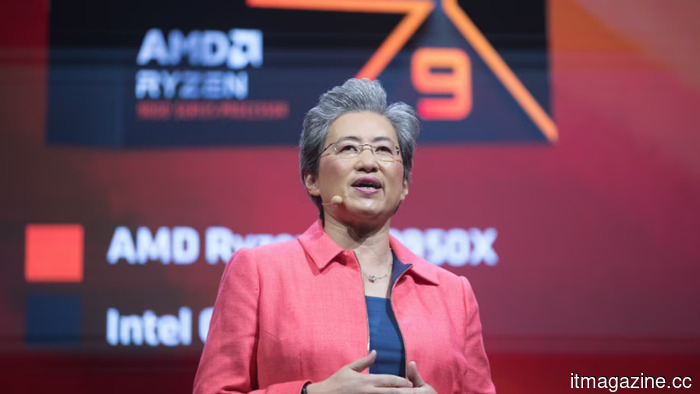 AMD's CEO Lisa Su meets with China's He Lifeng to talk about collaboration in the semiconductor industry | TNW
AMD's Lisa Su met with Vice Premier He Lifeng in Beijing, committing to increased investment in China as U.S. export regulations continue to alter the semiconductor landscape.
AMD's CEO Lisa Su meets with China's He Lifeng to talk about collaboration in the semiconductor industry | TNW
AMD's Lisa Su met with Vice Premier He Lifeng in Beijing, committing to increased investment in China as U.S. export regulations continue to alter the semiconductor landscape.
 Take-Two CEO Strauss Zelnick confirms that GTA 6 does not utilize any generative AI.
Strauss Zelnick states that the worlds in Rockstar games are constructed "building by building, street by street" without the use of generative AI, as GTA 6 aims for a launch in November 2026.
Take-Two CEO Strauss Zelnick confirms that GTA 6 does not utilize any generative AI.
Strauss Zelnick states that the worlds in Rockstar games are constructed "building by building, street by street" without the use of generative AI, as GTA 6 aims for a launch in November 2026.
 Motif, supported by Temasek, has introduced the Clarity AI financial intelligence system | TNW
Swiss startup motif has introduced Clarity, an AI system designed to monitor the evolution of financial relationships over time and enables advisory agents that institutions can implement within days.
Motif, supported by Temasek, has introduced the Clarity AI financial intelligence system | TNW
Swiss startup motif has introduced Clarity, an AI system designed to monitor the evolution of financial relationships over time and enables advisory agents that institutions can implement within days.
 Strauss Zelnick, the CEO of Take-Two, has confirmed that GTA 6 does not utilize any generative AI.
Strauss Zelnick states that Rockstar's environments are constructed "building by building, street by street" without the use of generative AI, as GTA 6 aims for a launch in November 2026.
Strauss Zelnick, the CEO of Take-Two, has confirmed that GTA 6 does not utilize any generative AI.
Strauss Zelnick states that Rockstar's environments are constructed "building by building, street by street" without the use of generative AI, as GTA 6 aims for a launch in November 2026.
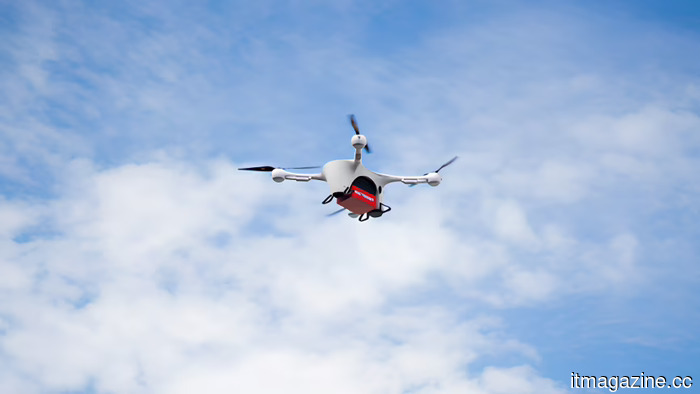 Amprius collaborates with Matternet for batteries used in drone delivery.
Amprius Technologies will provide its high-energy silicon anode SiCore batteries to Matternet's FAA-approved drone delivery fleet, aiming for extended range and increased payload capacity.
Hitachi collaborates with Anthropic to implement Claude for 290,000 employees.
Hitachi plans to implement Anthropic's Claude AI for 290,000 employees globally, train 100,000 AI specialists, and integrate advanced AI into its essential infrastructure solutions.
Amprius collaborates with Matternet for batteries used in drone delivery.
Amprius Technologies will provide its high-energy silicon anode SiCore batteries to Matternet's FAA-approved drone delivery fleet, aiming for extended range and increased payload capacity.
Hitachi collaborates with Anthropic to implement Claude for 290,000 employees.
Hitachi plans to implement Anthropic's Claude AI for 290,000 employees globally, train 100,000 AI specialists, and integrate advanced AI into its essential infrastructure solutions.
Meta's Hyperion data center: $200 billion investment, 10 gas plants, and 4,000 acres in rural Louisiana dedicated to AI.
Hyperion will provide 5 GW of AI computing, supported by 10 gas-fired facilities constructed by Entergy. The $27 billion funding is arranged off-balance-sheet through Blue Owl Capital as Meta's capital expenditures for 2026 reach $145 billion.