
Hitachi collaborates with Anthropic to implement Claude for 290,000 employees.
**TL;DR** Hitachi has formed a partnership with Anthropic to implement Claude AI throughout its workforce of 290,000 employees as part of its Lumada 3.0 initiative. This agreement features the creation of a Frontier AI Deployment Center, a training program for 100,000 employees focused on AI, and the integration of Claude into Hitachi’s HMAX solutions for critical infrastructure.
Hitachi has announced a strategic alliance with Anthropic, aiming to deploy Claude AI models across its global workforce of around 290,000, thereby enhancing its Lumada 3.0 business model. This collaboration positions Hitachi as a prominent enterprise user of Claude worldwide and indicates Anthropic’s push into heavy industry and critical infrastructures.
**Understanding Lumada 3.0**
Lumada, a blend of "illuminate" and "data," has been Hitachi's premier digital services platform for almost ten years. The 3.0 version signifies a strategic shift towards what Hitachi terms “physical AI,” which involves applying artificial intelligence to tangible systems in areas such as energy, transportation, manufacturing, and finance. Unlike its predecessor versions that focused on IoT connectivity and data analytics, the latest iteration incorporates frontier AI with Hitachi’s operational technology, IT systems, and product offerings. The collaboration with Anthropic, which has been aggressively expanding its enterprise partnerships in 2026, provides the cognitive layer Hitachi aims to embed in its operations and customer-oriented solutions.
**290,000 Employees, One AI Platform**
The scope of the implementation is remarkable. Hitachi intends to deploy Claude across all business processes for its nearly 290,000 employees globally, expanding AI utilization beyond its engineering teams into sales, planning, and corporate functions. Additionally, the company plans to develop 100,000 employees into what it calls “AI professional talent” through joint training initiatives with Anthropic. This goal aligns Hitachi with SAP, which recently announced a similar partnership with Anthropic, as part of a growing number of traditional enterprises investing in Claude as their primary AI reasoning engine.
Hitachi is positioning its internal transformation as a “Customer Zero” strategy, utilizing the insights gained from large-scale AI deployments in its operations to enhance HMAX, its advanced suite of AI-driven solutions for social infrastructure. HMAX currently focuses on three areas: mobility for optimizing transportation, energy for managing essential power supply systems, and industry for increasing safety and efficiency in factories and buildings. Hitachi has expressed intentions to expand HMAX to include data centers and financial services.
**The Frontier AI Deployment Center**
To manage this initiative, Hitachi will establish a Frontier AI Deployment Center, a global entity spanning North America, Europe, and Asia. The center will initially comprise around 100 experts, with plans to expand to 300. Its responsibilities include co-creating physical AI applications, implementing them in real-world scenarios, and collaborating on cybersecurity for critical infrastructures, an area where Hitachi’s existing Cyber Center of Excellence will work closely with Anthropic on threat detection and response.
The emphasis on cybersecurity is significant. Operators of critical infrastructures in energy, transportation, and manufacturing confront an increasingly adversarial threat environment, and the integration of operational technology with AI systems presents new vulnerabilities. Hitachi’s extensive experience in mission-critical infrastructures lends it a credibility that pure-play AI companies may lack, while Anthropic’s safety-first approach to AI development addresses the trust issues that have hampered enterprise adoption in regulated industries.
**Anthropic’s Industrial Strategy**
For Anthropic, the Hitachi collaboration marks another advancement into enterprise and industrial markets. The company has been exploring private equity channels to promote Claude in the enterprise sphere, with its partnership network now including Accenture, Deloitte, Cognizant, and Infosys. Enterprise customers account for approximately 80 percent of Anthropic’s revenue, with over 1,000 businesses each spending more than $1 million annually on its offerings. However, the Hitachi partnership differs from typical consulting engagements as it integrates Claude directly into the operational framework of a company that creates and maintains power grids, rail systems, and manufacturing facilities, where AI errors can have significant physical repercussions.
The industrial AI sector is garnering significant investment. Startups like Athena are demonstrating that large language models can enhance manufacturing execution systems on semiconductor factory floors for real-time information retrieval and autonomous support. Hitachi's strategy, however, differs in its breadth: instead of focusing on a single vertical, it aims to create a horizontal AI infrastructure across multiple critical sectors, with Anthropic’s models serving as the cognitive foundation.
**The Implications of Physical AI**
Jun Abe, Hitachi’s executive vice president and head of Digital Systems & Services Sector, framed the partnership in terms of social issues, highlighting the stress faced by frontline workers due to a declining workforce as a key motivator. This demographic challenge is particularly resonant in Japan, where labor shortages in construction, manufacturing, and logistics are acute, but it is also applicable across Hitachi’s
Other articles
 Take-Two CEO Strauss Zelnick confirms that GTA 6 does not utilize any generative AI.
Strauss Zelnick states that the worlds in Rockstar games are constructed "building by building, street by street" without the use of generative AI, as GTA 6 aims for a launch in November 2026.
Take-Two CEO Strauss Zelnick confirms that GTA 6 does not utilize any generative AI.
Strauss Zelnick states that the worlds in Rockstar games are constructed "building by building, street by street" without the use of generative AI, as GTA 6 aims for a launch in November 2026.
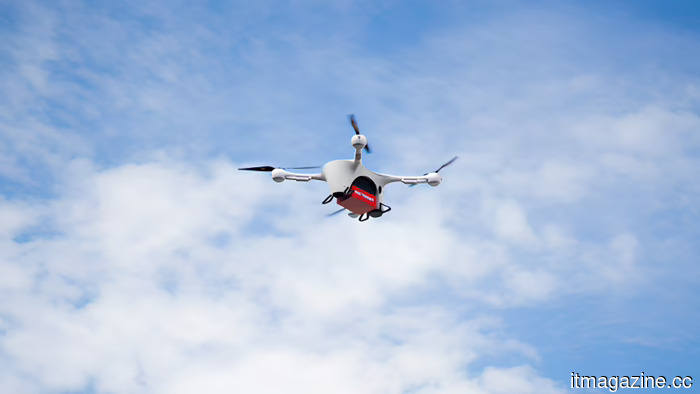 Amprius collaborates with Matternet for drone delivery batteries.
Amprius Technologies will provide its high-energy silicon anode SiCore batteries to Matternet's FAA-certified drone delivery fleet, aiming for increased range and heavier payload capacities.
Amprius collaborates with Matternet for drone delivery batteries.
Amprius Technologies will provide its high-energy silicon anode SiCore batteries to Matternet's FAA-certified drone delivery fleet, aiming for increased range and heavier payload capacities.
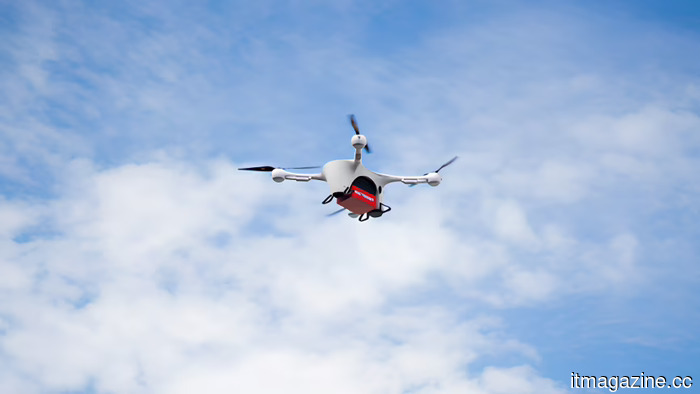 Amprius collaborates with Matternet for batteries used in drone delivery.
Amprius Technologies will provide its high-energy silicon anode SiCore batteries to Matternet's FAA-approved drone delivery fleet, aiming for extended range and increased payload capacity.
Amprius collaborates with Matternet for batteries used in drone delivery.
Amprius Technologies will provide its high-energy silicon anode SiCore batteries to Matternet's FAA-approved drone delivery fleet, aiming for extended range and increased payload capacity.
 Unframe secures an additional $50 million from Highland Europe, reaching a total contract value of $100 million within a year.
Unframe has secured an extra $50 million in funding led by Highland Europe, bringing its total funding to $100 million. The enterprise-AI delivery platform based in Cupertino reports that it has surpassed $100 million in Total Contract Value (TCV) within 12 months, achieving a 400% Net Revenue Retention (NRR).
Unframe secures an additional $50 million from Highland Europe, reaching a total contract value of $100 million within a year.
Unframe has secured an extra $50 million in funding led by Highland Europe, bringing its total funding to $100 million. The enterprise-AI delivery platform based in Cupertino reports that it has surpassed $100 million in Total Contract Value (TCV) within 12 months, achieving a 400% Net Revenue Retention (NRR).
 Strauss Zelnick, the CEO of Take-Two, has confirmed that GTA 6 does not utilize any generative AI.
Strauss Zelnick states that Rockstar's environments are constructed "building by building, street by street" without the use of generative AI, as GTA 6 aims for a launch in November 2026.
Strauss Zelnick, the CEO of Take-Two, has confirmed that GTA 6 does not utilize any generative AI.
Strauss Zelnick states that Rockstar's environments are constructed "building by building, street by street" without the use of generative AI, as GTA 6 aims for a launch in November 2026.
 Panasonic purchases HIVE Media Control to enhance its immersive initiatives.
Panasonic has acquired the UK media server firm HIVE Media Control, securing the BeeBlade platform to broaden its offerings beyond hardware and into integrated visual solutions under the MEVIX brand.
Panasonic purchases HIVE Media Control to enhance its immersive initiatives.
Panasonic has acquired the UK media server firm HIVE Media Control, securing the BeeBlade platform to broaden its offerings beyond hardware and into integrated visual solutions under the MEVIX brand.
Hitachi collaborates with Anthropic to implement Claude for 290,000 employees.
Hitachi plans to launch Anthropic's Claude AI for 290,000 employees globally, educate 100,000 AI professionals, and integrate frontier AI into its essential infrastructure solutions.