
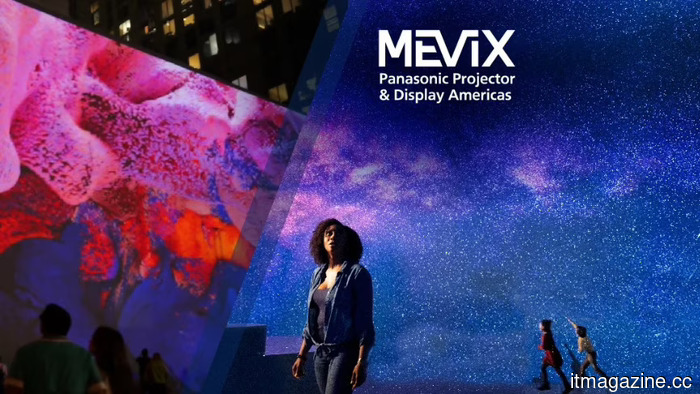
Panasonic purchases HIVE Media Control to enhance its immersive initiatives.
Panasonic Projector & Display Corporation has acquired all shares of UK-based HIVE Media Control, the creator of the award-winning BeeBlade SDM media server platform. This acquisition marks a significant shift in Panasonic’s strategy, moving from a manufacturer of projectors and displays to a provider of comprehensive visual solutions under its MEVIX brand, focusing on the growing market for immersive experiences.
Announced on May 19, 2026, the acquisition integrates HIVE’s technology into Panasonic’s MEVIX brand, which was launched in 2025 as part of its transition from hardware to complete visual experiences. Financial details of the acquisition were not disclosed.
What HIVE contributes
HIVE’s primary offering, BeeBlade, is a compact media engine based on Intel’s Smart Display Module (SDM) standard. Unlike traditional setups that require numerous external servers and complex cabling, BeeBlade fits directly into the SDM bay of compatible projectors, direct-view LED displays, and professional screens, resulting in a significantly reduced infrastructure, fewer external devices, and a simplified installation process that lowers costs and energy usage.
The BeeBlade platform is available in several versions. The entry-level Minima supports HD playback, the mid-range Osmia offers 4K output, and the high-end Nexus, which HIVE claims is the first 8K60 output SDM media engine with HDMI Genlock, targets demanding installations. All versions utilize HIVE’s proprietary BeeSync software to ensure frame-accurate synchronization across multiple networked players, a vital aspect for immersive environments that require coordinated operation of numerous projectors.
HIVE's achievements highlight its capabilities; it powered the BBC Earth Experience in Melbourne, where 49 of the venue’s 70 Panasonic projectors used BeeBlade modules to provide immersive content narrated by David Attenborough across eight rooms. It also developed a custom media control system for the National Museum of Qatar, one of the largest permanent video installations globally, processing approximately 21 billion pixels per second across 112 projectors. Additionally, it facilitated the Sistine Chapel immersive exhibition, eliminating complex signal distribution networks through BeeBlade modules in Panasonic projectors.
Why Panasonic is making this move now
This acquisition reflects a wider industry trend where hardware manufacturers are realizing the greater value and recurring revenue potential of software and workflow integration. Panasonic's CEO of projector and display operations, Yousuke Adachi, emphasized that the company is "clearly articulating our commitment to support customers throughout the entire workflow, not just at the hardware endpoint."
The media server market is expanding rapidly, driven by the demand for immersive attractions, museums, themed entertainment venues, and permanent visual displays in retail and corporate settings. In this evolving market, strategic acquisitions can quickly alter competitive landscapes, and Panasonic aims to differentiate itself by owning the software component, contrasting with rivals that focus solely on hardware sales.
MEVIX, the sub-brand introduced by Panasonic at InfoComm 2025, was intended to represent this transition. The name stands for Media, Entertainment & Visual Transformation, and the brand's mission is to provide holistic, human-centric experiences driven by software, services, and technology partnerships. Acquiring HIVE enhances this mission by providing a tangible product range and a pre-existing customer base in the targeted sectors.
HIVE maintains its independence, for the time being
Panasonic has pledged to keep HIVE independent, agile, and vendor-neutral. HIVE will continue to operate as a separate entity, ensuring continuity of service for its existing customers and partners, including those using HIVE alongside competing projector and LED display brands. Co-founders Mark Calvert, Dave Green, and Trey Harrison will remain with the company.
Calvert expressed an ecological perspective, stating that “in nature, the most powerful systems are interconnected, adaptive, and free to evolve.” Emphasizing openness is strategically significant for HIVE, as its vendor neutrality enhances its market value. The future of its independence within a larger corporate framework remains uncertain, but the current intent is evident.
This scenario mirrors a common trend in tech acquisitions, where acquirers promise autonomy before gradually integrating subsidiaries into their operations. Panasonic's ability to manage its acquired businesses will face scrutiny here.
What this means for the immersive market
For the expanding immersive experience industry, this acquisition is significant as it combines the hardware and software elements into a single entity. Venues creating immersive experiences currently assemble projectors, media servers, control systems, and synchronization software from various vendors, often resulting in expensive, complex processes fraught with integration challenges. Panasonic can now provide a more cohesive solution, from projectors to content management interfaces, while ideally preserving HIVE’s flexibility to collaborate with other manufacturers’ hardware.
The timing is critical as well. The immersive experience market has grown beyond theme parks to include museums, flagship retail locations, corporate showrooms, and live entertainment. Installations are becoming larger, more permanent, and more technically demanding, and companies that can streamline deployment while ensuring reliable, synchronized playback across multiple outputs
Other articles
 ECARX and May Mobility have executed a $750 million agreement for robotaxi services, with the vehicles being manufactured outside of China to meet US regulations.
ECARX, supported by Li Shufu, will supply May Mobility with thousands of autonomy-enabled vehicles featuring custom L4 computing, aiming for a 50% reduction in hardware costs by 2028. The manufacturing process is organized outside of China to comply with US ICTS regulations.
ECARX and May Mobility have executed a $750 million agreement for robotaxi services, with the vehicles being manufactured outside of China to meet US regulations.
ECARX, supported by Li Shufu, will supply May Mobility with thousands of autonomy-enabled vehicles featuring custom L4 computing, aiming for a 50% reduction in hardware costs by 2028. The manufacturing process is organized outside of China to comply with US ICTS regulations.
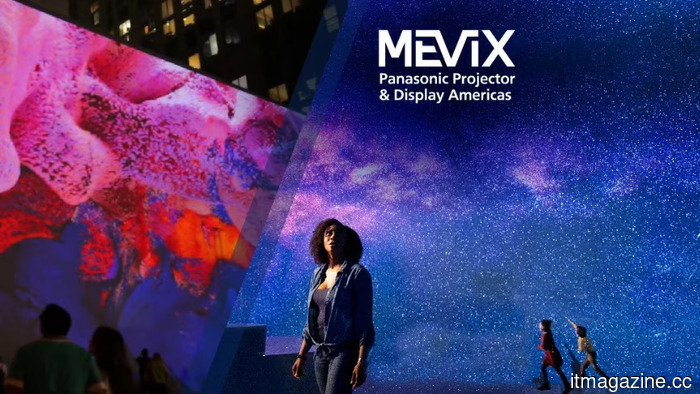 Panasonic purchases HIVE Media Control to enhance immersive experiences.
Panasonic has acquired the UK media server firm HIVE Media Control, securing the BeeBlade platform to broaden its offerings beyond hardware into integrated visual solutions under the MEVIX brand.
Panasonic purchases HIVE Media Control to enhance immersive experiences.
Panasonic has acquired the UK media server firm HIVE Media Control, securing the BeeBlade platform to broaden its offerings beyond hardware into integrated visual solutions under the MEVIX brand.
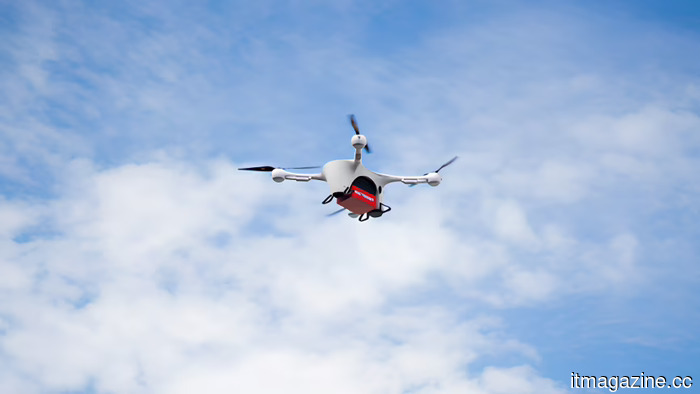 Amprius collaborates with Matternet for batteries used in drone delivery.
Amprius Technologies will provide its high-energy silicon anode SiCore batteries to Matternet's FAA-approved drone delivery fleet, aiming for extended range and increased payload capacity.
Amprius collaborates with Matternet for batteries used in drone delivery.
Amprius Technologies will provide its high-energy silicon anode SiCore batteries to Matternet's FAA-approved drone delivery fleet, aiming for extended range and increased payload capacity.
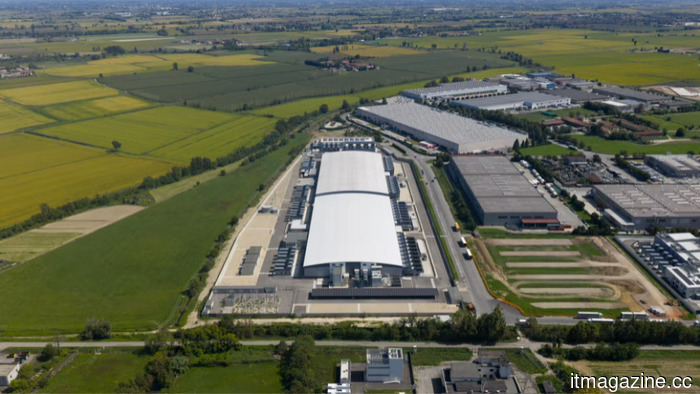 Meta's Hyperion data center will involve a $200 billion investment, encompass 10 gas plants, and occupy 4,000 acres in rural Louisiana for artificial intelligence development.
Hyperion is set to provide 5 GW of AI computing, supported by 10 gas-fired plants constructed by Entergy. The $27 billion financing is arranged off-balance-sheet via Blue Owl Capital, coinciding with Meta's capital expenditures reaching $145 billion in 2026.
Meta's Hyperion data center will involve a $200 billion investment, encompass 10 gas plants, and occupy 4,000 acres in rural Louisiana for artificial intelligence development.
Hyperion is set to provide 5 GW of AI computing, supported by 10 gas-fired plants constructed by Entergy. The $27 billion financing is arranged off-balance-sheet via Blue Owl Capital, coinciding with Meta's capital expenditures reaching $145 billion in 2026.
 Take-Two CEO Strauss Zelnick confirms that GTA 6 does not utilize any generative AI.
Strauss Zelnick states that the worlds in Rockstar games are constructed "building by building, street by street" without the use of generative AI, as GTA 6 aims for a launch in November 2026.
Take-Two CEO Strauss Zelnick confirms that GTA 6 does not utilize any generative AI.
Strauss Zelnick states that the worlds in Rockstar games are constructed "building by building, street by street" without the use of generative AI, as GTA 6 aims for a launch in November 2026.
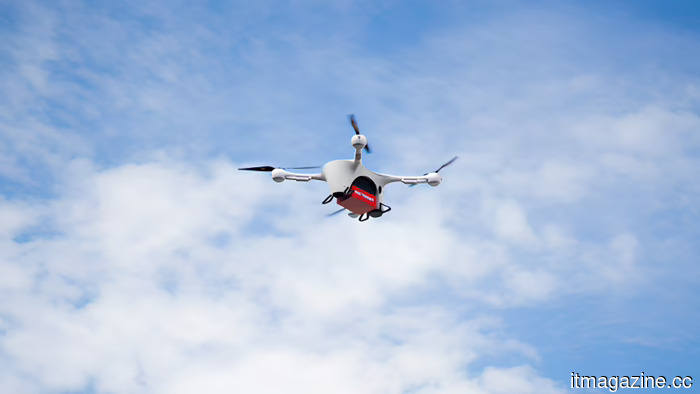 Amprius collaborates with Matternet for drone delivery batteries.
Amprius Technologies will provide its high-energy silicon anode SiCore batteries to Matternet's FAA-certified drone delivery fleet, aiming for increased range and heavier payload capacities.
Amprius collaborates with Matternet for drone delivery batteries.
Amprius Technologies will provide its high-energy silicon anode SiCore batteries to Matternet's FAA-certified drone delivery fleet, aiming for increased range and heavier payload capacities.
Panasonic purchases HIVE Media Control to enhance its immersive initiatives.
Panasonic has acquired the UK media server firm HIVE Media Control, securing the BeeBlade platform to broaden its offerings beyond hardware and into integrated visual solutions under the MEVIX brand.