
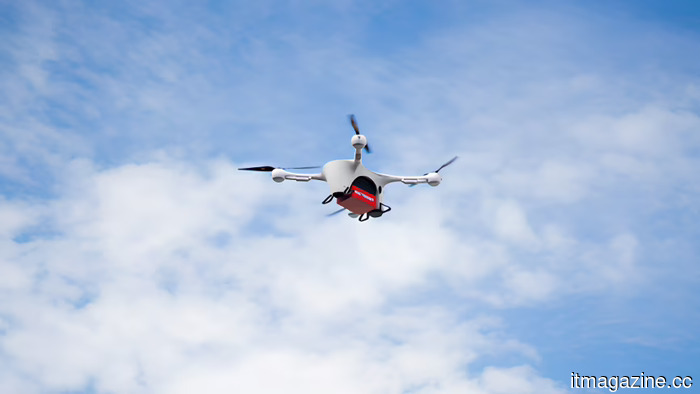
Amprius collaborates with Matternet for batteries used in drone delivery.
Amprius Technologies has teamed up with Matternet to provide silicon anode lithium-ion batteries for drone delivery operations. This partnership combines Amprius’s high-energy-density SiCore cells, which can achieve up to 450 Wh/kg, with Matternet’s FAA-certified autonomous delivery drones, with the goal of enhancing flight range, increasing payload capacity, and accelerating charging times.
Based in Fremont, Amprius Technologies, a manufacturer of high-energy-density silicon anode batteries, has announced its collaboration with Matternet, which is one of the few drone delivery companies with both FAA Type Certification and Production Certification. In this partnership, Amprius will supply its SiCore® lithium-ion cells for Matternet’s autonomous delivery drones, which could significantly boost the range, payload capacity, and turnaround speed of commercial drone logistics.
This partnership represents Amprius’s ongoing involvement in the unmanned aviation industry, where it already supplies drone delivery systems for Nokia Drone Networks, Nordic Wing, and various undisclosed defense customers. For Matternet, whose M2 drones transport medical supplies and retail items across urban areas in the U.S. and Europe, this collaboration addresses a major challenge in autonomous aerial logistics: battery performance.
The Importance of Silicon Anodes in Drone Delivery
Traditional lithium-ion batteries for drones use graphite anodes, which limit energy density and, consequently, restrict the distance and speed a drone can travel while carrying a useful load. Silicon, capable of storing about ten times more lithium ions than graphite, offers lighter battery packs, longer flight durations, and the ability to transport heavier loads. There has been significant research and development on silicon anode technology across the battery sector, with numerous startups and established companies vying to scale up its commercialization.
Amprius’s SiCore cells provide energy outputs of up to 450 Wh/kg and 1,150 Wh/L, with independent validation suggesting figures as high as 500 Wh/kg and 1,300 Wh/L. These metrics represent a considerable improvement over typical drone batteries, which generally range from 200 to 270 Wh/kg. Additionally, the cells can handle high discharge rates necessary for takeoff and can charge to approximately 80% in around six minutes, a vital feature for delivery operations that require quick turnarounds.
Matternet's Growing Logistics Goals
Matternet has developed one of the most operationally advanced drone delivery networks globally. It was the first to receive FAA Type Certification for a drone delivery system, successfully completing tens of thousands of flights transporting medical samples, pharmaceuticals, and retail goods. The company is pursuing aggressive growth, evidenced by its strategic partnership with SoftBank Robotics America in April 2026 to expand drone delivery across healthcare, retail, and enterprise logistics, as well as launching NHS drone deliveries in central London, linking major hospital hubs with autonomous last-mile aerial routes.
However, despite this progress, battery limitations continue to pose the primary challenge for the sector. Matternet’s M2 drones can carry payloads of up to two kilograms over distances reaching 20 kilometers on a single charge. The integration of Amprius’s higher-energy cells could significantly enhance this operational capability, enabling heavier payloads and longer flight distances without adding to the drone's overall weight.
NDAA Compliance Considerations
This partnership also has a strategic dimension that goes beyond performance statistics. Amprius is compliant with the National Defense Authorization Act (NDAA), ensuring that its batteries meet the requirements for use in U.S. government and defense applications. As federal agencies and healthcare systems increasingly focus on the origins of drone components, particularly batteries, domestic supply chains have become critical in procurement choices.
Amprius produces its silicon anodes and cells at its headquarters in Fremont and has secured over 2.0 GWh of contract manufacturing capacity through partnerships with U.S.-based Nanotech Energy and the Amprius Korea Battery Alliance, all designed to uphold NDAA-compliant supply chains. For Matternet, which serves clients in healthcare and potentially government sectors, sourcing batteries from a domestic, NDAA-compliant manufacturer lowers regulatory risks and enhances appeal to security-conscious buyers.
A Competitive but Expanding Market
The commercial drone delivery market is poised for rapid growth. Analysts at Gartner predict that over a million delivery drones could be operational worldwide by 2026, a significant increase from around 20,000 just a few years ago. Companies like Amazon, Walmart, Wing, and Zipline are scaling their aerial logistics operations, heightening competition to improve range, payload, and reliability.
Amprius has positioned itself as a preferred battery supplier in this ecosystem. Its revenue for Q1 2026 reached $28.5 million, a 2.5-fold increase from the same quarter the previous year, and the company has raised its full-year revenue forecast for 2026 to at least $130 million. Its clientele now spans unmanned aviation, manned aviation, light electric vehicles, and defense, with drone and UAS applications being the main revenue drivers.
For Mat
Other articles
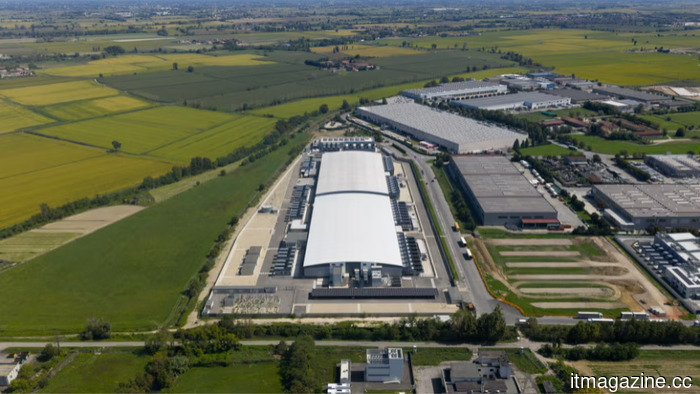 Meta's Hyperion data center: $200 billion investment, 10 gas plants, and 4,000 acres in rural Louisiana dedicated to AI.
Hyperion will provide 5 GW of AI computing, supported by 10 gas-fired facilities constructed by Entergy. The $27 billion funding is arranged off-balance-sheet through Blue Owl Capital as Meta's capital expenditures for 2026 reach $145 billion.
Meta's Hyperion data center: $200 billion investment, 10 gas plants, and 4,000 acres in rural Louisiana dedicated to AI.
Hyperion will provide 5 GW of AI computing, supported by 10 gas-fired facilities constructed by Entergy. The $27 billion funding is arranged off-balance-sheet through Blue Owl Capital as Meta's capital expenditures for 2026 reach $145 billion.
 ECARX and May Mobility have executed a $750 million agreement for robotaxi services, with the vehicles being manufactured outside of China to meet US regulations.
ECARX, supported by Li Shufu, will supply May Mobility with thousands of autonomy-enabled vehicles featuring custom L4 computing, aiming for a 50% reduction in hardware costs by 2028. The manufacturing process is organized outside of China to comply with US ICTS regulations.
ECARX and May Mobility have executed a $750 million agreement for robotaxi services, with the vehicles being manufactured outside of China to meet US regulations.
ECARX, supported by Li Shufu, will supply May Mobility with thousands of autonomy-enabled vehicles featuring custom L4 computing, aiming for a 50% reduction in hardware costs by 2028. The manufacturing process is organized outside of China to comply with US ICTS regulations.
 Unframe secures an additional $50 million from Highland Europe, reaching a total contract value of $100 million within a year.
Unframe has secured an extra $50 million in funding led by Highland Europe, bringing its total funding to $100 million. The enterprise-AI delivery platform based in Cupertino reports that it has surpassed $100 million in Total Contract Value (TCV) within 12 months, achieving a 400% Net Revenue Retention (NRR).
Unframe secures an additional $50 million from Highland Europe, reaching a total contract value of $100 million within a year.
Unframe has secured an extra $50 million in funding led by Highland Europe, bringing its total funding to $100 million. The enterprise-AI delivery platform based in Cupertino reports that it has surpassed $100 million in Total Contract Value (TCV) within 12 months, achieving a 400% Net Revenue Retention (NRR).
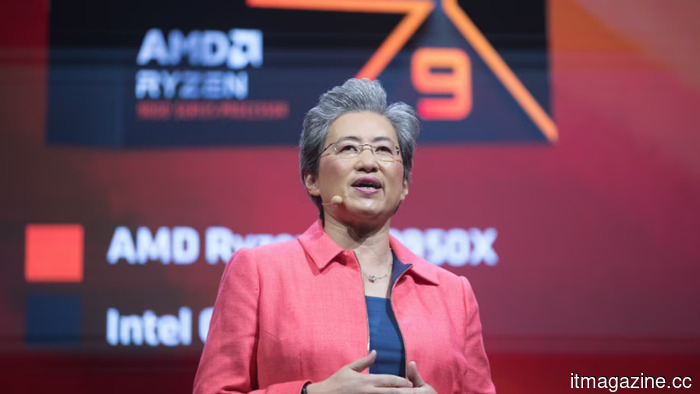 AMD's CEO Lisa Su meets with China's He Lifeng to talk about collaboration in the semiconductor industry | TNW
AMD's Lisa Su met with Vice Premier He Lifeng in Beijing, committing to increased investment in China as U.S. export regulations continue to alter the semiconductor landscape.
AMD's CEO Lisa Su meets with China's He Lifeng to talk about collaboration in the semiconductor industry | TNW
AMD's Lisa Su met with Vice Premier He Lifeng in Beijing, committing to increased investment in China as U.S. export regulations continue to alter the semiconductor landscape.
 Instead of a copy of SAP, Sber is creating an ERP platform with AI-native architecture.
Sber is developing a next-generation ERP platform with an AI-native architecture and plans to launch it on the market in 2027. The company believes that the Russian corporate systems market is entering a phase of deep technological transformation following the departure of SAP.
Instead of a copy of SAP, Sber is creating an ERP platform with AI-native architecture.
Sber is developing a next-generation ERP platform with an AI-native architecture and plans to launch it on the market in 2027. The company believes that the Russian corporate systems market is entering a phase of deep technological transformation following the departure of SAP.
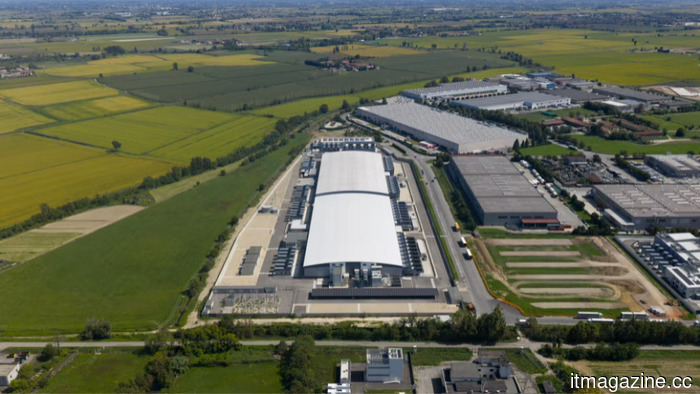 Meta's Hyperion data center will involve a $200 billion investment, encompass 10 gas plants, and occupy 4,000 acres in rural Louisiana for artificial intelligence development.
Hyperion is set to provide 5 GW of AI computing, supported by 10 gas-fired plants constructed by Entergy. The $27 billion financing is arranged off-balance-sheet via Blue Owl Capital, coinciding with Meta's capital expenditures reaching $145 billion in 2026.
Meta's Hyperion data center will involve a $200 billion investment, encompass 10 gas plants, and occupy 4,000 acres in rural Louisiana for artificial intelligence development.
Hyperion is set to provide 5 GW of AI computing, supported by 10 gas-fired plants constructed by Entergy. The $27 billion financing is arranged off-balance-sheet via Blue Owl Capital, coinciding with Meta's capital expenditures reaching $145 billion in 2026.
Amprius collaborates with Matternet for batteries used in drone delivery.
Amprius Technologies will provide its high-energy silicon anode SiCore batteries to Matternet's FAA-approved drone delivery fleet, aiming for extended range and increased payload capacity.