
ECARX and May Mobility have executed a $750 million agreement for robotaxi services, with the vehicles being manufactured outside of China to meet US regulations.
TL;DRECARX, the automotive technology firm supported by Geely founder Li Shufu, has finalized a deal worth around $750 million with May Mobility to provide thousands of specially designed robotaxi vehicles featuring custom Level 4 computing and sensor systems. Production of these vehicles will take place outside of China to meet U.S. connected vehicle regulations.
ECARX, the automotive tech company established by Geely founder Li Shufu, has entered into a strategic framework agreement with May Mobility to supply thousands of vehicles equipped for autonomy for the American robotaxi operator's commercial fleet. This agreement, valued at nearly $750 million, connects a hardware supplier from China with one of the few U.S. robotaxi companies that has transitioned from pilot programs to ongoing commercial operations, happening at a time when U.S. regulations are restricting the deployment of Chinese automotive technology on American streets.
Deal Details
According to the agreement, ECARX will provide specially designed vehicles outfitted with tailored Level 4 central computing systems and comprehensive sensor packages created expressly for autonomous ride-hailing. These vehicles and their sensor systems will be manufactured outside of China, a strategic choice aimed at adhering to U.S. regulations concerning information and communications technology in connected vehicles. Deployments are anticipated to kick off next year, with plans to scale up by 2028, when both companies aim for a 50% reduction in the costs of per-vehicle autonomy hardware compared to current industry standards.
This partnership suggests a new approach to assembling robotaxi fleets. Instead of retrofitting existing consumer vehicles with aftermarket autonomy systems, which most operators have been doing until now, ECARX and May Mobility are developing vehicles from scratch with integrated Level 4 hardware at the factory. This method, if successful at scale, could mitigate the engineering challenges and reliability issues linked to added sensor arrays and computing units.
About ECARX
Founded in 2017, ECARX is now based in London and Singapore and employs over 1,400 people across 13 locations globally. The company went public on the Nasdaq in 2022 under the ticker ECX, with Li Shufu, the billionaire founder of Geely—whose automotive portfolio includes Volvo Cars, Polestar, Lotus, and Zeekr—as its largest shareholder. Ziyu Shen serves as CEO.
The core business of ECARX is the development of computing and software platforms that are integral to vehicles, such as digital cockpit systems, connectivity modules, and central computing frameworks that increasingly shape the driving experience. Geely has a history of collaborating with tech firms on autonomous driving, and ECARX reflects the group's belief that computing hardware in vehicles will become as crucial as the engines and drivetrains that defined the previous automotive manufacturing era.
May Mobility's Commercial Experience
Headquartered in Ann Arbor, Michigan, May Mobility has raised about $300 million in total funding, including a $105 million Series D round led by NTT. The company collaborates with Toyota, Uber, Lyft, Grab, and NTT and has completed over 500,000 autonomous rides for commercial purposes in the United States and Japan.
What sets May Mobility apart from many competitors is its operation of paid, public-facing autonomous services, rather than just closed pilot programs. The company's autonomy system utilizes what it refers to as “in-situ AI,” combining deep learning with a dynamic world model and a real-time reasoning engine that adapts to the local driving environment. The ECARX partnership grants May Mobility access to a dedicated vehicle platform specifically designed for its autonomy framework, rather than forcing it to modify its software to fit vehicles initially created for human drivers.
Regulatory Context
The most crucial design decision in the deal—manufacturing vehicles and sensors outside of China—reflects the increasingly stringent regulatory climate regarding Chinese automotive technology in the United States. The Commerce Department's information and communications technology and services (ICTS) regulations restrict the import of connected vehicle hardware and software from adversarial nations, while the Connected Vehicle Security Act of 2026 established further limitations on Chinese-origin components in vehicles operating on U.S. roads.
By structuring its supply chain to avoid Chinese manufacturing for this contract, ECARX is directly addressing these restrictions. Essentially, the company is providing American customers access to Chinese-developed automotive computing expertise while ensuring that physical production occurs in locations that comply with U.S. regulations.
This approach aligns with a broader trend in the automotive industry. Foreign automakers are increasingly partnering with Chinese technology firms because they are unable to develop competitive software and autonomous systems swiftly enough on their own. However, the political climate necessitates inventive structuring to make these partnerships feasible in Western markets.
Competitive Arena
The ECARX-May Mobility collaboration is positioned within a robotaxi market that is both consolidating and expanding. Waymo, a subsidiary of Alphabet, remains the leading operator in the U.S. and is collaborating with Zeekr, another brand under Geely, for its forthcoming Ojai robotaxi platform set to
Other articles
 Motif, backed by Temasek, introduces the Clarity AI financial intelligence system | TNW
Swiss startup Motif has introduced Clarity, an AI system designed to monitor the evolution of financial relationships over time and to enable advisory agents that institutions can implement within a matter of days.
Motif, backed by Temasek, introduces the Clarity AI financial intelligence system | TNW
Swiss startup Motif has introduced Clarity, an AI system designed to monitor the evolution of financial relationships over time and to enable advisory agents that institutions can implement within a matter of days.
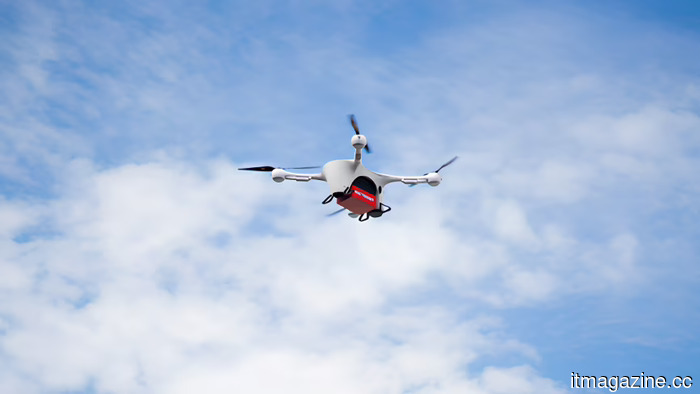 Amprius collaborates with Matternet to supply batteries for drone delivery services.
Amprius Technologies will provide its high-energy silicon anode SiCore batteries to Matternet's FAA-approved drone delivery fleet, aiming for extended range and greater payload capacity.
Amprius collaborates with Matternet to supply batteries for drone delivery services.
Amprius Technologies will provide its high-energy silicon anode SiCore batteries to Matternet's FAA-approved drone delivery fleet, aiming for extended range and greater payload capacity.
 Unframe secures an additional $50 million from Highland Europe, reaching a total contract value of $100 million within a year.
Unframe has secured an extra $50 million in funding led by Highland Europe, bringing its total funding to $100 million. The enterprise-AI delivery platform based in Cupertino reports that it has surpassed $100 million in Total Contract Value (TCV) within 12 months, achieving a 400% Net Revenue Retention (NRR).
Unframe secures an additional $50 million from Highland Europe, reaching a total contract value of $100 million within a year.
Unframe has secured an extra $50 million in funding led by Highland Europe, bringing its total funding to $100 million. The enterprise-AI delivery platform based in Cupertino reports that it has surpassed $100 million in Total Contract Value (TCV) within 12 months, achieving a 400% Net Revenue Retention (NRR).
 Strauss Zelnick, the CEO of Take-Two, has confirmed that GTA 6 does not utilize any generative AI.
Strauss Zelnick states that Rockstar's environments are constructed "building by building, street by street" without the use of generative AI, as GTA 6 aims for a launch in November 2026.
Strauss Zelnick, the CEO of Take-Two, has confirmed that GTA 6 does not utilize any generative AI.
Strauss Zelnick states that Rockstar's environments are constructed "building by building, street by street" without the use of generative AI, as GTA 6 aims for a launch in November 2026.
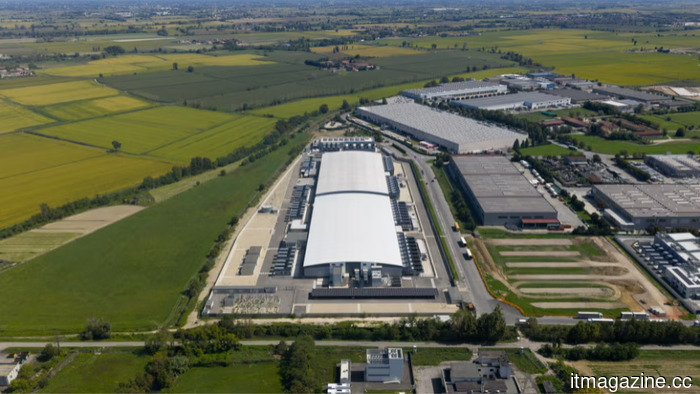 Meta's Hyperion data center: $200 billion investment, 10 gas plants, and 4,000 acres in rural Louisiana dedicated to AI.
Hyperion will provide 5 GW of AI computing, supported by 10 gas-fired facilities constructed by Entergy. The $27 billion funding is arranged off-balance-sheet through Blue Owl Capital as Meta's capital expenditures for 2026 reach $145 billion.
Meta's Hyperion data center: $200 billion investment, 10 gas plants, and 4,000 acres in rural Louisiana dedicated to AI.
Hyperion will provide 5 GW of AI computing, supported by 10 gas-fired facilities constructed by Entergy. The $27 billion funding is arranged off-balance-sheet through Blue Owl Capital as Meta's capital expenditures for 2026 reach $145 billion.
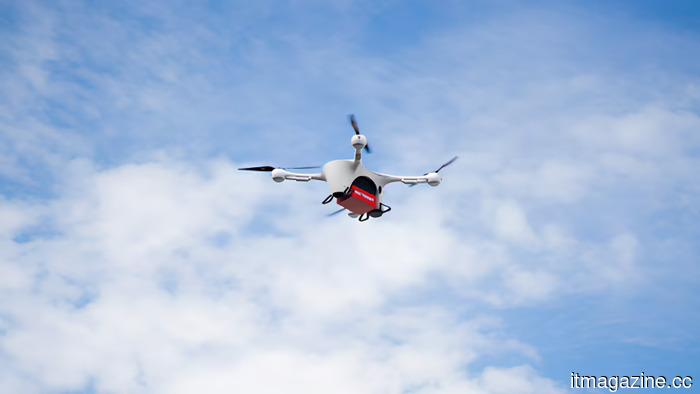 Amprius collaborates with Matternet for batteries used in drone delivery.
Amprius Technologies will provide its high-energy silicon anode SiCore batteries for Matternet's FAA-certified drone delivery fleet, aiming for extended range and increased payload capacity.
Amprius collaborates with Matternet for batteries used in drone delivery.
Amprius Technologies will provide its high-energy silicon anode SiCore batteries for Matternet's FAA-certified drone delivery fleet, aiming for extended range and increased payload capacity.
ECARX and May Mobility have executed a $750 million agreement for robotaxi services, with the vehicles being manufactured outside of China to meet US regulations.
ECARX, supported by Li Shufu, will supply May Mobility with thousands of autonomy-enabled vehicles featuring custom L4 computing, aiming for a 50% reduction in hardware costs by 2028. The manufacturing process is organized outside of China to comply with US ICTS regulations.