
Mistral acquires Emmi AI from Vienna to incorporate physics into its industrial offering.
The Paris-based open-weights laboratory is acquiring an Austrian startup that specializes in models managing airflow, heat transfer, and material stress, with a focus on customers in the aerospace, automotive, and semiconductor sectors. The financial details of the transaction have not been made public.
According to Reuters, Mistral AI, the leading open-source AI laboratory in Europe, has purchased the Vienna-based Emmi AI for an undisclosed amount. Emmi focuses on models that replicate physical phenomena, including airflow, heat transfer, and material stress, and is known for leading what local media referred to as Austria's largest funding round in 2025, amounting to €15 million.
This acquisition is Mistral's second announced deal for 2026, following the acquisition of cloud-infrastructure company Koyeb earlier this February. CEO Arthur Mensch frames this acquisition within a well-defined industrial customer strategy.
Mistral’s statement emphasizes that acquiring Emmi strengthens its position as a partner for manufacturers in aerospace, automotive, and semiconductor sectors, which Mensch identifies as traditionally overlooked by the industry. The focus on industrial physics modeling in this strategy reflects an area where a European open-weights lab can establish a competitive product position against U.S. foundation-model labs, which have mainly concentrated on consumer and enterprise software tasks.
The technical field that Emmi operates in is often referred to as ‘physics-aware AI’ or ‘simulation surrogate modeling.’ This concept involves training a neural network on the outputs of costly physics simulations (like computational fluid dynamics, finite-element analysis, and thermal modeling) to produce similar results within seconds instead of hours, accepting a controlled loss of resolution in exchange for a significant increase in speed.
For aerospace and automotive engineering teams, where simulation throughput limits design-cycle time, this proposition is particularly valuable. The same rationale applies, albeit at smaller scales, to semiconductor packaging and chip thermal design, representing another market segment mentioned by Mensch.
Mistral's acquisition pattern this year reflects a clear strategic focus. The Koyeb acquisition added cloud deployment infrastructure to Mistral's offerings, while the Emmi acquisition brings in expertise in physics-domain modeling. Both are areas that Mistral can feasibly dominate at a European level, allowing them to compete more effectively against leading firms like OpenAI, Anthropic, and Google in the broader frontier-foundation-model race.
The strategic assumption is that European industrial clients are inclined to invest in narrow, deployable, regulatory-compliant AI solutions rather than seeking incremental access to general-capacity frontier models. The competitive landscape for physics-aware AI, which Reuters did not detail extensively, includes Decart, an Israeli startup pushing its Oasis platform amid similar customers—an idea echoed by Mistral's acquisition.
Additionally, Nvidia's Omniverse, Siemens’ Xcelerator, and several academic spinout startups in physics-AI have been gaining traction with rising valuations. Emmi’s €15 million funding round in 2025 may seem modest in the context of foundation models but is significant for an Austrian deep-tech firm, with the implied value per employee Mistral has paid becoming apparent once the deal details are revealed. Overall, European AI infrastructure has been developing capabilities in this field for the past 18 months.
Mistral has not revealed the transaction value, integration timeline, or whether Emmi’s founding team will continue to operate from Vienna under the new structure.
From the perspective of European AI policy analysts, this deal is notable because Mistral has frequently been referenced in discussions surrounding the EU’s 'sovereign AI,' supported by the French government and debated by critics throughout the EU. The acquisition of a physics modeling firm located in another EU member state exemplifies the kind of intra-European capability consolidation that advocates for AI sovereignty have been promoting.
While this deal on its own does not validate the broader sovereign-AI argument, it does extend Mistral’s product reach into a sector where European industrial customers have historically shown a willingness to invest in local technology providers.
Other articles
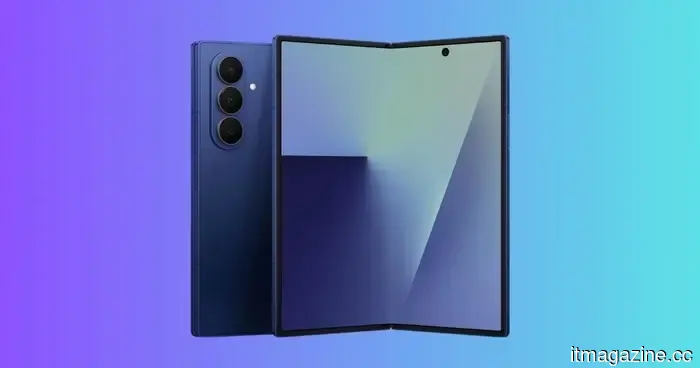 The Samsung Galaxy Z Fold 8 may finally address the most significant issue with foldable devices.
A recent leak regarding the Galaxy Z Fold 8 indicates that Samsung might enhance foldable battery life, in addition to introducing slimmer designs and improved camera features.
The Samsung Galaxy Z Fold 8 may finally address the most significant issue with foldable devices.
A recent leak regarding the Galaxy Z Fold 8 indicates that Samsung might enhance foldable battery life, in addition to introducing slimmer designs and improved camera features.
 Meta transitions 7,000 employees into AI positions during the same week it announces a 10% workforce reduction.
According to an internal memo from Chief People Officer Janelle Gale that was reviewed by Bloomberg, Meta is reallocating 7,000 employees to roles centered on AI in advance of a 10% reduction in its workforce later this week.
Meta transitions 7,000 employees into AI positions during the same week it announces a 10% workforce reduction.
According to an internal memo from Chief People Officer Janelle Gale that was reviewed by Bloomberg, Meta is reallocating 7,000 employees to roles centered on AI in advance of a 10% reduction in its workforce later this week.
 Apple's iOS 27 may introduce AI writing features, an upgraded Siri, and personalized wallpapers.
Apple's iOS 27 could bring in AI writing features, more advanced Siri connections, natural-language shortcuts, and AI-created wallpapers as the company enhances its AI ecosystem.
Apple's iOS 27 may introduce AI writing features, an upgraded Siri, and personalized wallpapers.
Apple's iOS 27 could bring in AI writing features, more advanced Siri connections, natural-language shortcuts, and AI-created wallpapers as the company enhances its AI ecosystem.
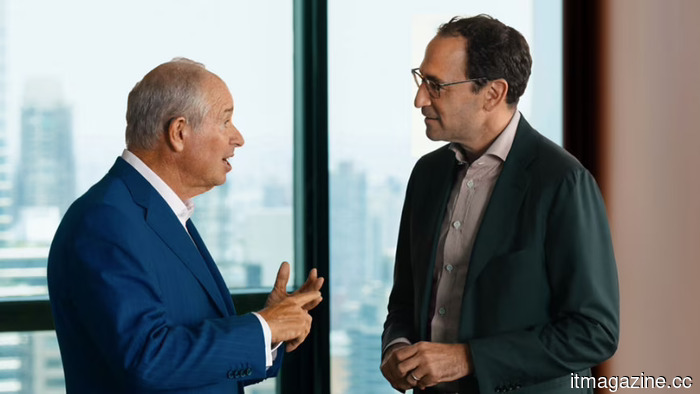 Blackstone secures the majority stake in Google's new TPU cloud.
Google and Blackstone have revealed a partnership to establish a TPU compute-as-a-service business in the United States, backed by $5 billion in Blackstone equity, an overall valuation of approximately $25 billion, and a target of 500 MW of capacity operational by 2027.
Blackstone secures the majority stake in Google's new TPU cloud.
Google and Blackstone have revealed a partnership to establish a TPU compute-as-a-service business in the United States, backed by $5 billion in Blackstone equity, an overall valuation of approximately $25 billion, and a target of 500 MW of capacity operational by 2027.
 Narwal Freo Z10 Turbo Offers Premium Features at an Affordable Price
The Narwal Freo Z10 Turbo offers flagship-level suction, CarpetFocus technology, and easy maintenance cleaning at a more affordable price, making it an excellent upgrade for contemporary households.
Narwal Freo Z10 Turbo Offers Premium Features at an Affordable Price
The Narwal Freo Z10 Turbo offers flagship-level suction, CarpetFocus technology, and easy maintenance cleaning at a more affordable price, making it an excellent upgrade for contemporary households.
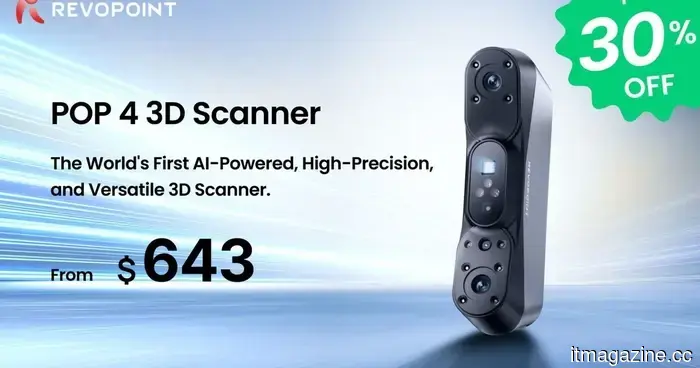 Revopoint POP 4 is now available on Kickstarter: the first AI-driven 3D scanner featuring photorealistic 3D Gaussian Splatting export.
Promoted as the first high-precision and versatile 3D scanner powered by AI, the POP 4 features real-time AI segmentation and 3D Gaussian Splatting on a hybrid blue-laser-and-infrared platform. As the latest and most sophisticated addition to the POP series, the POP 4 is designed to accommodate a range of tasks, from complex geometries to larger objects, including black and [...]
Revopoint POP 4 is now available on Kickstarter: the first AI-driven 3D scanner featuring photorealistic 3D Gaussian Splatting export.
Promoted as the first high-precision and versatile 3D scanner powered by AI, the POP 4 features real-time AI segmentation and 3D Gaussian Splatting on a hybrid blue-laser-and-infrared platform. As the latest and most sophisticated addition to the POP series, the POP 4 is designed to accommodate a range of tasks, from complex geometries to larger objects, including black and [...]
Mistral acquires Emmi AI from Vienna to incorporate physics into its industrial offering.
Mistral AI has purchased the Vienna-based physics-AI startup Emmi for an undisclosed amount, focusing on manufacturers in the aerospace, automotive, and semiconductor sectors. This marks Mistral's second acquisition in 2026, following Koyeb.