
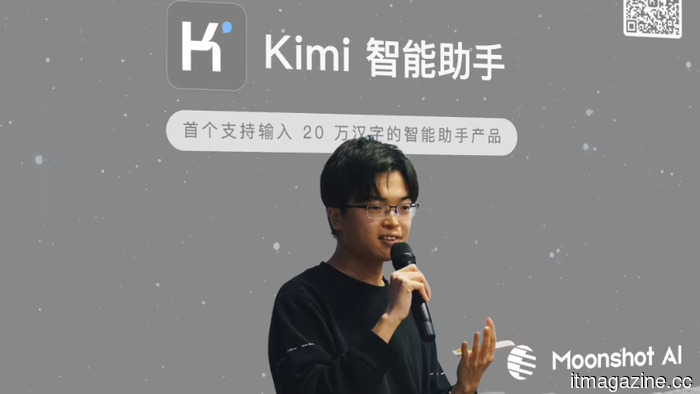
Kimi developer Moonshot has decided to drop its VIE structure for its Hong Kong listing, worth $20 billion.
The $20bn Kimi developer has notified its shareholders that it will eliminate its variable-interest-entity (VIE) structure, following Beijing's indication that an exemption was improbable. This IPO would represent one of the largest Chinese AI listings recorded.
Moonshot AI, the Beijing-based creator of the Kimi chatbot, has informed shareholders of its plans to dismantle the VIE structure in order to facilitate a Hong Kong listing, as reported by the South China Morning Post on Monday, citing sources familiar with the situation. After its recent funding round, the company's valuation stands at $20bn, making this IPO one of the largest for Chinese AI companies since the market became open to public capital.
The significant news is the structural shift. Moonshot’s offshore entity is registered in the Cayman Islands, while its operational assets in mainland China are managed through a VIE framework.
Under the revised IPO regulations from the China Securities Regulatory Commission, companies with offshore VIE structures must now justify their existence during a procedural review, with a preference for entities anchored on the mainland. Moonshot initially aimed for a waiver. However, the company's decision to completely unwind the structure indicates that the likelihood of obtaining a waiver, according to internal assessments, seemed slim.
The funding backdrop adds to the scale of the IPO. Moonshot secured $2bn in funding earlier this month at a post-money valuation of $20bn, bringing the total funding since November 2025 to approximately $3.9bn, according to AI Insider’s records. The firm has increased its annual recurring revenue to roughly $200m as of April. Recent investors include Alibaba, with speculations about Tencent and Hillhouse's involvement, which the company has not officially confirmed. Bloomberg first reported on the potential Hong Kong IPO in March when Moonshot’s valuation was lower, and resolving the regulatory issue via an exemption still seemed possible.
The broader competitive landscape is shaped by the Chinese AI race. Moonshot’s Kimi chatbot has consistently ranked among the top-performing Chinese AI products based on user engagement, alongside DeepSeek’s open-weight models and ByteDance’s Doubao. Coverage by TNW on DeepSeek’s open-weight cadence offers the most accessible English-language perspective on the current state of Chinese AI. Companies that achieve listings in the 2026-27 timeframe will become benchmarks for valuation against US-listed entities like OpenAI (when it goes public), Anthropic, and others.
The geopolitical context cannot be overlooked. Moonshot’s listing is expected to coincide with the Trump-Xi Beijing summit discussions on AI regulations, the H200 export licensing arrangement—which has resulted in more paperwork than actual chip deliveries—and the ongoing tightening of regulations by the CSRC regarding offshore structures for Chinese companies.
Choosing a Hong Kong listing over a New York one explicitly anchors the company’s capital base in a jurisdiction subject to direct regulatory oversight from the Chinese government. Moonshot's willingness to dismantle the VIE structure to proceed with the listing highlights a clear operational consequence of that decision.
The practical implications of this unwinding involve a technical structural-finance process. Moonshot’s offshore entities and the mainland operating company will be consolidated or restructured under a single vehicle for the Hong Kong listing, requiring regulatory approvals from multiple Chinese supervision agencies.
The timeline for this process, following the typical cadence for Chinese AI IPOs, is expected to span several quarters rather than just a few months. Following the completion of the restructure, a formal listing application and the standard approval period from the Hong Kong Exchange would likely result in the actual listing taking place in late 2026 or early 2027.
Unresolved issues include the indicative price range Moonshot will pursue, the proportion of new versus existing equity in the offering, and whether the unwinding process necessitates converting its US dollar funding rounds into renminbi equivalents. These details could significantly impact the rights of existing Western investors in the future listed entity. To date, the company has not publicly addressed these three questions based on the primary available information.
Other articles
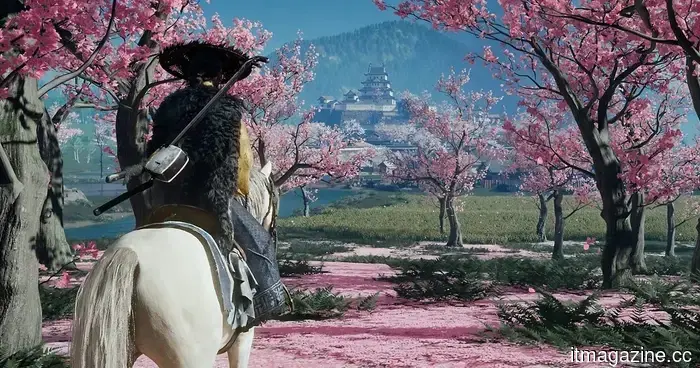 Sony no longer aims for “PlayStation exclusive” games to be released on PC.
According to reports, Sony is reducing its PC releases of significant single-player PlayStation titles, indicating a considerable change in strategy following years of growth in the PC market.
Sony no longer aims for “PlayStation exclusive” games to be released on PC.
According to reports, Sony is reducing its PC releases of significant single-player PlayStation titles, indicating a considerable change in strategy following years of growth in the PC market.
 Hypershell secures an additional $50 million in a $120 million Series B round as consumer exoskeletons move beyond their niche market.
Hypershell has secured $50 million in a Series B+ funding round co-led by Ant Group and Meituan Dragonball, with participation from Sofina and Granite Asia. The total funding for the Series B round now amounts to $120 million, reaching a valuation of nearly $400 million ahead of the X-Series launch on Wednesday.
Hypershell secures an additional $50 million in a $120 million Series B round as consumer exoskeletons move beyond their niche market.
Hypershell has secured $50 million in a Series B+ funding round co-led by Ant Group and Meituan Dragonball, with participation from Sofina and Granite Asia. The total funding for the Series B round now amounts to $120 million, reaching a valuation of nearly $400 million ahead of the X-Series launch on Wednesday.
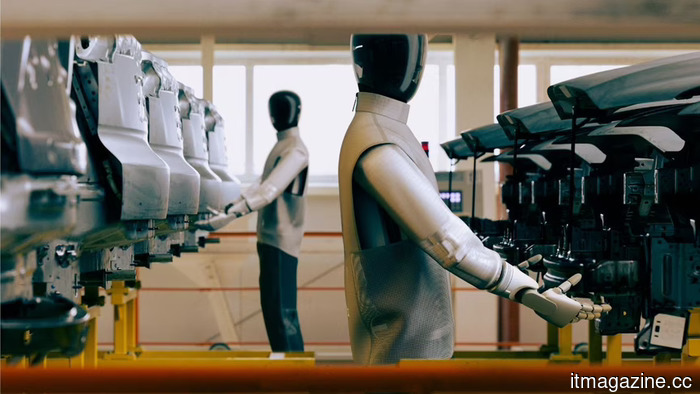 Barclays reports that humanoid robots could help alleviate 60% of the anticipated 37 million worker shortage in China by 2035.
Barclays states that China's introduction of humanoid robots could compensate for nearly 60% of the anticipated decline of 37 million workers in the labor force by 2035, necessitating the use of up to 24 million humanoid robots.
Barclays reports that humanoid robots could help alleviate 60% of the anticipated 37 million worker shortage in China by 2035.
Barclays states that China's introduction of humanoid robots could compensate for nearly 60% of the anticipated decline of 37 million workers in the labor force by 2035, necessitating the use of up to 24 million humanoid robots.
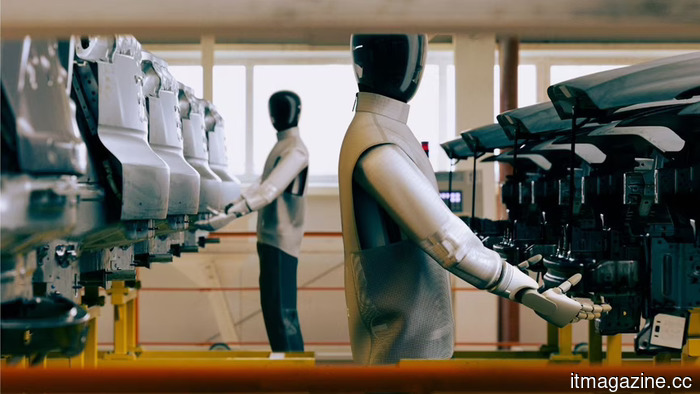 Barclays reports that humanoid robots could compensate for 60% of the 37 million worker shortage in China by the year 2035.
According to Barclays, the use of humanoid robots in China might compensate for up to 60% of the anticipated decline of 37 million workers in the labor force by 2035, necessitating the deployment of as many as 24 million humanoid robots.
Barclays reports that humanoid robots could compensate for 60% of the 37 million worker shortage in China by the year 2035.
According to Barclays, the use of humanoid robots in China might compensate for up to 60% of the anticipated decline of 37 million workers in the labor force by 2035, necessitating the deployment of as many as 24 million humanoid robots.
 PlayStation Plus is increasing in price just as everyone is returning.
Sony's recent increase in PS Plus pricing affects monthly and three-month subscribers, just ahead of the anticipated release of GTA 6, which is likely to draw a surge of players back to online multiplayer.
PlayStation Plus is increasing in price just as everyone is returning.
Sony's recent increase in PS Plus pricing affects monthly and three-month subscribers, just ahead of the anticipated release of GTA 6, which is likely to draw a surge of players back to online multiplayer.
 Nintendo rises 6.8% as Japanese investors shift away from AI.
Nintendo's stock rose by as much as 6.8% on Tuesday, marking the third consecutive day of increases, while Bandai Namco and Konami each saw gains exceeding 9%, as Japanese investors shifted their focus away from AI-related companies.
Nintendo rises 6.8% as Japanese investors shift away from AI.
Nintendo's stock rose by as much as 6.8% on Tuesday, marking the third consecutive day of increases, while Bandai Namco and Konami each saw gains exceeding 9%, as Japanese investors shifted their focus away from AI-related companies.
Kimi developer Moonshot has decided to drop its VIE structure for its Hong Kong listing, worth $20 billion.
Moonshot AI, a Beijing-based developer of the Kimi chatbot valued at $20 billion, has notified its shareholders of its plan to dissolve its offshore VIE structure to facilitate a Hong Kong IPO in compliance with new CSRC regulations.