
Nintendo rises 6.8% as Japanese investors shift away from AI.
On Tuesday, Nintendo's stock surged by as much as 6.8% in Tokyo, marking its longest winning streak since mid-March, as reported by Bloomberg. Bandai Namco Holdings and Konami Group also saw increases of over 9% during the same session. This trading session reflected a broader shift that Japanese investors have been indicating for two weeks: moving away from AI-related components of the TOPIX and into established intellectual property and consumer franchises that aren't reliant on the current capex cycle boosting US semiconductor and hyperscaler stocks.
The catalyst for this rotation is critical to understand. Earlier in May, Nintendo's stock had dropped nearly 10% after the company's disappointing full-year guidance and a poorly received announcement regarding the Switch 2 price increase. The recent movements can be seen as two overlapping narratives: a technical rebound from undervalued levels and a shift in sector allocation that's seized this specific upturn.
Bloomberg characterizes this rotation as stemming from ‘AI fatigue’ with a particular interpretation in the local context. Throughout most of Q1 and early Q2 of 2026, Japanese investors were heavily investing in companies tied to the AI capex cycle: SoftBank, Tokyo Electron, Disco, Advantest, and Renesas. However, these companies have underperformed in the last three weeks of TOPIX trading against valuations perceived as stretched by Japanese institutional investors.
The announcement of the $25 billion joint venture between Google and Blackstone did not disrupt this trend; it merely adds to the data points indicating the shift is underway. Every new AI capex commitment heightens the significance of the fundamental terminal-value questions, and the past two weeks of order flow suggest that the Japanese institutional market is growing uneasy with the responses.
This macro context exists within a larger conversation about AI valuations that has unfolded over the last two months on both sides of the Pacific. Global CAPE multiples have reached levels not seen since 2000, sector concentration in US large caps has surpassed 2000 dot-com levels, and earnings concentration within the AI category has hit all-time highs.
Proponents argue that companies in the AI cohort are profitable in ways that the 2000 cohort was not. However, skeptics contend that the capex profile of the AI cohort is unprecedented, that the disparity between announced capex and earnings is widening, and that the current rotation in Japanese equities serves as a leading indicator, not a contrarian one.
What characterizes the Nintendo trade is its focus on intellectual property and franchises. Despite the disappointing guidance in Q1, the Switch 2 platform, set to launch in late 2024, presents an installed-base trajectory that suggests a multi-year earnings potential extending into the next decade. Bandai Namco and Konami also enjoy similar optionality. None of these companies is expected to be part of the $700 billion+ AI capex cycle anticipated for 2026, and recent evidence indicates that Japanese institutional investors are becoming more at ease with this reality.
The technical aspect of this scenario is the second factor. The surge on Tuesday coincided with a broader pattern of three consecutive days of gains in consumer-oriented Japanese stocks, which Bloomberg describes as a ‘hunt for bargains’ within the TOPIX. The combination of low entry prices, appealing intellectual property prospects, and underperformance of AI-related stocks typically fuels a multi-week rotation rather than a fleeting upturn.
The sustainability of this trend will depend on the forthcoming AI cohort earnings results and their implications for the convergence of capex and earnings. The unresolved factor is the upcoming Q2 earnings disclosures from the AI cohort. Microsoft, Alphabet, Meta, and Amazon are set to report between July and August on whether their capex investments are translating into accelerated cloud and AI revenues at the rates currently reflected in multiples.
The rotation in Japanese gaming stocks represents a cautious hedge against the possibility that the answer to these questions could be negative. Nintendo's performance on Tuesday shouldn't be viewed as a contrarian win; rather, it’s a notable movement that has garnered attention.
Other articles
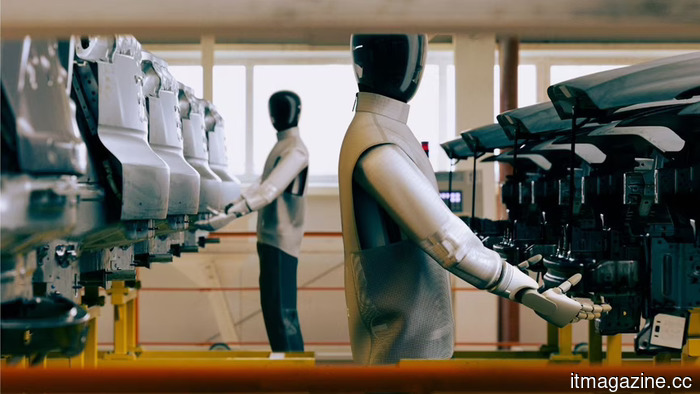 Barclays reports that humanoid robots could compensate for 60% of the 37 million worker shortage in China by the year 2035.
According to Barclays, the use of humanoid robots in China might compensate for up to 60% of the anticipated decline of 37 million workers in the labor force by 2035, necessitating the deployment of as many as 24 million humanoid robots.
Barclays reports that humanoid robots could compensate for 60% of the 37 million worker shortage in China by the year 2035.
According to Barclays, the use of humanoid robots in China might compensate for up to 60% of the anticipated decline of 37 million workers in the labor force by 2035, necessitating the deployment of as many as 24 million humanoid robots.
 Feldwerke secures a €12M revolving credit line to support a 100 MW agri-PV rollout.
Feldwerke, an agri-PV developer located in Munich, has obtained a €12 million revolving credit facility to construct 100 MW of agricultural-photovoltaic capacity within the coming 18 months from its 250 MW project pipeline.
Feldwerke secures a €12M revolving credit line to support a 100 MW agri-PV rollout.
Feldwerke, an agri-PV developer located in Munich, has obtained a €12 million revolving credit facility to construct 100 MW of agricultural-photovoltaic capacity within the coming 18 months from its 250 MW project pipeline.
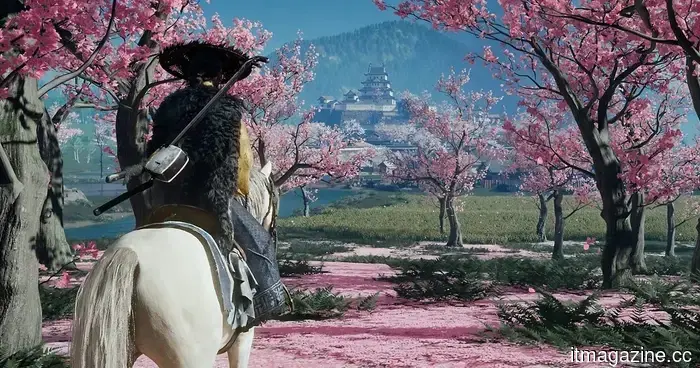 Sony no longer aims for “PlayStation exclusive” games to be released on PC.
According to reports, Sony is reducing its PC releases of significant single-player PlayStation titles, indicating a considerable change in strategy following years of growth in the PC market.
Sony no longer aims for “PlayStation exclusive” games to be released on PC.
According to reports, Sony is reducing its PC releases of significant single-player PlayStation titles, indicating a considerable change in strategy following years of growth in the PC market.
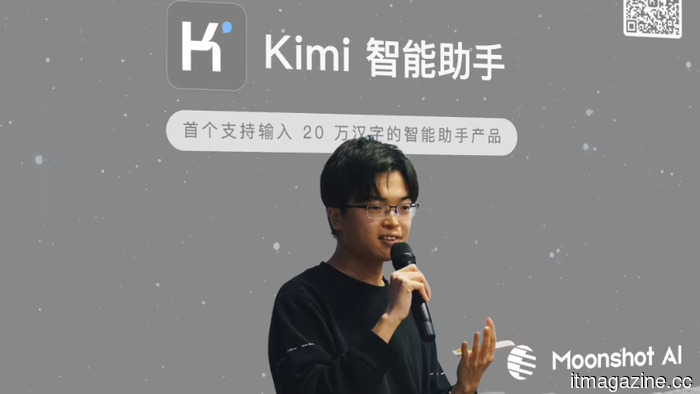 Kimi developer Moonshot has decided to drop its VIE structure for its Hong Kong listing, worth $20 billion.
Moonshot AI, a Beijing-based developer of the Kimi chatbot valued at $20 billion, has notified its shareholders of its plan to dissolve its offshore VIE structure to facilitate a Hong Kong IPO in compliance with new CSRC regulations.
Kimi developer Moonshot has decided to drop its VIE structure for its Hong Kong listing, worth $20 billion.
Moonshot AI, a Beijing-based developer of the Kimi chatbot valued at $20 billion, has notified its shareholders of its plan to dissolve its offshore VIE structure to facilitate a Hong Kong IPO in compliance with new CSRC regulations.
 Hypershell secures an additional $50 million in a $120 million Series B round as consumer exoskeletons move beyond a niche market.
Hypershell has secured $50 million in a Series B+ round co-led by Ant Group and Meituan Dragonball, with Sofina and Granite Asia participating as well. The total funding for the Series B has reached $120 million, valuing the company at nearly $400 million ahead of the X-Series launch on Wednesday.
Hypershell secures an additional $50 million in a $120 million Series B round as consumer exoskeletons move beyond a niche market.
Hypershell has secured $50 million in a Series B+ round co-led by Ant Group and Meituan Dragonball, with Sofina and Granite Asia participating as well. The total funding for the Series B has reached $120 million, valuing the company at nearly $400 million ahead of the X-Series launch on Wednesday.
 Hypershell secures an additional $50 million in a $120 million Series B round as consumer exoskeletons move beyond their niche market.
Hypershell has secured $50 million in a Series B+ funding round co-led by Ant Group and Meituan Dragonball, with participation from Sofina and Granite Asia. The total funding for the Series B round now amounts to $120 million, reaching a valuation of nearly $400 million ahead of the X-Series launch on Wednesday.
Hypershell secures an additional $50 million in a $120 million Series B round as consumer exoskeletons move beyond their niche market.
Hypershell has secured $50 million in a Series B+ funding round co-led by Ant Group and Meituan Dragonball, with participation from Sofina and Granite Asia. The total funding for the Series B round now amounts to $120 million, reaching a valuation of nearly $400 million ahead of the X-Series launch on Wednesday.
Nintendo rises 6.8% as Japanese investors shift away from AI.
Nintendo's stock rose by as much as 6.8% on Tuesday, marking the third consecutive day of increases, while Bandai Namco and Konami each saw gains exceeding 9%, as Japanese investors shifted their focus away from AI-related companies.