
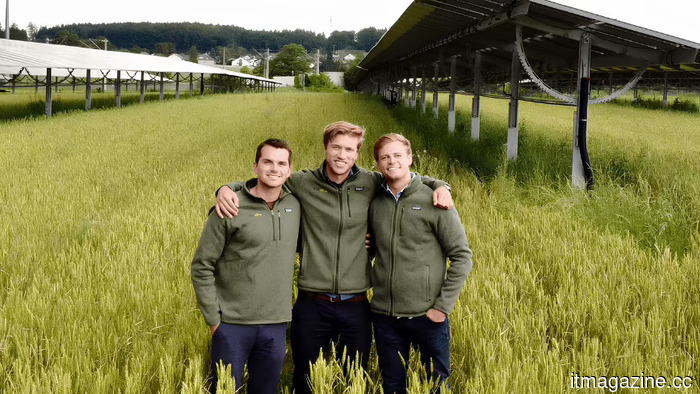
Feldwerke secures a €12 million revolving credit facility to support a 100 MW agri-PV deployment.
The Munich-based firm responsible for Germany’s largest agri-PV project aims to construct 100 MW within the next 18 months. The new debt line serves as the essential working capital that transforms a 250 MW project pipeline into actual deliverable projects.
Feldwerke, the agri-PV developer from Munich, has secured a €12 million revolving credit line to finance the development of 100 MW of agricultural photovoltaic projects over the upcoming 18 months. This financing is debt-based rather than equity, providing the necessary working capital for the company to turn its approved or pending projects into operational, grid-connected energy capacities quickly.
As a specialist in its field, Feldwerke focuses on agri-PV, which is a German term for agrivoltaics – an approach that involves installing elevated solar arrays over fields or grazing land to enable simultaneous production of electricity and agricultural goods from the same hectare. Over the past three years, this technology has transitioned from policy-supported pilot phases to commercial-scale implementation across Europe, with Germany emerging as the most advanced market thanks to the EEG (Erneuerbare-Energien-Gesetz) tariff system and additional backing from the federal Ministry for Economic Affairs and Climate Action.
Feldwerke's established track record underpins the new financing. The company commenced construction on Germany’s largest agri-PV facility in Oberndorf am Lech, Bavaria, in August 2025, with the 17 MWp installation becoming operational by the end of March 2026. A 32 MW project in Baden-Württemberg is also in development, complemented by seven other projects currently awaiting approval. According to Feldwerke’s own figures, the total pipeline comprises approximately 250 MW. The new €12 million credit facility is tailored to the initial 100 MW of this pipeline, implying a unit financing rate of around €0.12 per watt of capacity (not counting the equity and tariff subsidies each project also relies upon).
The choice of a revolving credit facility, as opposed to project-finance term debt, represents a technical detail. This type of credit allows Feldwerke to access funds as construction milestones are achieved across various projects, repay loans when each project secures permanent financing, and then re-access the same line for upcoming projects in the pipeline.
While this financing structure is standard for renewable developers operating on a portfolio basis, it is somewhat atypical for a startup less than three years old. The willingness of an unnamed lender to provide this facility signals strong underwriting confidence.
The broader German agri-PV market provides context for the rest of the industry. Germany's solar incentives for 2026 include the KfW 270 loan program, EEG Marktprämie auctions, specific grants for agri-PV, and the Bavarian Free-Field Photovoltaic Ordinance, which assigns 'privileged' status to certain agri-PV configurations for permitting.
This combination of low-cost public finance, stable tariff income, and expedited permitting has significantly enhanced the economic viability of agri-PV compared to conventional ground-mounted solar. Feldwerke’s portfolio is strategically aligned with this set of policies.
In a wider European context, Feldwerke aligns with the EU-backed BayWa agri-PV initiative, which encompasses six projects across five countries and was the first major pilot program supported by European policy. Feldwerke is now engaged in the commercial-scale rollout phase of the same concept.
Germany's ongoing push in renewable energy policy, which is a key focus of Chancellor Merz’s economic revival strategy, has led to notably quicker permitting processes in the first half of 2026, as demonstrated by EEG auction throughput data. This procedural improvement positions Feldwerke favorably as it looks to capitalize on its pipeline.
Founded in October 2023 and operating from Munich, Feldwerke has not publicly released details about its equity funding, post-money valuation, or the indicative interest rate associated with the new credit line. It remains uncertain whether the company will pursue an equity round alongside the debt facility, a query that will be addressed in the coming quarters.
In the broader context of German energy startups, valuations have been increasingly solid over the past 18 months. Feldwerke’s combination of grid-connected operational capacity and visibility into its approved pipeline places it in a category that investors have shown a growing willingness to support at scale.
Regarding operational specifics: the identity of the lender bank remains undisclosed, the drawdown schedule in relation to construction milestones is not available, and it is unclear which specific 100 MW from the ~250 MW pipeline will be prioritized for initial construction.
What is evident is the commitment to achieving 100 MW of new agri-PV capacity within 18 months from a German developer with one operational asset and seven projects currently under approval. The next 18 months will determine if the pipeline progresses on schedule or if the credit facility will absorb any delays.
Other articles
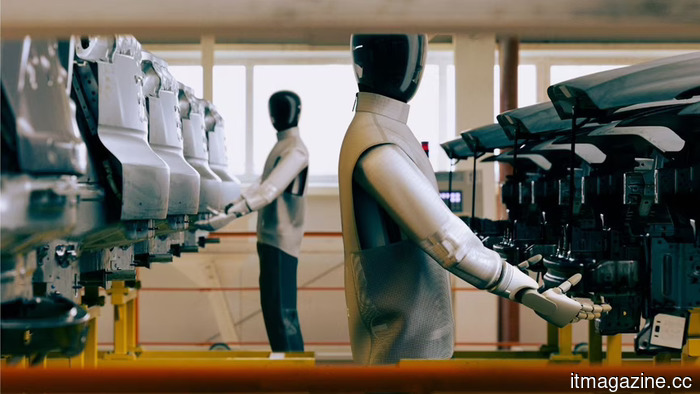 Barclays reports that humanoid robots could compensate for 60% of the 37 million worker shortage in China by the year 2035.
According to Barclays, the use of humanoid robots in China might compensate for up to 60% of the anticipated decline of 37 million workers in the labor force by 2035, necessitating the deployment of as many as 24 million humanoid robots.
Barclays reports that humanoid robots could compensate for 60% of the 37 million worker shortage in China by the year 2035.
According to Barclays, the use of humanoid robots in China might compensate for up to 60% of the anticipated decline of 37 million workers in the labor force by 2035, necessitating the deployment of as many as 24 million humanoid robots.
 Nintendo rises 6.8% as Japanese investors shift away from AI.
Nintendo's stock rose by as much as 6.8% on Tuesday, marking the third consecutive day of increases, while Bandai Namco and Konami each saw gains exceeding 9%, as Japanese investors shifted their focus away from AI-related companies.
Nintendo rises 6.8% as Japanese investors shift away from AI.
Nintendo's stock rose by as much as 6.8% on Tuesday, marking the third consecutive day of increases, while Bandai Namco and Konami each saw gains exceeding 9%, as Japanese investors shifted their focus away from AI-related companies.
 Hypershell secures an additional $50 million in a $120 million Series B round as consumer exoskeletons move beyond a niche market.
Hypershell has secured $50 million in a Series B+ round co-led by Ant Group and Meituan Dragonball, with Sofina and Granite Asia participating as well. The total funding for the Series B has reached $120 million, valuing the company at nearly $400 million ahead of the X-Series launch on Wednesday.
Hypershell secures an additional $50 million in a $120 million Series B round as consumer exoskeletons move beyond a niche market.
Hypershell has secured $50 million in a Series B+ round co-led by Ant Group and Meituan Dragonball, with Sofina and Granite Asia participating as well. The total funding for the Series B has reached $120 million, valuing the company at nearly $400 million ahead of the X-Series launch on Wednesday.
 Google I/O 2026: Anticipations for Gemini, Android 17, and additional updates
Google I/O 2026 is anticipated to emphasize Gemini AI, Android 17, smart devices, and Google's overall transition to an AI-first ecosystem.
Google I/O 2026: Anticipations for Gemini, Android 17, and additional updates
Google I/O 2026 is anticipated to emphasize Gemini AI, Android 17, smart devices, and Google's overall transition to an AI-first ecosystem.
 The Apple Watch may soon introduce a new feature for sensing blood pressure.
The Apple Watch currently alerts users regarding potential hypertension, but Apple could be developing a more sophisticated blood pressure function for its upcoming premium model.
The Apple Watch may soon introduce a new feature for sensing blood pressure.
The Apple Watch currently alerts users regarding potential hypertension, but Apple could be developing a more sophisticated blood pressure function for its upcoming premium model.
 The 100W INIU Cougar P63 may serve as a substitute for your bulky charger during travel, work, and gaming.
With the rapid demands of remote work, constant travel, and gaming, the worry about battery life has become increasingly difficult to overlook. To address this concern, the INIU Cougar P63 presents a new solution with its lightweight 100W 25,000mAh power bank, which offers effortless charging for laptops, creative equipment, and gaming gadgets without adding the weight of another cumbersome charging brick to your bag.
The 100W INIU Cougar P63 may serve as a substitute for your bulky charger during travel, work, and gaming.
With the rapid demands of remote work, constant travel, and gaming, the worry about battery life has become increasingly difficult to overlook. To address this concern, the INIU Cougar P63 presents a new solution with its lightweight 100W 25,000mAh power bank, which offers effortless charging for laptops, creative equipment, and gaming gadgets without adding the weight of another cumbersome charging brick to your bag.
Feldwerke secures a €12 million revolving credit facility to support a 100 MW agri-PV deployment.
The agri-PV developer Feldwerke, located in Munich, has obtained a €12 million revolving credit facility to construct 100 MW of agricultural-photovoltaic capacity within the next 18 months from its 250 MW project pipeline.