

Your upcoming pipeline issue might begin with AI Search.
I've been noticing a recurring pattern among the B2B SaaS teams I collaborate with. The pipeline appears less reliable, sales cycles are lengthening, and conversations about conversions demand more elaboration than before. Simultaneously, traffic often seems stable — sometimes even on the rise. The disconnect arises from a change that isn't immediately apparent in the metrics. Buyers are forming their initial impressions earlier, influenced by AI-generated responses that determine which companies are even considered.
If you're not part of that initial consideration, you won't be evaluated later — you simply won't be included in the decision-making process.
I tested this notion with a client over the past year. This client is a fintech SaaS company operating in the financial close automation sector — a market where the top five competitors have been producing content for a decade and possess Domain Ratings that can make newcomers feel insignificant before they even begin.
They had a solid product, genuine customers, and a strong team, yet their organic visibility was nearly non-existent. At the outset, their site garnered just 10-20 organic clicks daily, with over 60% of that traffic coming from searches for their brand name. Essentially, very few people were discovering them without already knowing they existed.
We ran queries using ChatGPT, Perplexity, and AI Overviews based on the questions their buyers were actually inputting when looking for solutions, rather than when they were already aware of the vendors. Searches like “best financial close software” and “how to automate account reconciliation” reflect basic commercial intent. They were absent in these searches, while their larger competitors dominated the landscape.
Upon investigation, we discovered that their positioning was insufficiently defined for referencing. The website contained content, but it was too scattered — it targeted too many audiences, addressed too many use cases, and lacked a clear anchor to specific buyer challenges. Without a distinct signal, AI systems won't take a chance on you; they rely on whoever they can confidently identify.
We didn’t alter the product or increase ad spending. Our singular focus was to clarify the company's message and categorize them effectively. We tightened their positioning, aligned content with what buyers were actively searching at each decision-making stage, and ensured comprehensive coverage of the transactional terms most relevant to their pipeline.
Fast forward nine months: there was a 275% increase in organic traffic, with 19,781 keywords ranking in the top three positions, and most importantly for me, they began to be cited in ChatGPT, Perplexity, and Google’s AI Overviews, achieving over 100 AI mentions across those platforms. You can find the complete breakdown of our process [here].
The pipeline conversations demonstrably improved; buyers arriving were already familiar with the product’s purpose. Calls became shorter, the leads were a better match, and less time was spent explaining the category. That’s not merely an SEO success; that’s the result of a company becoming easy to recommend.
The mechanics that CMOs might overlook
AI does not discover you; it reflects what the overall information landscape states about you. When a buyer uses ChatGPT for recommendations, the model isn't assessing your homepage to make a judgment call.
It draws from countless signals: how you’re presented on review sites, how comparison content frames you, what industry publications have said, and whether your customers use consistent terminology when discussing your brand.
If those signals are inconsistent or generic, the results will be scattered or generic as well — or nothing at all.
This means much of the visibility issue with AI isn't truly an AI problem; it's a positioning issue that has existed for some time. The difference now is that it carries more significant commercial ramifications than it used to.
Two or three years ago, a buyer with a vague understanding of your company could still visit your site, engage with some content, and you would have the opportunity to influence their perception of you. This still happens, but a growing segment of demand is being resolved before it reaches you. The buyer forms a shortlist during the AI discussion and then examines those options.
If you weren't part of that initially, you're not included in the shortlist. It's that straightforward.
What actually needs to change
I want to be frank: much of the "GEO" or "AEO" content you encounter today stems from agencies attempting to create urgency around a new service line. While some of it has merit, a lot of it is simply noise.
From my experience with SaaS companies navigating this shift, the ones succeeding in AI search are not engaging in unusual tactics; they're effectively executing the basics.
They maintain a clear position for a specific buyer. They possess sufficiently concrete proof to be referenced — actual customer results rather than vague case studies. They are visible in the venues where buyers form opinions before they even search: communities, comparison sites, and third-party content.
Their websites answer questions clearly enough to be incorporated into AI responses. If you're interested in a more tactical overview of
Other articles
 A method for economy class travel suggested by scientists may reduce the costs of lunar journeys slightly.
Researchers have discovered a more economical approach to sending spacecraft to the Moon by utilizing a gravitational sweet spot as a stopover, reducing fuel expenses by at least 58.80 m/s compared to current techniques.
A method for economy class travel suggested by scientists may reduce the costs of lunar journeys slightly.
Researchers have discovered a more economical approach to sending spacecraft to the Moon by utilizing a gravitational sweet spot as a stopover, reducing fuel expenses by at least 58.80 m/s compared to current techniques.
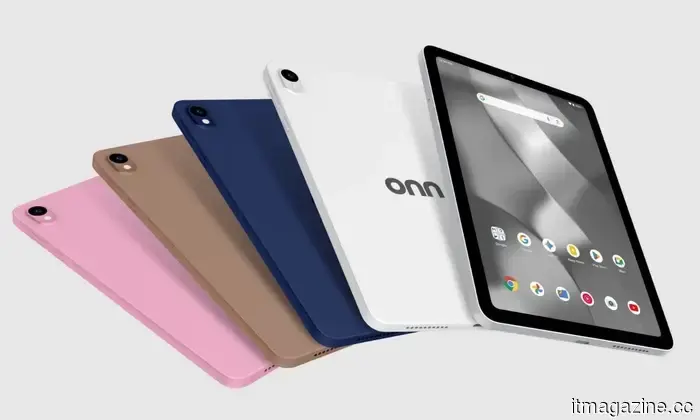 Walmart's new ONN tablets are budget-friendly while offering great value.
Walmart is offering budget tablet customers two new Onn options, which include a compact 8.1-inch version and a larger 13-inch Pro model featuring a big screen, stylus, and Android 16.
Walmart's new ONN tablets are budget-friendly while offering great value.
Walmart is offering budget tablet customers two new Onn options, which include a compact 8.1-inch version and a larger 13-inch Pro model featuring a big screen, stylus, and Android 16.
 Coursera initiates a $500 million share buyback program just days after finalizing its merger with Udemy.
The buyback, which is financed using current cash reserves, occurs as COUR's stock is close to its 52-week low of $5.00. The merged Coursera-Udemy platform reports having 290 million learners and aims to achieve $115 million in annual cost synergies.
Omnia and Casa dos Ventos have signed a $2 billion power agreement to support TikTok's data center in Brazil.
Omnia and Casa dos Ventos have entered into a renewable energy supply agreement valued at approximately $2 billion, which will support TikTok's $9.8 billion data center in Pecém, Ceará, marking ByteDance's first dedicated facility in Latin America.
Coursera initiates a $500 million share buyback program just days after finalizing its merger with Udemy.
The buyback, which is financed using current cash reserves, occurs as COUR's stock is close to its 52-week low of $5.00. The merged Coursera-Udemy platform reports having 290 million learners and aims to achieve $115 million in annual cost synergies.
Omnia and Casa dos Ventos have signed a $2 billion power agreement to support TikTok's data center in Brazil.
Omnia and Casa dos Ventos have entered into a renewable energy supply agreement valued at approximately $2 billion, which will support TikTok's $9.8 billion data center in Pecém, Ceará, marking ByteDance's first dedicated facility in Latin America.
 Coursera initiates a $500 million share buyback program just days after finalizing its merger with Udemy.
The buyback, which is financed through available cash, occurs as COUR's trading approaches its 52-week low of $5.00. The merged Coursera-Udemy platform reports having 290 million learners and aims to achieve $115 million in yearly cost synergies.
Coursera initiates a $500 million share buyback program just days after finalizing its merger with Udemy.
The buyback, which is financed through available cash, occurs as COUR's trading approaches its 52-week low of $5.00. The merged Coursera-Udemy platform reports having 290 million learners and aims to achieve $115 million in yearly cost synergies.
 Grafana Labs declines to pay ransom following the theft of code that is already open source.
Grafana Labs has revealed that its source code was stolen by hackers through an exploited GitHub token, who then requested a ransom.
Grafana Labs declines to pay ransom following the theft of code that is already open source.
Grafana Labs has revealed that its source code was stolen by hackers through an exploited GitHub token, who then requested a ransom.
Your upcoming pipeline issue might begin with AI Search.
AI search is transforming the way B2B SaaS buyers create their shortlists. Here’s why their awareness begins even before they land on your website.