

Amazon introduces Alexa Podcasts, an AI capability that produces complete episodes using licensed news material.
Amazon has introduced Alexa Podcasts, a feature that utilizes artificial intelligence to generate complete podcast episodes on demand, featuring narration by two virtual co-hosts. This tool is available to Alexa+ subscribers, including all Prime members, and is supported by licensing agreements with over 200 news organizations such as the Associated Press, Reuters, and the Washington Post.
Alexa Podcasts allows users to request a podcast on any topic of their choice. The system conducts research on the subject, creates a structured overview, and presents it as an audio episode narrated by AI-generated co-hosts in a conversational style. The rollout of this feature began in the United States on May 18, 2026. It is included at no extra cost for all Alexa+ subscribers, while non-Prime users can subscribe for $19.99 per month.
Users can start a podcast by asking Alexa+ to generate one about a specific subject, ranging from historical events to scientific concepts or current news topics. The system gathers information from various sources, produces an organized summary, and allows users to customize aspects such as the episode's length, tone, and focus before final production. The completed episodes are narrated by two entirely AI-generated co-hosts who present the content in a typical podcast dialogue format. The episodes are then sent as notifications to Echo Show devices and stored in the Alexa app for future listening.
While the concept is not entirely new, given that Google’s NotebookLM showcased a similar AI-generated audio overview feature in 2024, Amazon's version stands out because it does not require users to provide source materials but instead generates content independently. Additionally, it integrates seamlessly into a voice assistant ecosystem with over 500 million Alexa-enabled devices globally.
The most notable aspect of Alexa Podcasts lies not in the on-demand topic generation but in the news content pipeline that Amazon has established. The company has forged licensing deals with more than 200 news organizations, including major names like the Associated Press, Reuters, the Washington Post, Time, Forbes, Business Insider, Politico, USA Today, Condé Nast, Hearst, and Vox Media, alongside numerous local newspapers in the U.S.
These partnerships will enable a forthcoming feature that allows for personalized AI-generated news briefings based on licensed journalism, producing audio summaries specifically tailored to each user's interests. News organizations have been experimenting with generative AI in various ways, but Amazon's approach differs as it seeks to replace the act of reading or listening to journalism rather than assisting journalists in content creation.
Amazon is also looking into the ability to create podcasts from user-uploaded documents, a feature that would enable Alexa+ to convert uploaded PDFs, reports, or articles into audio narrated by the same virtual co-hosts.
The licensing agreements indicate that Amazon has learned from the missteps of other tech companies that previously utilized publisher content without proper permission or compensation. However, the arrangement's structure also raises concerns. When a user requests a news briefing and receives an AI-generated audio summary based on licensed journalism, there is little incentive for them to visit the publisher's website, download its app, or subscribe to its newsletter, as their informational needs have already been met. Publishers will only receive compensation based on their licensing arrangement with Amazon.
This situation mirrors the contentious issue surrounding AI-generated summaries in search engines, where such overviews have been linked to notable declines in click-through rates to the source websites. Amazon's podcast episodes offer a more insular product, as they do not provide direct links to content, making the source journalism essentially invisible to the audience.
The involvement of over 200 local newspapers is particularly significant, given that local news outlets in the U.S. have faced a financial crisis for over a decade, leading to numerous newsroom closures as advertising revenue shifted to digital platforms. A licensing agreement with Amazon offers immediate financial relief but could also jeopardize the vital audience relationships that local publishers rely on for subscriptions, donations, and community engagement.
Amazon's gamble is that users prefer AI to handle the tasks of finding, curating, and presenting information, and that the podcast format, characterized by its conversational style and passive listening experience, is the optimal means of delivery. This is not a new gamble; Google's NotebookLM, Spotify’s AI-generated playlists, and Apple’s personalized news digests all stem from the belief that users favor AI-curated content over the effort of sourcing information themselves.
However, research consistently shows that a majority of news readers express a disinterest in AI-generated content in their newsrooms. The contrast between users' stated preferences and their actual behavior when presented with AI-generated content is a key conflict in AI-driven media. Amazon’s integration of this feature into Alexa+, which is offered for free to over 200 million Prime members globally, minimizes the barrier to its adoption.
Alexa Podcasts is part of a broader shift of Alexa+ from a basic command-and-response voice assistant to an AI agent that produces and delivers content. Amazon has substantially invested in transforming Alexa around its Nova large language model, evolving from a system designed primarily to answer
Other articles
 Peter Steinberger's 100 AI agents amassed $1.3 million in OpenAI tokens over the course of 30 days while creating OpenClaw.
The bill amounted to 603 billion tokens from 7.6 million requests generated by 100 Codex instances operating on GPT-5.5. Turning off Fast Mode would reduce the cost to $300,000, but this figure highlights the actual economics involved in autonomous AI development.
Peter Steinberger's 100 AI agents amassed $1.3 million in OpenAI tokens over the course of 30 days while creating OpenClaw.
The bill amounted to 603 billion tokens from 7.6 million requests generated by 100 Codex instances operating on GPT-5.5. Turning off Fast Mode would reduce the cost to $300,000, but this figure highlights the actual economics involved in autonomous AI development.
 Peter Steinberger's 100 AI agents accumulated $1.3 million in OpenAI tokens within 30 days by developing OpenClaw.
The bill totaled 603 billion tokens from 7.6 million requests across 100 Codex instances utilizing GPT-5.5. Turning off Fast Mode would reduce the expense to $300,000, underscoring the actual financial aspects of developing autonomous AI.
Peter Steinberger's 100 AI agents accumulated $1.3 million in OpenAI tokens within 30 days by developing OpenClaw.
The bill totaled 603 billion tokens from 7.6 million requests across 100 Codex instances utilizing GPT-5.5. Turning off Fast Mode would reduce the expense to $300,000, underscoring the actual financial aspects of developing autonomous AI.
 Do you long for the classic PC days? This website allows you to navigate Wikipedia as if you’re using Windows XP.
A new web project transforms Wikipedia into a Windows XP-style desktop, allowing categories, articles, and Wikimedia Commons to resemble folders that can be browsed instead of just pages to search through.
Do you long for the classic PC days? This website allows you to navigate Wikipedia as if you’re using Windows XP.
A new web project transforms Wikipedia into a Windows XP-style desktop, allowing categories, articles, and Wikimedia Commons to resemble folders that can be browsed instead of just pages to search through.
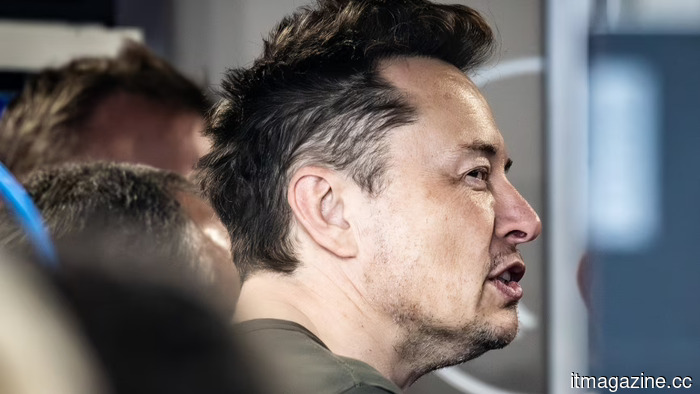 Elon Musk loses the lawsuit against Sam Altman and OpenAI after the jury determines that the claims were submitted after the deadline.
Nine jurors unanimously dismissed Musk's claim that the statute of limitations should begin from his later realization of OpenAI's shift from its nonprofit mission. This advisory verdict essentially concludes his attempt to oust Altman and reverse the $852 billion restructuring.
Elon Musk loses the lawsuit against Sam Altman and OpenAI after the jury determines that the claims were submitted after the deadline.
Nine jurors unanimously dismissed Musk's claim that the statute of limitations should begin from his later realization of OpenAI's shift from its nonprofit mission. This advisory verdict essentially concludes his attempt to oust Altman and reverse the $852 billion restructuring.
 Meta reduces its workforce by 8,000 employees while reporting a record quarterly revenue of $56 billion, as Zuckerberg invests $145 billion in AI infrastructure.
Employee morale has plummeted as Meta announces record profits while cutting 10 percent of its workforce. Additional layoffs are anticipated in August and fall 2026, as the company shifts payroll expenses towards AI capital investments.
Meta reduces its workforce by 8,000 employees while reporting a record quarterly revenue of $56 billion, as Zuckerberg invests $145 billion in AI infrastructure.
Employee morale has plummeted as Meta announces record profits while cutting 10 percent of its workforce. Additional layoffs are anticipated in August and fall 2026, as the company shifts payroll expenses towards AI capital investments.
 Researchers have set a new record for wireless speed that may influence the future of 6G technology.
Researchers achieved a speed of 112Gbps through a 560GHz wireless connection, demonstrating how terahertz technology driven by microcombs could enhance data transfer rates in future 6G networks behind the scenes.
Researchers have set a new record for wireless speed that may influence the future of 6G technology.
Researchers achieved a speed of 112Gbps through a 560GHz wireless connection, demonstrating how terahertz technology driven by microcombs could enhance data transfer rates in future 6G networks behind the scenes.
Amazon introduces Alexa Podcasts, an AI capability that produces complete episodes using licensed news material.
Alexa+ is now able to produce podcast episodes on a wide range of topics, featuring narration by two AI-generated co-hosts. This capability leverages licensing agreements with organizations such as AP, Reuters, the Washington Post, and over 200 local newspapers.