

Malta has just become the first nation to provide all its citizens with free access to ChatGPT Plus, but there is one stipulation.
TL;DR: Malta will provide every citizen with free access to ChatGPT Plus for a year after completing a university-designed AI literacy course.
OpenAI has reached an agreement with the Maltese government to grant all citizens and residents complimentary access to ChatGPT Plus for one year, contingent on completing an AI literacy course created by the University of Malta. This marks the first partnership of its kind between OpenAI and a national government.
The initiative, termed “AI for All,” commenced its initial phase in May 2026. Citizens and residents who are registered with Malta's online identity system can register for the free course, which covers the basics of AI, its capabilities and limitations, as well as responsible usage at home and in professional settings. After completing the course, participants will receive 12 months of free ChatGPT Plus access. This offer also applies to Maltese citizens living abroad. The Malta Digital Innovation Authority will oversee the distribution to eligible participants, and the program will expand as more individuals finish the course.
Malta, with a population of around 540,000, is the smallest EU member state. The financial specifics of the agreement were not disclosed. ChatGPT Plus is currently priced at $20 per month, which would amount to about $130 million in retail value for a full year of access for all Maltese residents, assuming universal enrollment. However, OpenAI's actual provision costs are likely significantly lower, and the company may be offering a heavily discounted or subsidized rate. No independent verification regarding the financial arrangements has been provided by either party at the time of publication.
Silvio Schembri, Malta’s Minister for Economy, Enterprise and Strategic Projects, stated that the initiative aims to transform “an unfamiliar concept into practical assistance for our families, students, and workers.” George Osborne, head of OpenAI for Countries, expressed that intelligence is evolving into “a national utility” and hoped that other governments would adopt similar strategies.
The agreement aligns with a broader trend of AI companies collaborating with national governments to promote adoption and establish strategic positions. Anthropic announced a similar initiative last year, providing all teachers in Iceland with access to Claude for educational materials. In September 2025, OpenAI partnered with the Greek government to implement its technology in secondary schools and startups. Additionally, in February 2025, the UK government signed a memorandum with Anthropic aimed at improving access to government information and services online.
OpenAI's global expansion has encountered challenges. The Stargate UK data center project, which was revealed in September 2025 as a partnership for sovereign AI infrastructure with Nvidia and Nscale, was paused in April due to the high cost of British industrial electricity—over four times the rates in the US—and a challenging regulatory environment concerning AI copyright. The Abu Dhabi Stargate campus faced a direct threat from Iran’s Islamic Revolutionary Guard Corps, which released satellite imagery of the site and categorically labeled it a potential military target. The Malta partnership does not face similar geopolitical risks but represents a different form of international engagement: focusing on adoption rather than infrastructure.
OpenAI’s rationale for this strategy is clear. Subscriptions to ChatGPT Plus represent the company's primary consumer revenue stream, but growth in established markets is slowing as the number of early adopters willing to pay $20 monthly nears saturation. Collaborating with governments presents an opportunity to reach a new user demographic—individuals who might not independently pursue a premium AI subscription but could evolve into long-term paying customers if trained and provided access. Malta, with its small population and centralized government, offers a low-risk environment to test this theory.
The AI literacy course is a key feature of this initiative. By requiring education as a prerequisite for access instead of merely distributing free subscriptions, Malta and OpenAI aim to tackle two challenges at once: the adoption gap arising from a lack of understanding of AI, and the risk of misuse stemming from a lack of knowledge about its limitations. Whether a university course can effectively address these issues at scale remains uncertain, but this approach is more considered than a simple giveaway.
OpenAI has aggressively enhanced ChatGPT’s capabilities, integrating personal finance tools through Plaid, introducing advertising, and framing the chatbot as a platform rather than just a product. The Malta deal adds another dimension: positioning ChatGPT as a public resource, funded by the government and distributed through an educational system. If other nations follow suit, this program could serve as a model for how AI companies achieve nationwide adoption without solely relying on consumer marketing.
Malta has a track record of being an early adopter in technology regulation and integration. It was one of the first countries to establish a regulatory framework for blockchain and cryptocurrency, and it created the Malta Digital Innovation Authority to oversee the governance of emerging technologies. The AI for All initiative continues this trend, uniquely tying AI access to AI education on a national scale.
The critical question remains whether this model can be successful beyond a small nation of half a million residents. For OpenAI, Malta represents a proof of concept; for Malta
Other articles
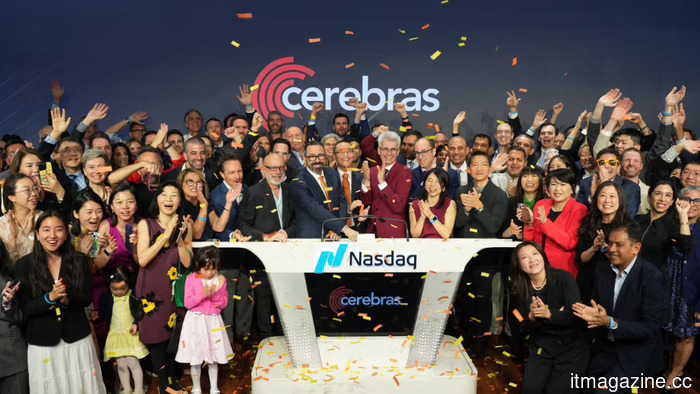 Cerebras has just completed the largest tech IPO in the US since Snowflake. Next in line are SpaceX, OpenAI, and Anthropic.
Cerebras secured $5.55 billion and reached a valuation of $95 billion. However, the $3 trillion in total IPOs from SpaceX, OpenAI, and Anthropic makes everything else appear minor in comparison.
Cerebras has just completed the largest tech IPO in the US since Snowflake. Next in line are SpaceX, OpenAI, and Anthropic.
Cerebras secured $5.55 billion and reached a valuation of $95 billion. However, the $3 trillion in total IPOs from SpaceX, OpenAI, and Anthropic makes everything else appear minor in comparison.
 Samsung and its union are set to meet on Monday in a final effort to avert an 18-day strike at the chip factory.
South Korea's Prime Minister cautioned about "unimaginable" economic consequences. The union is demanding 15% of the operating profit, while Samsung has proposed 10%. The deadline is set for May 21.
Samsung and its union are set to meet on Monday in a final effort to avert an 18-day strike at the chip factory.
South Korea's Prime Minister cautioned about "unimaginable" economic consequences. The union is demanding 15% of the operating profit, while Samsung has proposed 10%. The deadline is set for May 21.
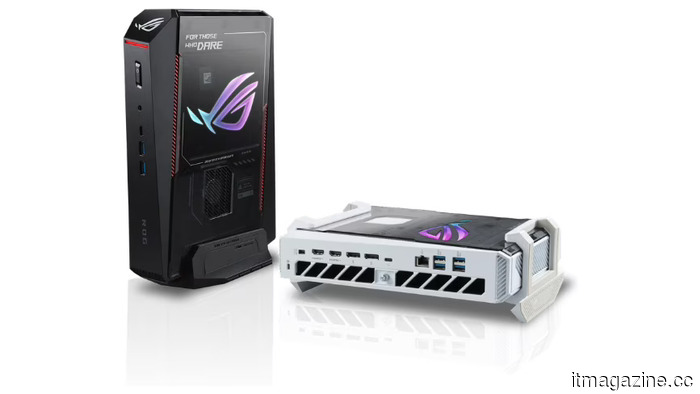 Asus packed an RTX 5080 into a 3-liter enclosure. It is priced at $4,400, and the performance increase is 2.3%.
The ROG NUC 16 combines Intel's Core Ultra 9 290HX with an RTX 5080 laptop GPU in a case that is smaller than a PS5. The estimated global price is around $4,000.
Asus packed an RTX 5080 into a 3-liter enclosure. It is priced at $4,400, and the performance increase is 2.3%.
The ROG NUC 16 combines Intel's Core Ultra 9 290HX with an RTX 5080 laptop GPU in a case that is smaller than a PS5. The estimated global price is around $4,000.
 Asus ROG and Xreal have created the first augmented reality gaming glasses with a 240Hz refresh rate. Priced at $849, they will be available for shipping in June.
The ROG Xreal R1 features dual Sony micro-OLED screens, a virtual display measuring 171 inches, and Bose audio, all within a weight of 91 grams. Pre-orders are available now at Best Buy.
Asus ROG and Xreal have created the first augmented reality gaming glasses with a 240Hz refresh rate. Priced at $849, they will be available for shipping in June.
The ROG Xreal R1 features dual Sony micro-OLED screens, a virtual display measuring 171 inches, and Bose audio, all within a weight of 91 grams. Pre-orders are available now at Best Buy.
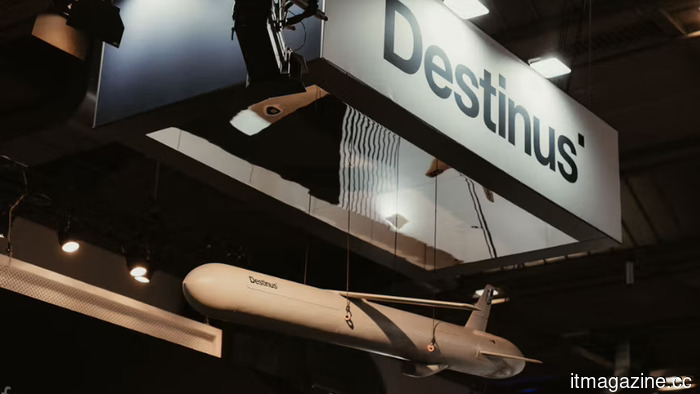 Destinus is seeking to raise €200 million in preparation for an IPO. The cruise missile manufacturer aims for a valuation of €5 billion.
The Dutch defense startup produces drones and cruise missiles for Ukraine and its European partners. It has already established a joint venture with Rheinmetall.
Destinus is seeking to raise €200 million in preparation for an IPO. The cruise missile manufacturer aims for a valuation of €5 billion.
The Dutch defense startup produces drones and cruise missiles for Ukraine and its European partners. It has already established a joint venture with Rheinmetall.
 Chinese electric vehicles are making their way to Canada, with almost 400 dealers already competing to sell them.
Canada reduced tariffs on Chinese electric vehicles to 6.1%, setting a limit of 49,000 units. Dealers are eager to participate, Trump labels it a catastrophe, and the initial cars have arrived.
Chinese electric vehicles are making their way to Canada, with almost 400 dealers already competing to sell them.
Canada reduced tariffs on Chinese electric vehicles to 6.1%, setting a limit of 49,000 units. Dealers are eager to participate, Trump labels it a catastrophe, and the initial cars have arrived.
Malta has just become the first nation to provide all its citizens with free access to ChatGPT Plus, but there is one stipulation.
OpenAI has reached an agreement with Malta to offer ChatGPT Plus for one year to all residents who successfully finish a complimentary AI literacy course created by a university.