
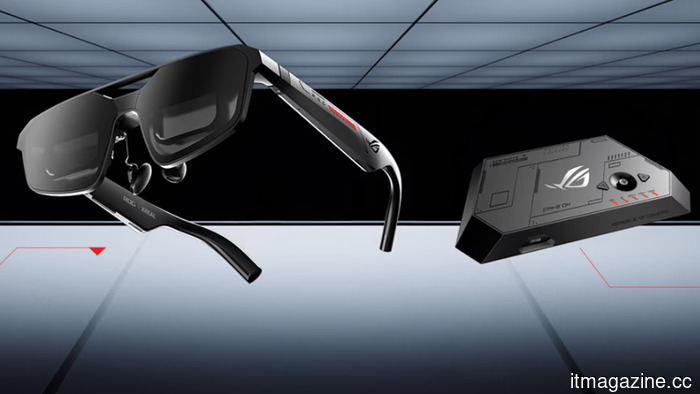
Asus ROG and Xreal have created the first augmented reality gaming glasses with a 240Hz refresh rate. Priced at $849, they will be available for shipping in June.
TL;DR: The ROG Xreal R1 features 240Hz micro-OLED gaming on a 171-inch virtual screen, priced at $849. Pre-orders are open, with shipping starting June 1.
Asus Republic of Gamers and Xreal have begun accepting pre-orders for the ROG Xreal R1, the first AR glasses to offer 240Hz micro-OLED gaming. Available for $849 at Best Buy, pre-orders on Xreal’s official site started on May 17, with global shipping set for June 1.
The standout feature is its refresh rate, which at 240Hz, surpasses any current AR competitors, including Xreal’s own One Pro, limited to 120Hz and priced at $650. The glasses boast dual 0.55-inch Sony micro-OLED displays with a maximum brightness of 700 nits, a 0.01ms response time, and Full HD (1,920 x 1,080) resolution per eye. With a field of view of 57 degrees, Xreal claims it covers 95% of the user’s focused vision, resulting in a virtual screen that feels 171 inches wide. The total weight of the device is 91 grams.
Inside, Xreal’s X1 spatial coprocessor manages the menu, 3DoF tracking (with 6DoF support), and latency. The motion-to-photon lag is rated at 3ms. The glasses offer electrochromic dimming across three levels, automatically adjusting lens transparency based on head position, becoming clear when the user looks away and tinted when engaging with the virtual screen. Audio is provided by integrated Bose-tuned speakers.
The R1 package includes the ROG Control Dock, which features DisplayPort 1.4 and two HDMI 2.0 ports, allowing users to switch among three connected devices—PC, PlayStation 5, Xbox Series X, or Nintendo Switch 2—at the press of a button. Without the dock, the glasses can directly connect to any smartphone, tablet, laptop, or handheld device with USB-C DisplayPort output. The integration with the ROG Ally is notably advanced, turning the handheld into a control panel for adjusting brightness, screen size, aspect ratio, tint level, and spatial settings while the glasses handle gameplay display.
First revealed at CES 2026 in January, the product has seen several months of optimization. Asus states that it requires no additional software to operate, just a USB-C cable or the Control Dock. The glasses also support the Asus DisplayWidget Center app for setting adjustments from a laptop or desktop.
The competitive landscape is complex. Meta sold over seven million Ray-Ban smart glasses in 2025, controlling about 82% of the smart glasses market, but these are primarily AI-powered audio and camera frames rather than display devices. The Meta Quest 3 offers a full VR headset experience with 6DoF tracking and passthrough AR at a lower cost than the R1. The Xreal 1S, which launched at CES 2026 for $449, features a larger 500-inch cinematic screen and higher resolution but is limited to 120Hz.
The R1 is not a VR headset and operates differently; it's a wearable external monitor that projects a flat virtual screen in front of the user, fixed in space or head-tracked depending on the selected mode. There’s no hand tracking, passthrough camera feed, or app ecosystem. It delivers a 240Hz gaming display that fits in a glasses case, weighs less than most smartphones, and connects to any device with video output. For competitive gamers who prioritize refresh rate and response time, the specifications are appealing. However, for others, the $849 price may seem steep for a product that focuses on a single function.
Apple is testing at least four frame designs for AI smart glasses aimed at a 2027 release, with the first version lacking a display. Google is collaborating with Samsung, Warby Parker, and Gentle Monster to prepare Android XR glasses for 2026. The wearable display segment is set to become significantly more crowded, but none of these upcoming products will target the 240Hz gaming market. The ROG Xreal R1 finds a narrow, but potentially sustainable niche: the highest refresh-rate wearable display for gamers seeking a large screen without the bulk and isolation of a VR headset.
The actual performance in real-world use will reveal if the R1 is a groundbreaking product or merely a curiosity. The X1 coprocessor was designed to support 120Hz, and its capacity to manage 240Hz at scale remains untested by consumers. Additionally, while the 57-degree field of view addresses focused vision, it is narrow by VR standards, and the 1080p resolution can lead to lower pixel density as the virtual screen size increases. Road to VR's community has observed that effective sharpness is high at 44 pixels per degree, superior
Other articles
 Chinese electric vehicles are making their way to Canada, with nearly 400 dealers already competing to sell them.
Canada has reduced tariffs on Chinese electric vehicles to 6.1%, imposing a cap of 49,000 units. Dealers are eager to participate, Trump labels it a catastrophe, and the initial vehicles have arrived.
Chinese electric vehicles are making their way to Canada, with nearly 400 dealers already competing to sell them.
Canada has reduced tariffs on Chinese electric vehicles to 6.1%, imposing a cap of 49,000 units. Dealers are eager to participate, Trump labels it a catastrophe, and the initial vehicles have arrived.
 A student equipped with a laptop and a radio interrupted four high-speed trains. The crypto keys had remained unchanged for 19 years.
A 23-year-old in Taiwan took advantage of TETRA radio vulnerabilities that have remained unchanged since 2007 to activate emergency brakes on four trains. He could face a prison sentence of up to 10 years.
A student equipped with a laptop and a radio interrupted four high-speed trains. The crypto keys had remained unchanged for 19 years.
A 23-year-old in Taiwan took advantage of TETRA radio vulnerabilities that have remained unchanged since 2007 to activate emergency brakes on four trains. He could face a prison sentence of up to 10 years.
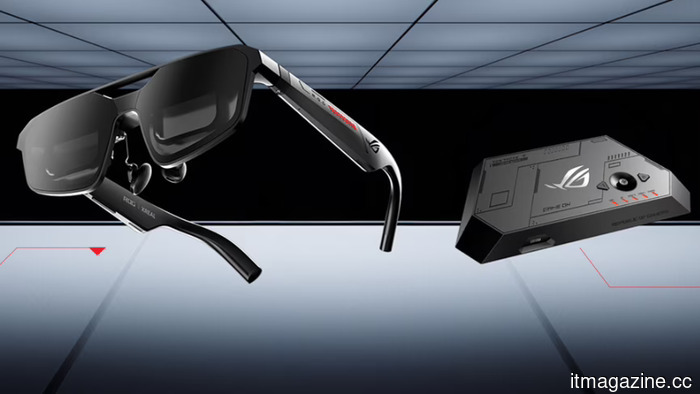 Asus ROG and Xreal have created the inaugural 240Hz AR gaming glasses. Priced at $849, they will be available for shipping in June.
The ROG Xreal R1 features dual Sony micro-OLED screens, offers a 171-inch virtual display, and includes Bose audio, all weighing just 91 grams. Pre-orders are now available on Best Buy.
Asus ROG and Xreal have created the inaugural 240Hz AR gaming glasses. Priced at $849, they will be available for shipping in June.
The ROG Xreal R1 features dual Sony micro-OLED screens, offers a 171-inch virtual display, and includes Bose audio, all weighing just 91 grams. Pre-orders are now available on Best Buy.
 A student with a laptop and a radio interrupted four high-speed trains. The crypto keys had remained unchanged for 19 years.
A 23-year-old individual in Taiwan took advantage of TETRA radio vulnerabilities that have remained unaddressed since 2007 to activate emergency braking systems on four trains. He could be sentenced to as much as 10 years in prison.
A student with a laptop and a radio interrupted four high-speed trains. The crypto keys had remained unchanged for 19 years.
A 23-year-old individual in Taiwan took advantage of TETRA radio vulnerabilities that have remained unaddressed since 2007 to activate emergency braking systems on four trains. He could be sentenced to as much as 10 years in prison.
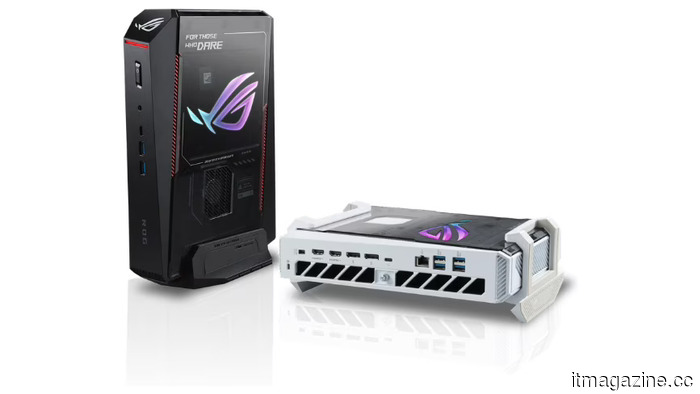 Asus packed an RTX 5080 into a 3-liter enclosure. It is priced at $4,400, and the performance increase is 2.3%.
The ROG NUC 16 combines Intel's Core Ultra 9 290HX with an RTX 5080 laptop GPU in a case that is smaller than a PS5. The estimated global price is around $4,000.
Asus packed an RTX 5080 into a 3-liter enclosure. It is priced at $4,400, and the performance increase is 2.3%.
The ROG NUC 16 combines Intel's Core Ultra 9 290HX with an RTX 5080 laptop GPU in a case that is smaller than a PS5. The estimated global price is around $4,000.
 Destinus is securing €200 million in preparation for an IPO. The manufacturer of cruise missiles aims for a valuation of €5 billion.
The Dutch defense startup produces drones and cruise missiles for Ukraine and its European allies. It has already formed a joint venture with Rheinmetall.
Destinus is securing €200 million in preparation for an IPO. The manufacturer of cruise missiles aims for a valuation of €5 billion.
The Dutch defense startup produces drones and cruise missiles for Ukraine and its European allies. It has already formed a joint venture with Rheinmetall.
Asus ROG and Xreal have created the first augmented reality gaming glasses with a 240Hz refresh rate. Priced at $849, they will be available for shipping in June.
The ROG Xreal R1 features dual Sony micro-OLED screens, a virtual display measuring 171 inches, and Bose audio, all within a weight of 91 grams. Pre-orders are available now at Best Buy.