
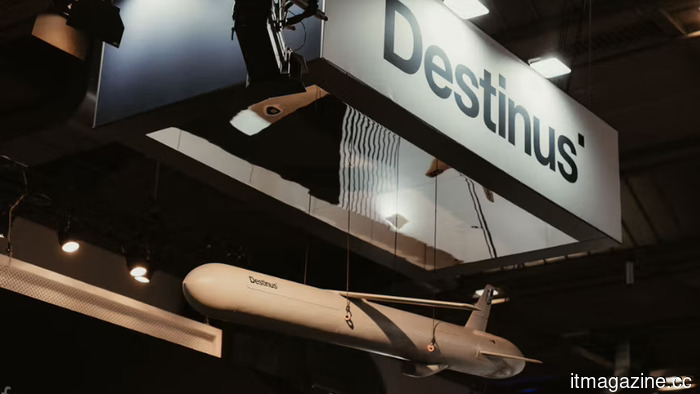
Destinus is seeking to raise €200 million in preparation for an IPO. The cruise missile manufacturer aims for a valuation of €5 billion.
**TL;DR** Dutch defense startup Destinus is aiming to raise €200 million with a valuation exceeding €5 billion ahead of a planned IPO in Amsterdam, according to Bloomberg.
Destinus, based in the Netherlands and specializing in cruise missiles and autonomous drones, is reportedly in discussions to secure around €200 million prior to its anticipated initial public offering. The company is targeting a valuation of over €5 billion, supported by projected annual revenues of about €500 million.
Founded in 2021 by Mikhail Kokorich, a Russian-born physicist who renounced his Russian citizenship in 2024 due to the war in Ukraine, Destinus has developed from a hypersonic aviation research initiative into a major defense manufacturer in Europe. The startup employs around 750 engineers and specialists across its production sites in the Netherlands, Germany, Spain, and Ukraine, producing over 2,000 cruise missile systems each year.
Destinus’s key product is the Ruta, a cruise missile system that has been validated and utilized by Ukrainian forces since 2023. In early 2026, Destinus introduced the Ruta Block2, which can carry a 250-kilogram payload and has a range of up to 450 kilometers. Their offerings also include the Hornet interceptor drone, currently under evaluation by the French Army, and the development of longer-range autonomous strike platforms.
To date, Destinus has raised nearly €400 million, which includes €140 million in convertible instruments and shareholder loans, along with a €50 million financing facility from Commerzbank established in December 2025, marking the company’s first commercial bank arrangement. Last year, it made headlines by acquiring the Swiss autonomous pilot startup Daedalean for $225 million—one of the largest defense technology acquisitions in Europe—aimed at enhancing its capabilities in AI and autonomous flight.
A significant recent advancement is Destinus's joint venture with Rheinmetall, Germany's leading defense contractor. Launched in April, Rheinmetall Destinus Strike Systems will manufacture and distribute cruise missiles and ballistic rocket artillery, with operations set to begin in the latter half of 2026. Rheinmetall holds a 51% stake in the venture while Destinus holds 49%. This collaboration merges Destinus’s design and engineering strengths with Rheinmetall’s industrial production capabilities, intending to address the European defense demand amid manufacturing constraints.
If successful, the planned pre-IPO fundraising would pave the way for Destinus's listing on the Amsterdam stock exchange. The global defense-tech sector is drawing investment at an unprecedented pace; for instance, US-based Anduril raised $5 billion at a valuation of $61 billion last week. In Europe, Munich-based Helsing is seeking to raise $1.2 billion at an $18 billion valuation, potentially positioning it among the continent's top five private tech companies. Last year, Quantum Systems attained the status of Germany’s first defense-tech unicorn, and defense tech venture capital reached a historic $49.1 billion globally in 2025, nearly twice that of the previous year.
Destinus's €5 billion valuation target corresponds to a 10x revenue multiple, which, while ambitious, aligns with current sector valuations. Helsing's recent funding round suggests approximately 15x projected revenue, a trend mirrored by Anduril’s valuation. These multiples reflect investors' confidence that European defense spending—fueled by the war in Ukraine, escalating tensions with Russia, and the EU’s ReArm Europe initiative, which aims to mobilize up to €800 billion over four years—will maintain a steady demand for autonomous strike systems that legacy defense contractors are unable to deliver promptly.
Kokorich’s background lends both credibility and intricacy to the scenario. Having established Russia’s first private space company, Dauria, in 2011, he emigrated to the US in 2012, where he created satellite companies Astro Digital and Momentus, which raised over $100 million and reached a $4 billion valuation before a SPAC merger. In 2021, he moved to Europe and founded Destinus. His established ability to develop and fund technology companies across various regions is recognized. Although his Russian heritage, despite his renunciation of citizenship, may raise caution among defense investors, it has not hindered partnerships with Rheinmetall, Thales, or the Ukrainian military.
The European defense-tech landscape is expanding beyond a select few unicorns that have garnered media attention. Recently, Norwegian counter-drone startup Stendr completed a pre-seed funding round. The EU’s European Defence Industry Programme, established in March 2026 with a budget of €1.47 billion, allocates specific funding for counter-drone procurement. The industry is shifting from venture-capital supported prototyping to industrial-scale production. Destinus, with its collaboration with Rheinmetall, capacity for 2,000 missiles annually, and operational success in Ukraine, is positioning itself as a company that has already achieved this transition.
The realization
Other articles
 Chinese electric vehicles are making their way to Canada, with almost 400 dealers already competing to sell them.
Canada reduced tariffs on Chinese electric vehicles to 6.1%, setting a limit of 49,000 units. Dealers are eager to participate, Trump labels it a catastrophe, and the initial cars have arrived.
Chinese electric vehicles are making their way to Canada, with almost 400 dealers already competing to sell them.
Canada reduced tariffs on Chinese electric vehicles to 6.1%, setting a limit of 49,000 units. Dealers are eager to participate, Trump labels it a catastrophe, and the initial cars have arrived.
 A student with a laptop and a radio interrupted four high-speed trains. The crypto keys had remained unchanged for 19 years.
A 23-year-old individual in Taiwan took advantage of TETRA radio vulnerabilities that have remained unaddressed since 2007 to activate emergency braking systems on four trains. He could be sentenced to as much as 10 years in prison.
A student with a laptop and a radio interrupted four high-speed trains. The crypto keys had remained unchanged for 19 years.
A 23-year-old individual in Taiwan took advantage of TETRA radio vulnerabilities that have remained unaddressed since 2007 to activate emergency braking systems on four trains. He could be sentenced to as much as 10 years in prison.
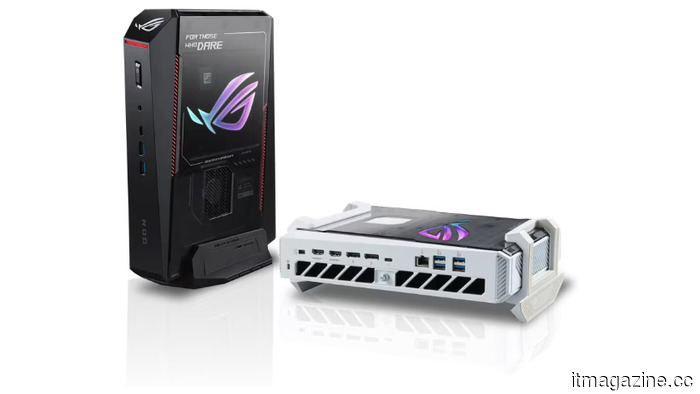 Asus packed an RTX 5080 into a 3-liter enclosure. Priced at $4,400, it offers a performance increase of 2.3%.
The ROG NUC 16 combines Intel's Core Ultra 9 290HX with an RTX 5080 laptop GPU in a case that is smaller than a PS5. The worldwide price is anticipated to be around $4,000.
Asus packed an RTX 5080 into a 3-liter enclosure. Priced at $4,400, it offers a performance increase of 2.3%.
The ROG NUC 16 combines Intel's Core Ultra 9 290HX with an RTX 5080 laptop GPU in a case that is smaller than a PS5. The worldwide price is anticipated to be around $4,000.
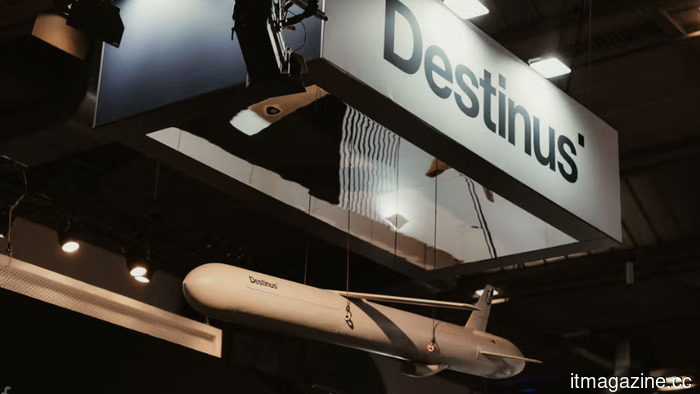 Destinus is seeking to raise €200 million in preparation for an IPO. The manufacturer of cruise missiles aims for a valuation of €5 billion.
The Dutch defense startup produces drones and cruise missiles for Ukraine and its European partners. It has already established a joint venture with Rheinmetall.
Destinus is seeking to raise €200 million in preparation for an IPO. The manufacturer of cruise missiles aims for a valuation of €5 billion.
The Dutch defense startup produces drones and cruise missiles for Ukraine and its European partners. It has already established a joint venture with Rheinmetall.
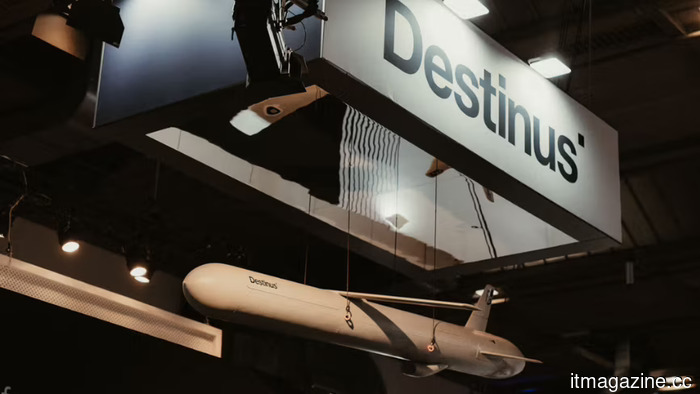 Destinus is securing €200 million in preparation for an IPO. The manufacturer of cruise missiles aims for a valuation of €5 billion.
The Dutch defense startup produces drones and cruise missiles for Ukraine and its European allies. It has already formed a joint venture with Rheinmetall.
Destinus is securing €200 million in preparation for an IPO. The manufacturer of cruise missiles aims for a valuation of €5 billion.
The Dutch defense startup produces drones and cruise missiles for Ukraine and its European allies. It has already formed a joint venture with Rheinmetall.
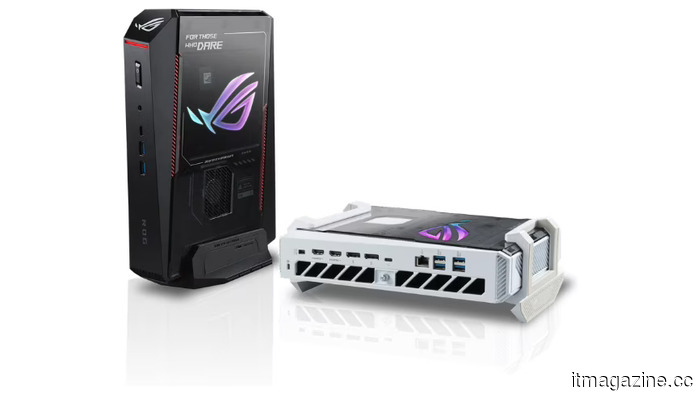 Asus packed an RTX 5080 into a 3-litre chassis. It is priced at $4,400, and the improvement in performance is 2.3%.
The ROG NUC 16 combines Intel's Core Ultra 9 290HX with an RTX 5080 laptop GPU in a case that is smaller than a PS5. The anticipated global price is around $4,000.
Asus packed an RTX 5080 into a 3-litre chassis. It is priced at $4,400, and the improvement in performance is 2.3%.
The ROG NUC 16 combines Intel's Core Ultra 9 290HX with an RTX 5080 laptop GPU in a case that is smaller than a PS5. The anticipated global price is around $4,000.
Destinus is seeking to raise €200 million in preparation for an IPO. The cruise missile manufacturer aims for a valuation of €5 billion.
The Dutch defense startup produces drones and cruise missiles for Ukraine and its European partners. It has already established a joint venture with Rheinmetall.