
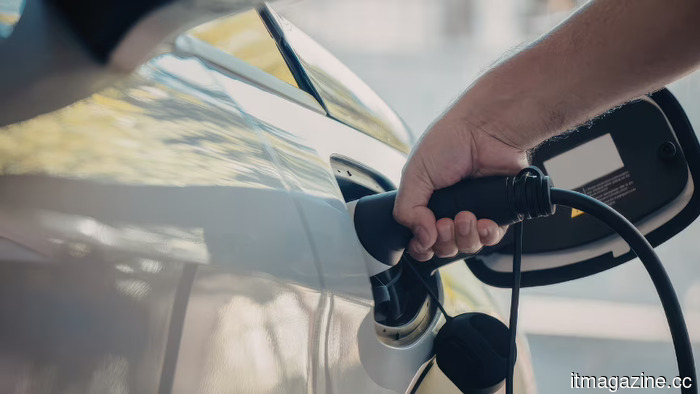
Chinese electric vehicles are making their way to Canada, with almost 400 dealers already competing to sell them.
TL;DR: Canada has lowered tariffs on Chinese electric vehicles (EVs) to 6.1%, with an annual limit of 49,000 units. Almost 400 dealerships are eager to sell brands like BYD, Geely, and Chery.
Michael MacGillivray, CEO of Century Auto Group and Sigma Auto Group, manages 10 dealerships in Nova Scotia and New Brunswick. In April, he visited the Beijing Auto Show to connect with Chinese automakers and test their vehicles. He returned impressed, stating, “They have materials that are second to none,” and noted their appealing design and impressive ride quality. He is now striving to be one of the first Canadian dealers to offer Chinese EVs.
He is not the only one interested. Farid Ahmad, CEO of DSMA, an auto dealership brokerage in suburban Toronto, reported that his firm has received nearly 400 inquiries from Canadian dealers wanting to represent brands like BYD, Geely, and Chery. Ahmad mentioned, “From their perspective, it provides them a foothold in the North American market.”
This surge is fueled by a trade agreement made in January between Canadian Prime Minister Mark Carney and Chinese President Xi Jinping, which reduced Canada’s tariff on Chinese EVs from 100% to 6.1% for the first 49,000 vehicles imported annually. Exceeding this cap will still incur the previous 100% surtax starting from October 2024. In return, China lowered tariffs on Canadian canola from 85% to around 15%, and removed anti-discrimination tariffs on various Canadian products including rapeseed meal, lobsters, crabs, and peas.
The quota runs from March to February, divided into two six-month periods of 24,500 units each, allocated on a first-come, first-served basis by the Canada Border Services Agency. The 49,000-unit limit accounts for less than 3% of Canada’s annual new vehicle market, which exceeded 1.9 million sales last year. This quota is projected to increase to 70,000 vehicles by 2030, with the Canadian government aiming for at least 50% of these imports to consist of affordable models priced under C$35,000 (approximately US$26,000) within five years.
The first Chinese vehicles have already arrived. Chery has transported cars from its Jaecoo, Omoda, and Exelantis sub-brands, while Geely-owned Lotus has delivered 18 Eletre electric SUVs, the first Chinese-made vehicles under the new trade arrangement. The Canadian price of the Lotus Eletre dropped roughly 50% post-tariff reduction. BYD has also registered vehicles from its Shenzhen and Xi’an factories with Transport Canada. A BYD Seagull priced at C$12,000 ex-factory could come to Canada for about C$14,000 after tariff and shipping, potentially retailing between C$20,000 and C$25,000—an impactful price point for the currently nonexistent sub-C$30,000 EV market in Canada.
The political reaction has been strong. The Canadian Vehicle Manufacturers’ Association, which includes GM, Ford, and Stellantis, expressed serious concern, asserting that Chinese state subsidies undermine domestic competition and that connected vehicle technology may pose security threats. Ontario Premier Doug Ford labeled the imported vehicles as “spy vehicles.” In the U.S., over 120 House lawmakers urged President Trump to exclude Chinese automakers altogether, and bipartisan legislation proposed on May 12 aims to prohibit the import of connected vehicles and parts sourced from China.
Trump described Canada’s decision as “a disaster.” U.S. Transportation Secretary Sean Duffy remarked on X that “Canada will live to regret the day they let the Chinese Communist Party flood North America with their EVs.” However, Trump's stance has varied; shortly after his criticism, he acknowledged at a White House event that Carney was correct to sign the trade deal with China and expressed interest in allowing Chinese automakers to establish plants in the U.S.
Chinese EV content is already generating buzz on American TikTok and YouTube, driving consumer interest for vehicles that cannot legally be sold in the U.S. Canada’s regulated entry allows North Americans to visit Canadian dealerships to experience brands like BYD and Chery, even if they cannot purchase them domestically. This geographic closeness pressures U.S. policy designed to maintain a 100% tariff barrier to exclude Chinese vehicles from a market where the average new car costs over $49,000.
Michael Robinet, vice president of forecast strategy at S&P Global Mobility, characterized the Canadian strategy as cautious. He noted that while a 3% to 5% market share is substantial, it is not likely to significantly alter the competitive landscape. However, the deal is structured for expansion: the quota rises to 70,000 by 2030, Chinese automakers are expected to form joint ventures in Canada within three
Other articles
 A student with a laptop and a radio interrupted four high-speed trains. The crypto keys had remained unchanged for 19 years.
A 23-year-old individual in Taiwan took advantage of TETRA radio vulnerabilities that have remained unaddressed since 2007 to activate emergency braking systems on four trains. He could be sentenced to as much as 10 years in prison.
A student with a laptop and a radio interrupted four high-speed trains. The crypto keys had remained unchanged for 19 years.
A 23-year-old individual in Taiwan took advantage of TETRA radio vulnerabilities that have remained unaddressed since 2007 to activate emergency braking systems on four trains. He could be sentenced to as much as 10 years in prison.
 ArXiv implements a one-year prohibition for researchers who submit papers containing unverified AI-generated material.
The preprint platform will impose penalties on authors whose manuscripts include fictional references or remnants of LLM directives. A study published in The Lancet revealed that instances of fabricated citations in biomedical research increased twelve times since 2023.
ArXiv implements a one-year prohibition for researchers who submit papers containing unverified AI-generated material.
The preprint platform will impose penalties on authors whose manuscripts include fictional references or remnants of LLM directives. A study published in The Lancet revealed that instances of fabricated citations in biomedical research increased twelve times since 2023.
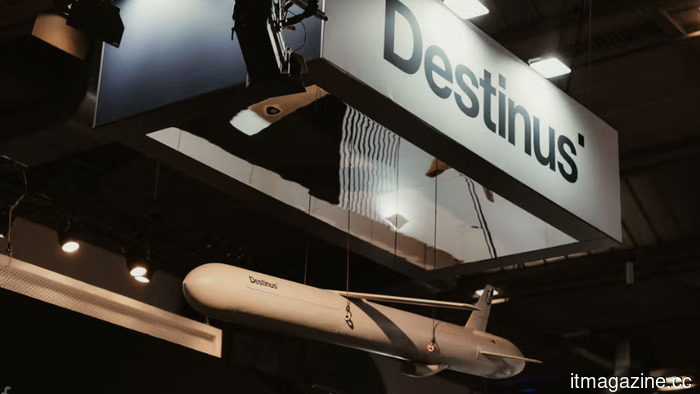 Destinus is seeking to raise €200 million in preparation for an IPO. The manufacturer of cruise missiles aims for a valuation of €5 billion.
The Dutch defense startup produces drones and cruise missiles for Ukraine and its European partners. It has already established a joint venture with Rheinmetall.
Destinus is seeking to raise €200 million in preparation for an IPO. The manufacturer of cruise missiles aims for a valuation of €5 billion.
The Dutch defense startup produces drones and cruise missiles for Ukraine and its European partners. It has already established a joint venture with Rheinmetall.
 A student equipped with a laptop and a radio interrupted four high-speed trains. The crypto keys had remained unchanged for 19 years.
A 23-year-old in Taiwan took advantage of TETRA radio vulnerabilities that have remained unchanged since 2007 to activate emergency brakes on four trains. He could face a prison sentence of up to 10 years.
A student equipped with a laptop and a radio interrupted four high-speed trains. The crypto keys had remained unchanged for 19 years.
A 23-year-old in Taiwan took advantage of TETRA radio vulnerabilities that have remained unchanged since 2007 to activate emergency brakes on four trains. He could face a prison sentence of up to 10 years.
 The individual who introduced a Roomba into every household aims to substitute your dog with a soft robotic companion.
Colin Angle's new venture, Familiar Machines, has come out of stealth mode with an AI pet that tracks your movements, adapts to your routines, and doesn't require feeding.
The individual who introduced a Roomba into every household aims to substitute your dog with a soft robotic companion.
Colin Angle's new venture, Familiar Machines, has come out of stealth mode with an AI pet that tracks your movements, adapts to your routines, and doesn't require feeding.
 A student equipped with a laptop and a radio was able to halt four high-speed trains. The encryption keys had remained unchanged for 19 years.
A 23-year-old in Taiwan took advantage of unaddressed TETRA radio vulnerabilities that have existed since 2007 to initiate emergency stops on four trains. He could be sentenced to as much as 10 years in prison.
A student equipped with a laptop and a radio was able to halt four high-speed trains. The encryption keys had remained unchanged for 19 years.
A 23-year-old in Taiwan took advantage of unaddressed TETRA radio vulnerabilities that have existed since 2007 to initiate emergency stops on four trains. He could be sentenced to as much as 10 years in prison.
Chinese electric vehicles are making their way to Canada, with almost 400 dealers already competing to sell them.
Canada reduced tariffs on Chinese electric vehicles to 6.1%, setting a limit of 49,000 units. Dealers are eager to participate, Trump labels it a catastrophe, and the initial cars have arrived.