
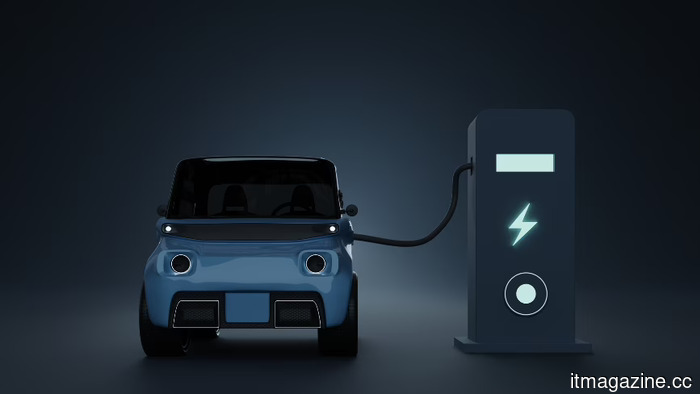
Chinese components are already powering American vehicles, and this is precisely why Congress is in a state of alarm.
Bipartisan lawmakers in the US have proposed the Connected Vehicle Security Act, aiming to prohibit vehicles, software, and hardware associated with China from the American market, coinciding with Trump’s meeting with Xi Jinping in Beijing. This initiative reveals a conflict between national security plus economic reality, especially since over 60 Chinese-owned suppliers are already integrated into the US auto supply chain and BYD has emerged as the leading EV seller globally.
Almost certainly, there is a Chinese component in the car you drove this morning, whether it be an airbag inflator, a windshield, or a steering column bearing. Research by AlixPartners indicates that more than 60 US-based auto suppliers have Chinese ownership, producing various parts for vehicles manufactured in Michigan, Ohio, and Tennessee.
In light of this reality, lawmakers from both parties are urging President Trump not to negotiate away the US car market during his visit to Beijing. The message from Congress is clear: avoid using automobiles as leverage in discussions with President Xi Jinping.
The concern is substantial. In January, Trump indicated his openness to Chinese automakers establishing factories in the US, provided they hire American workers. This statement startled an industry that had lobbied for years to keep Chinese vehicles out, though it was later clarified, the anxiety and legislative timelines had already been affected.
On May 12, Representative John Moolenaar, the Republican chair of the House Select Committee on China, and Democratic Representative Debbie Dingell put forward the Connected Vehicle Security Act of 2026. This proposed legislation would prohibit the import, manufacturing, and sale of connected vehicles, software, and hardware connected to China, Russia, North Korea, and Iran, with software bans starting January 1, 2027, and hardware bans by January 1, 2030. Violating these rules would incur civil penalties of at least $1.5 million or five times the transaction's value, whichever is higher.
A companion bill was also introduced in the Senate by Michigan Democrat Elissa Slotkin and Ohio Republican Bernie Moreno. Senator Slotkin described Chinese connected vehicles as “TikTok on wheels,” highlighting the surveillance concerns driving the push to separate TikTok from its Chinese parent company. This analogy is not merely rhetorical; as previously reported, Chinese EV content is prevalent in US social media, influencing demand for cars that cannot legally be sold in the US.
The legislation reinforces and broadens restrictions first established under President Biden, whose Commerce Department finalized policies in January 2025 banning connected vehicle technology associated with China and Russia. The legal basis stretches back to a 2019 executive order signed by Trump that declared a national emergency concerning foreign threats to America’s information and communications technology supply chain.
The political motivation is clear. Michigan and Ohio are critical states for the upcoming 2026 midterms and the next presidential election. The auto industry employs nearly half a million individuals in Michigan, as noted by Governor Gretchen Whitmer, who supported the legislation. For lawmakers in these regions, even the hint of welcoming Chinese car manufacturers is a political risk.
However, the economic implications are more complicated. The average new car price in the US exceeds $49,000, a growing crisis for American consumers. In contrast, there are over 200 battery-powered models available in China priced below the equivalent of $25,000. BYD's popular Seagull model starts at approximately $10,300, while the cheapest EV in the US, the Chevrolet Bolt, is expected to retail for $28,995.
BYD surpassed Tesla to become the biggest seller of battery electric vehicles in 2025, with 2.26 million units sold compared to Tesla's 1.64 million, reflecting a 28% increase for BYD year-on-year, against Tesla's roughly 9% decline. The company that Elon Musk once derided in a 2011 interview has now become a formidable rival. Although Tesla temporarily regained its quarterly lead in Q1 2026, the yearly performance difference of over 600,000 vehicles demonstrates the structural trend.
Internationally, Chinese vehicles are gaining market share. They accounted for about 19% of sales in Mexico in 2025, a rise from less than 1% five years prior. Mexico has since increased tariffs on Chinese vehicles to 50%. In Europe, Chinese brands are making significant gains, and BYD is reportedly negotiating to acquire certain Stellantis plants to boost production capacity. Cumulatively, European EV investments have surpassed €200 billion, but much of this capacity has been established by Chinese and Korean firms rather than European companies.
This situation raises alarm in Washington. Various stakeholders, including industry groups, unions, and automakers, argue that state-subsidized Chinese manufacturers will undercut domestic competitors, dismantle the supply chain, and subsequently increase prices after eliminating competition. Dingell referenced the solar panel industry as an example of this pattern during a press conference on May 12.
“China has a history of entering markets, subsid
Other articles
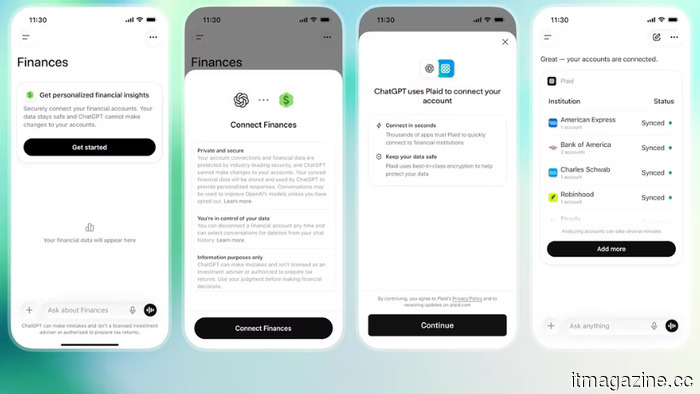 OpenAI aims for ChatGPT to access your bank account, promoting it as a convenience. However, the associated risk is significant.
ChatGPT Pro users can now link their bank accounts through Plaid to receive tailored financial advice, following OpenAI's acquisition of the fintech startup Hiro a month ago.
OpenAI aims for ChatGPT to access your bank account, promoting it as a convenience. However, the associated risk is significant.
ChatGPT Pro users can now link their bank accounts through Plaid to receive tailored financial advice, following OpenAI's acquisition of the fintech startup Hiro a month ago.
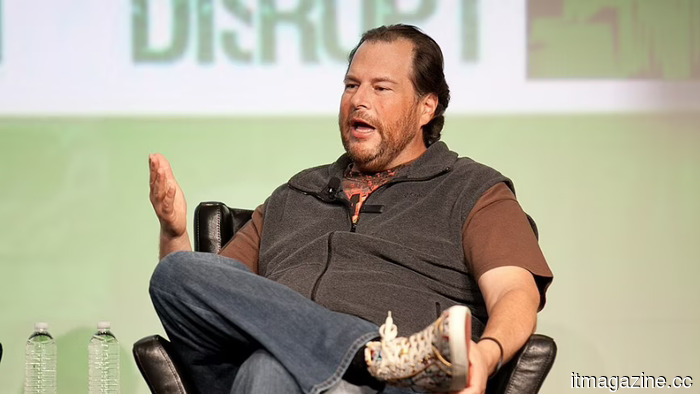 Salesforce plans to allocate $300 million for Anthropic tokens this year, and Benioff is looking to integrate coding functionality within Slack next.
Marc Benioff mentioned on the All-In podcast that AI coding agents are promoting unparalleled efficiency and hinted at upcoming coding tools for Slack.
Salesforce plans to allocate $300 million for Anthropic tokens this year, and Benioff is looking to integrate coding functionality within Slack next.
Marc Benioff mentioned on the All-In podcast that AI coding agents are promoting unparalleled efficiency and hinted at upcoming coding tools for Slack.
 Noticed an error in your Instagram Story? You can now edit it after it’s been posted.
Instagram is officially introducing the Edit Story feature, which users have been asking for, allowing them to modify a Story even after it has been published.
Noticed an error in your Instagram Story? You can now edit it after it’s been posted.
Instagram is officially introducing the Edit Story feature, which users have been asking for, allowing them to modify a Story even after it has been published.
 Yoshua Bengio cautions about hyperintelligent AI with
The Turing Award recipient established the nonprofit LawZero with $30 million to create AI that is safe by design. He points out that the industry's pursuit of agentic systems is transforming theoretical risks into real-world concerns.
Yoshua Bengio cautions about hyperintelligent AI with
The Turing Award recipient established the nonprofit LawZero with $30 million to create AI that is safe by design. He points out that the industry's pursuit of agentic systems is transforming theoretical risks into real-world concerns.
 Snap, YouTube, and TikTok have resolved a lawsuit regarding school addiction, leaving Meta to stand trial by itself.
Three out of four defendants reached a settlement with a Kentucky school district prior to a bellwether trial. Meta is now dealing with over 1,200 similar lawsuits independently.
Snap, YouTube, and TikTok have resolved a lawsuit regarding school addiction, leaving Meta to stand trial by itself.
Three out of four defendants reached a settlement with a Kentucky school district prior to a bellwether trial. Meta is now dealing with over 1,200 similar lawsuits independently.
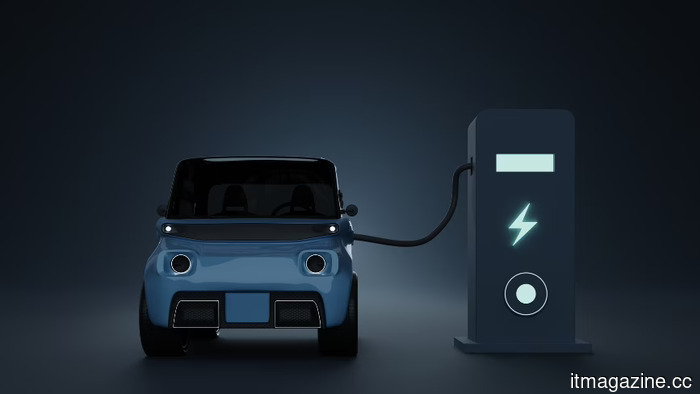 Chinese components are already used in American vehicles, which is precisely why Congress is in a state of alarm.
Bipartisan legislators are advocating for a ban on Chinese vehicles in the U.S., yet there are already over 60 Chinese-owned suppliers operating within America's automotive supply chain.
Chinese components are already used in American vehicles, which is precisely why Congress is in a state of alarm.
Bipartisan legislators are advocating for a ban on Chinese vehicles in the U.S., yet there are already over 60 Chinese-owned suppliers operating within America's automotive supply chain.
Chinese components are already powering American vehicles, and this is precisely why Congress is in a state of alarm.
Bipartisan legislators are advocating for a prohibition on Chinese vehicles in the United States; however, over 60 Chinese-owned suppliers are already part of the American auto supply chain.